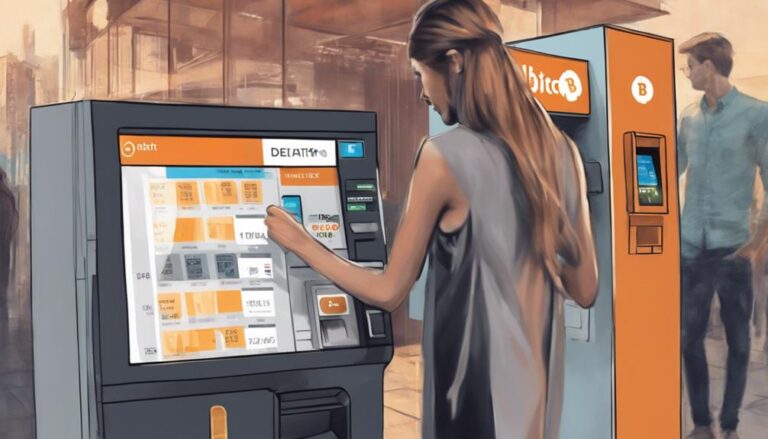
A Bitcoin ATM will charge you a median of 16 percent to buy Bitcoin, plus another 5 to 7 percent baked into the exchange rate, according to the Federal Reserve Bank of Kansas City’s August 2023 report on cash-to-crypto ATMs. A stranger meeting you in a parking lot with cash might charge far less. The question isn’t which option is cheaper. It’s what you’re paying for when you choose the more expensive one, and what you’re risking when you choose the cheaper one.
The ATM premium, in real numbers
The Kansas City Fed’s research is the clearest public accounting of what Bitcoin ATMs actually cost users. Operators self-report their fees to Coin ATM Radar, and the median buy fee across US machines is 16 percent of the transaction. The median sell fee is close behind at 15 percent. Layer on the 5 to 7 percent typically embedded in the exchange rate the machine offers, and the Fed’s researchers note that total fees of 20 percent may not be uncommon.
Put a dollar figure on it: put $200 into a Bitcoin ATM and you could lose $40 or more to fees and spread before you’ve done anything with the coins. Compare that to what it costs the operator to run the machine. The Fed estimates total operating cost at only 3 to 6 percent of revenue. The gap between what operators charge and what it costs them to operate is the business model.
There’s a wrinkle worth knowing before you assume 16 percent is the worst case. That figure is self-reported, and the Fed’s researchers point out that operators charging above-average rates commonly disable public reporting altogether. The published median is therefore biased low. The machine in your neighborhood could easily be charging more than the number that shows up in the national statistics.
What peer-to-peer trading actually costs
Peer-to-peer cash trades, where you meet a seller directly or use a peer-to-peer platform to arrange one, typically carry lower fees than Bitcoin ATMs. That’s the entire pitch. There’s no machine to maintain, no vault of cash to armor and refill, no compliance staff running transaction monitoring. Whatever markup exists is usually smaller because the overhead is smaller.
But lower fees come with a trade you’re making whether or not you’ve thought about it: you’re accepting counterparty risk that an ATM transaction doesn’t carry. Some peer-to-peer platforms offer escrow, which holds the Bitcoin until both sides confirm the trade completed. Escrow mitigates the risk of being sent nothing after handing over cash, or sent cash that turns out to be counterfeit. It does not remove that risk. Escrow only works if the platform enforcing it is legitimate and if both parties follow the process instead of trying to arrange something faster off-platform.
And once a Bitcoin transaction confirms, it’s final. There’s no chargeback mechanism, no bank to call, no fraud department. If a peer-to-peer trade goes wrong, either because the other party doesn’t send the coins or because the cash turns out to be fake, there is no institution positioned to reverse it or make you whole. The finality that makes Bitcoin useful as a payment rail is the same finality that makes a bad trade permanent.
What you’re actually buying with the ATM premium
The 16 to 20 percent an ATM charges buys two concrete things a peer-to-peer cash trade generally doesn’t: a receipt and a registered counterparty.
The receipt matters more than it sounds. It’s a timestamped record of the transaction, the amount, and the rate you were charged, which is useful if there’s ever a dispute about what happened or if you need records for your own accounting. The counterparty matters too. US Bitcoin ATM operators are money services businesses, which means they’re subject to federal anti-money-laundering obligations and have to hold money transmitter licenses administered state by state. That’s real oversight. It’s not a guarantee against every kind of problem, but it means the operator is a licensed, identifiable entity rather than a stranger you found through a listing or a social media post.
That said, “registered” doesn’t mean “permanent.” Bitcoin Depot, one of the larger ATM networks, filed for Chapter 11 bankruptcy in May 2026, and more than 9,000 of its machines were deactivated as a result. A machine being operated by a licensed company today doesn’t guarantee it will exist next month, and it doesn’t guarantee the company itself will still be operating. USA Crypto Reports verified 200 Bitcoin ATM listings across our directory and found that 41 of them, roughly one in five, no longer existed. The machine had been removed, the location had closed, or the operator was gone. That’s a meaningful failure rate for a network you’re relying on to be there when you need it.
If you’re going to use a Bitcoin ATM, check our verified Bitcoin ATM directory before you drive somewhere expecting a working machine. And if you find one that’s been pulled, moved, or shut down, you can report a machine that has closed or moved so the listing gets corrected for the next person.
The personal safety dimension
There’s a risk in peer-to-peer trading that no fee comparison captures: showing up to meet a stranger to exchange cash for Bitcoin carries the same personal safety risk as any face-to-face cash transaction with someone you don’t know. A Bitcoin ATM, by contrast, is a machine in a public location, usually inside a store, with no negotiation and no face-to-face handoff of a large sum of cash to an unverified individual. You’re not meeting anyone. You’re not negotiating a price in person. You’re not carrying cash to a location chosen by someone else.
This isn’t a reason to dismiss peer-to-peer trading outright. Plenty of people trade this way safely, especially through platforms with reputation systems and escrow, and especially for smaller amounts. But it is a real variable that a pure fee comparison leaves out, and it should factor into the decision the same way the fee percentage does. If you’re going to trade peer-to-peer, treat the safety planning with the same seriousness you’d apply to any in-person exchange of cash with a stranger: public location, ideally with other people around, and no reason to disclose more than the other party needs to know.
Weighing the two against each other
There’s no single right answer here, and that’s the honest conclusion. If you’re moving a small amount and value having a receipt, a licensed operator, and no in-person meeting, the ATM premium is a real cost for a real reduction in risk. If you’re moving a larger amount and the 20 percent premium is a meaningful sum of money, a peer-to-peer trade through an escrow-protected platform may be worth the added counterparty risk, provided you’re careful about how and where you meet.
What doesn’t make sense is treating either option as risk-free. ATMs charge a real premium and machines close down without warning. Peer-to-peer trades carry irreversible-transaction risk and, in person, physical risk. If a term in this comparison wasn’t clear, our site glossary covers escrow, money services businesses, and the other terms that come up when you’re deciding how to convert cash into Bitcoin.
Before your next transaction, run the actual numbers: get the ATM’s posted fee and exchange rate, and get the peer-to-peer platform’s fee and escrow terms, then compare the two dollar amounts side by side rather than relying on which option feels more familiar.