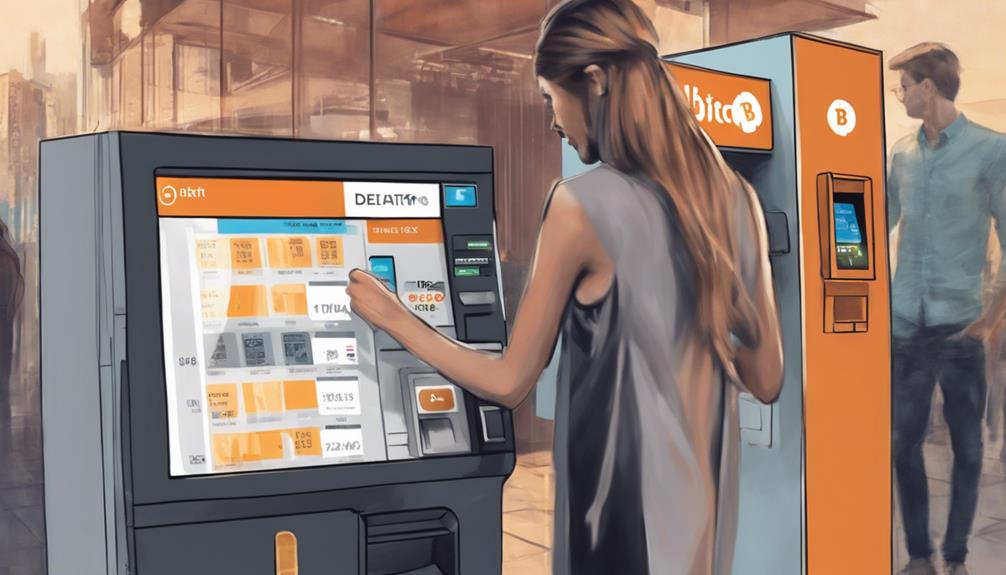
A Bitcoin ATM will take your cash and hand you Bitcoin in about ten minutes. A mainstream exchange will do the same transaction for a fraction of the cost but only after you’ve linked a bank account, verified your identity, and waited for a transfer to clear. Neither route is wrong. They serve different people with different problems, and the cost difference between them is large enough that you should know exactly what you’re paying for before you pick one.
What the ATM premium actually is
The Federal Reserve Bank of Kansas City studied this directly. In a report published 30 August 2023, “The Controversial Business of Cash-to-Crypto Bitcoin ATMs,” researchers found the median fee for buying Bitcoin at a US Bitcoin ATM, self-reported by operators through Coin ATM Radar, runs 16 percent of the transaction value. Selling is nearly as steep, with a median fee of 15 percent. On top of that stated fee, the exchange rate the machine applies typically adds another 5 to 7 percent, because the machine isn’t giving you the live market price. Add it up and the Kansas City Fed found that all-in costs of 20 percent are not uncommon.
Put a number on it: put $200 cash into a machine, and by the time fees and the exchange rate spread are accounted for, you could be losing $40 of that before you even own any Bitcoin. That’s not a rounding error. It’s closer to what a payday lender charges than what a bank charges.
There’s a wrinkle worth knowing. That 16 percent median is self-reported, and the Kansas City Fed notes that operators charging above-average rates commonly disable fee reporting altogether. That means the true median across the whole industry is probably higher than 16 percent, not lower. If you’re comparing machines through an app or directory, treat the listed fee as a floor, not a ceiling.
Why the machine costs so much to run — and why that doesn’t explain the fee
Operators will tell you the fee covers real costs: cash logistics, compliance, the physical machine, rent for the location. That’s true, but the actual cost of running a Bitcoin ATM is estimated at only 3 to 6 percent of revenue, according to the same Kansas City Fed report. If operating costs sit in the single digits and the fee charged is 16 percent or more, the gap between those two numbers is margin, not overhead. That’s the honest way to think about the premium: you’re not paying for the machine to exist. You’re paying for the convenience of walking up to it with cash in hand and walking away minutes later with Bitcoin, no bank account required.
What an exchange costs instead
Mainstream centralized exchanges typically charge a small fraction of what a Bitcoin ATM charges. The tradeoff is that you can’t walk in with a stack of twenties. You need a bank account or linked debit card, you’ll go through identity verification, and your first purchase may take a day or more to settle depending on how your bank processes the transfer. Once your account is set up, though, repeat purchases are fast and the fee difference compounds every time you buy. If you’re planning to buy Bitcoin more than once, the setup friction on an exchange pays for itself quickly. If you’re going to make a single purchase, that calculation looks different, and the ATM’s speed may be worth the extra cost to you.
If terms like “spot price,” “spread,” or “cold storage” are unfamiliar, the site’s glossary is worth a few minutes before you commit money to either route.
Who each route actually suits
A Bitcoin ATM makes sense if any of the following is true for you: you don’t have a bank account or don’t want to link one to a crypto platform, you need Bitcoin the same day and can’t wait for a bank transfer, you’re only making a small, one-time purchase where a flat percentage hit is easier to accept than the hassle of exchange onboarding, or you specifically need to convert physical cash, since a Bitcoin ATM accepts cash directly and most exchanges do not.
An exchange makes sense if you already have a bank account you’re comfortable linking, you plan to buy more than once, the amount you’re moving is large enough that a 16 to 20 percent fee would be a meaningful loss, or you’re not in a hurry and can wait for verification and a transfer to clear.
There isn’t a version of this where the ATM is objectively “better.” It’s faster and takes cash. That’s the entire case for it, and for some people that case is enough.
Two risks that apply no matter which route you pick
Whichever way you buy, remember that Bitcoin transactions are irreversible once confirmed. There’s no chargeback mechanism like a credit card dispute. If you send money to the wrong address, or a scammer talks you into buying at an ATM and sending the Bitcoin to them, that money is gone. This matters more at an ATM specifically because ATMs are the payment method most often used in urgent, high-pressure scam calls, where someone claiming to be from a government agency or a relative in trouble tells you to go feed cash into a machine right now.
Second, check that the location you’re using still exists and is still operating legitimately. US Bitcoin ATM operators are classified as money services businesses and are subject to federal anti-money-laundering rules, with money transmitter licensing handled state by state, so there is real oversight. But the industry has also seen real instability. When USA Crypto Reports manually verified 200 Bitcoin ATM listings pulled from public directories, 41 of them — roughly one in five — no longer existed at the listed address. And this isn’t a hypothetical risk confined to small operators: Bitcoin Depot, one of the larger networks, filed for Chapter 11 bankruptcy in May 2026, and more than 9,000 of its machines were deactivated as a result. A machine that was working fine last month can simply be gone this month.
That’s exactly the kind of thing a directory listing can get wrong through no fault of its own — locations close, leases end, companies restructure. Before you drive somewhere to use a machine, check our verified Bitcoin ATM directory for current status rather than relying on an old screenshot or a search result that hasn’t been updated. And if you show up somewhere and the machine is gone or the location has changed, report the closed or moved machine so the next person doesn’t waste a trip.
The practical takeaway
Do the arithmetic before you choose. If you’re moving $50 and need cash converted right now, a Bitcoin ATM’s 16 percent-plus fee might cost you $8 to $10 — annoying, but the price of speed and cash acceptance. If you’re moving $2,000, that same percentage costs you $320 to $400, money you’d keep almost entirely by opening an exchange account and waiting a day. Match the route to the amount and the urgency, not to whichever option happens to be physically closest to you right now.