Bring a wallet you control, and test its QR code before you leave the house. That’s the single fix that prevents the most expensive mistake people make at a Bitcoin ATM: standing at the machine with no wallet of their own and accepting whatever custodial option the operator offers on-screen instead.
Why the wallet question comes before the fee question
Most coverage of Bitcoin ATMs focuses on cost, and the cost is real. The Federal Reserve Bank of Kansas City reported in 2023 that the median fee for buying Bitcoin from a US Bitcoin ATM, self-reported by operators through Coin ATM Radar, is 16 percent of the transaction, with a median sell fee of 15 percent. Add exchange rate costs of an estimated 5 to 7 percent and total fees of 20 percent may not be uncommon, according to the same report. That’s steep against an estimated operating cost of only 3 to 6 percent of revenue for running the machine itself, per the same Fed research. The Fed also noted that the 16 percent figure is self-reported, and operators charging above-average rates commonly disable reporting, meaning the real median is probably higher than published.
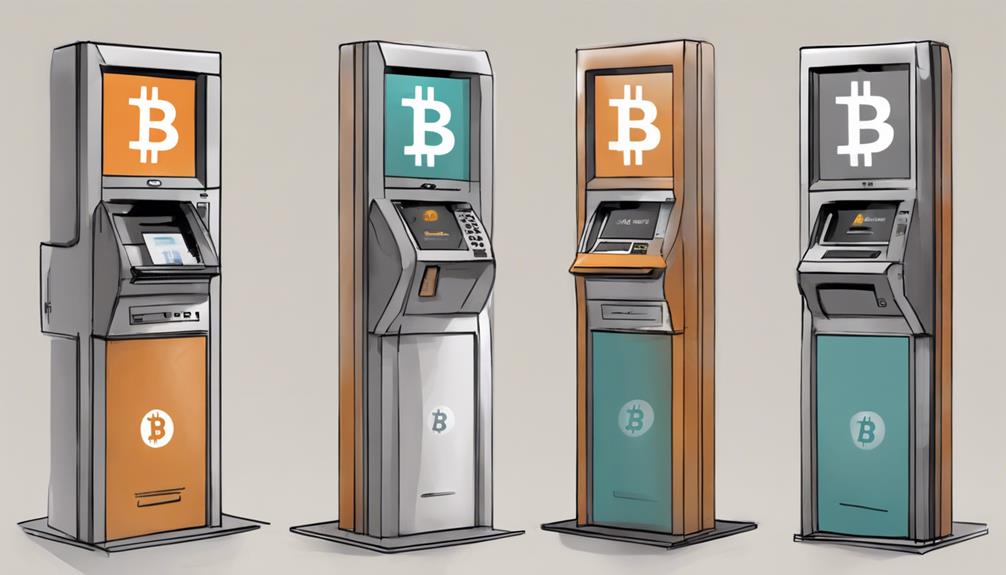
But fees are a known cost you pay once. A wallet mistake can cost you the entire transaction, permanently. A Bitcoin ATM sends coin to a wallet address you supply, usually by scanning a QR code. If you don’t bring one, many machines will let you generate a custodial wallet on the spot, where the operator holds the keys instead of you. That’s the moment to stop and think, because it changes who actually controls your money after you walk away.
What “the operator holds the keys” actually means
A wallet’s seed phrase is the string of words that restores access to whatever funds sit at that wallet’s address. Whoever holds that phrase controls the funds, full stop. When you use your own wallet, you hold the phrase. When you accept an operator-custodied wallet at the machine, the operator holds it, and you’re trusting them to keep it safe, keep the company solvent, and give you access whenever you ask.
That trust isn’t automatic. Bitcoin Depot, one of the larger operators in the US, filed for Chapter 11 bankruptcy in May 2026, and more than 9,000 of its machines were deactivated. Anyone who had left funds sitting in a custodial arrangement tied to that company’s infrastructure was suddenly dealing with a bankruptcy proceeding instead of a wallet they controlled. If you hold your own keys, a company going under doesn’t touch your coins at all — they’re already in a wallet only you can access.
US Bitcoin ATM operators are money services businesses, subject to federal anti-money-laundering rules, and money transmitter licensing is handled state by state. That regulatory structure governs how operators run their businesses. It does not insure your Bitcoin the way a bank account is insured, and it does not undo a bankruptcy filing.
Setting up a wallet before you leave the house
You don’t need to be technical to do this correctly. The process is short:
- Download a reputable wallet app on your phone, days before you plan to visit a machine, not in the parking lot.
- Write down the seed phrase on paper. Not a screenshot, not a note saved in your phone. Anyone who gets hold of that phrase, digitally or physically, controls the funds behind it.
- Store the paper somewhere only you can find it. There is no password reset for a lost seed phrase and no customer service line that can restore it.
- Open the receive screen in the app and confirm it generates a QR code and a text address. This is what you’ll show the machine.
If terms like “seed phrase” or “wallet address” are unfamiliar, USA Crypto Reports keeps the site glossary updated with plain definitions, and it’s worth five minutes before your first visit.
Test the QR code before you’re standing at the machine
Bitcoin ATMs read your wallet’s receive address by scanning a QR code, and small problems with that scan cause real losses. Screen glare, a cracked phone screen, low brightness, or a wallet app that generates a fresh address every single time you open the receive screen can all lead to a failed scan or, worse, a successful scan of the wrong address. Because Bitcoin transactions are irreversible once confirmed, there’s no chargeback if coin goes to a wrong or mistyped address. It’s simply gone.
Before you leave home, open your wallet app, go to the receive screen, and make sure the QR code displays clearly at full brightness with no screen protector glare. If your wallet supports it, note whether the receive address is fixed or rotates, so you know what you’re showing the machine on the day. Practicing this at home costs nothing. Discovering a scanning problem at the machine, with cash already in the slot, can cost you the whole transaction.
Confirm the machine still exists and still does what the listing says
Listings go stale. USA Crypto Reports verified 200 Bitcoin ATM listings and found that 41 no longer existed, roughly one in five. A machine can be removed, relocated, or shut down by the operator without every directory catching up right away. Before you drive anywhere, check our verified Bitcoin ATM directory for the specific machine’s current status, and if you arrive somewhere and the machine is gone or dead, let us know through our page for reporting a machine that has closed or moved so the next person doesn’t waste a trip.
While you’re checking the listing, look at what fee structure and wallet options the operator advertises. Some machines are cash-only for buying and require a wallet address up front. Others may offer a custodial option by default and require you to opt for your own wallet manually. Knowing which type of machine you’re walking up to means you’re not making that decision under pressure with a line forming behind you.
What to actually do this week
Set up a wallet on your phone tonight, write the seed phrase on paper and put it somewhere safe, and open the receive screen to confirm the QR code displays cleanly. Then check the current status of the specific machine you plan to use before you drive there. Those four steps take under twenty minutes combined and they address the two things most likely to go wrong at a Bitcoin ATM: sending money into an account you don’t control, and sending it to the wrong place because a QR code didn’t scan the way you expected.