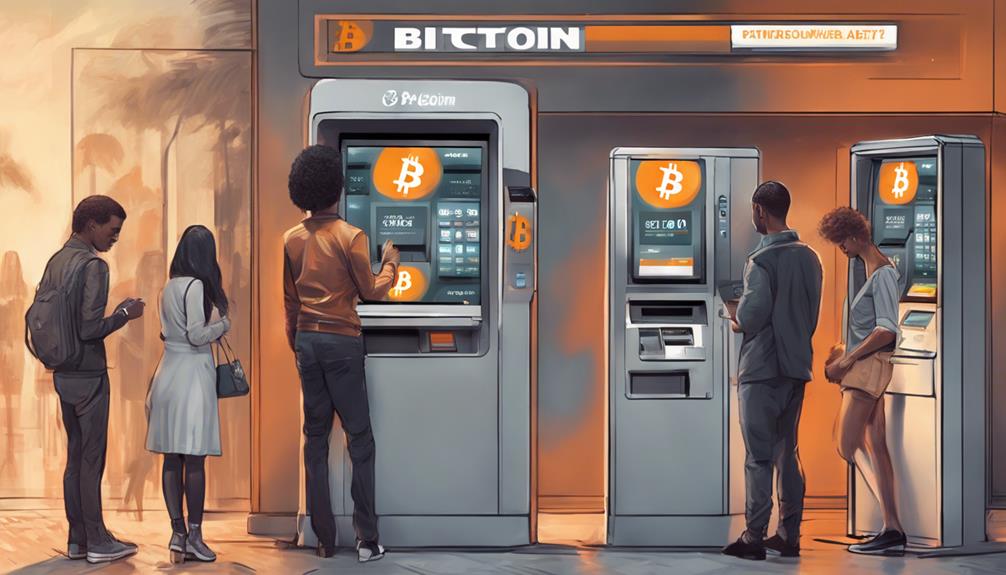
A handful of Bitcoin ATM operators have started letting customers buy stablecoins instead of, or alongside, Bitcoin. The machine looks the same. The screen, the cash slot, the QR code scanner, none of that changes. What changes is the asset that lands in your wallet, and that difference matters more than it sounds like it should.
What a stablecoin actually is
Stablecoins are cryptocurrencies designed to track the value of a reference asset, commonly the US dollar. One stablecoin is built to always be worth close to one dollar, rather than fluctuating the way Bitcoin does. When a machine offers a stablecoin option, it’s letting you convert cash into something meant to hold its value, rather than into an asset whose price can move while you’re still walking to your car. If you’re not sure what separates a stablecoin from Bitcoin or Ethereum, the site glossary breaks down the basic terms before you use a machine.
This matters because buying a stablecoin removes short-term price volatility between purchase and use, which Bitcoin does not. If you’re loading money onto an exchange to pay someone, or moving cash into crypto specifically to send it somewhere else within the hour, a stablecoin means the amount you deposit is close to the amount that arrives. With Bitcoin, the price at the moment you buy and the price at the moment your recipient receives it can differ, sometimes by a little, sometimes by a lot, depending on the day.
What stablecoins don’t fix: the network underneath
Buying a stablecoin at a Bitcoin ATM doesn’t mean you’re avoiding blockchains altogether. Stablecoins commonly issue on networks other than Bitcoin, with different confirmation characteristics and network fees. That means the speed of your transaction and the extra cost of moving it depend on which network the machine uses to issue that stablecoin, not on the fact that it’s labeled a “stablecoin” at all. Some networks confirm transactions faster than Bitcoin’s network typically does. Others charge less to move funds, others more. None of this is fixed by the stablecoin label itself, it depends entirely on the specific network the operator has chosen to support, and that detail isn’t something a customer can assume based on price stability alone.
In practical terms, this means you should ask the operator, or check the receipt, for which network your stablecoin was issued on before assuming it behaves like cash. It won’t move as fast as a debit card swipe, and depending on network conditions, it could take longer than you expect. And once it’s sent, it’s sent. Bitcoin transactions are irreversible once confirmed, so there is no chargeback equivalent, and the same finality generally applies to transfers on the networks stablecoins commonly use. If you type a wallet address wrong, the machine and the network won’t undo it.
What never changes: the fee
Here’s the part that stablecoins don’t touch at all. An operator’s own fee is set by the operator and is not reduced by the choice of asset. Whether you’re buying Bitcoin or a stablecoin, the same machine, run by the same company, charges the same cut it was always going to charge. The Federal Reserve Bank of Kansas City reported in 2023 that the median fee for buying Bitcoin from a US Bitcoin ATM, self-reported by operators via Coin ATM Radar, is 16 percent of transaction value, with a median sell fee of 15 percent. On top of that, the same report found that exchange rate costs add an estimated 5 to 7 percent, and total fees of 20 percent may not be uncommon.
Those numbers are worth sitting with. The Kansas City Fed also noted that the total cost of operating a Bitcoin ATM is estimated at only 3 to 6 percent of revenue, which means the fee charged to customers runs well above what it actually costs an operator to run the machine. And the 16 percent figure is itself likely an undercount: it’s self-reported, and operators charging above-average rates commonly disable reporting, so the published median is biased low. A stablecoin option changes none of this math. You’re still handing over cash to a machine that takes a large cut before your money becomes crypto, stable-priced or not.
Other things that don’t change
Regulatory oversight stays the same regardless of which asset you’re buying. US Bitcoin ATM operators are money services businesses subject to federal anti-money-laundering obligations, and money transmitter licensing is administered state by state. That framework applies whether the machine dispenses Bitcoin, a stablecoin, or both. You’ll still go through identity verification on larger transactions. You’re still transacting with a business that has to answer to regulators in whichever state it operates.
Machine reliability also hasn’t improved just because stablecoin options have expanded. USA Crypto Reports verified 200 Bitcoin ATM listings and found that 41 no longer existed, roughly one in five. Separately, Bitcoin Depot filed for Chapter 11 bankruptcy in May 2026, and more than 9,000 of its machines were deactivated. Neither of those facts has anything to do with which cryptocurrency a machine dispenses. They’re a reminder that a listing you find online may not reflect a working machine, and that even a large operator’s footprint can shrink fast. A stablecoin option on the touchscreen doesn’t tell you anything about whether the company behind it will still be running that machine next month.
What this actually means for you
If you’re using a Bitcoin ATM to convert cash into something you plan to hold or spend quickly, a stablecoin option can genuinely help, because it strips out the price swings that come with Bitcoin over short holding periods. That’s a real benefit. But it’s a narrow one. It doesn’t lower the fee, it doesn’t guarantee a faster or cheaper transaction than Bitcoin would have given you, and it doesn’t change the legal footing of the operator you’re dealing with. The network the stablecoin runs on will determine how fast your funds move and what that movement costs you separately from the ATM’s own cut.
Before you use any machine, verify it’s still active and confirm what asset and network it actually supports rather than trusting the label on the screen. Check our verified Bitcoin ATM directory for a listing that’s been checked rather than assumed to still be operating, and if you find one that’s closed, moved, or misrepresented, use the report a machine that has closed or moved page so the listing gets corrected for the next person who searches it.