
Ann Arbor will soon require every crypto kiosk in the city to hold a city license, check a photo ID and stop a first-time customer at $500 a day. City Council adopted Ordinance ORD-26-30, which adds a new Chapter 83 on virtual currency kiosks to the city code, by a 9-0 vote on Nov. 5. The ordinance text says it takes effect six months after adoption, which puts the start in early May 2027.
According to MLive and The Ann Arbor News, CoinFlip, the Chicago operator whose machine sits inside Buscemi’s on South Maple Road, has told the city its ordinance gives residents a false sense of protection. City officials are sticking with them.
The limits, in plain numbers
Section 7:136 sets three caps:
- $500 per 24 hours for a new user. The ordinance treats you as new if you have never used that operator’s kiosks before, and the label lasts 30 days from your first transaction.
- $1,000 per 24 hours for everyone else.
- $10,000 in any 30-day period, for all users.
Operators also can’t steer a kiosk customer to their own online or over-the-counter products to get past those numbers. For comparison, Iowa’s statewide law sets a $1,000 daily limit, according to the Iowa Attorney General’s kiosk FAQ. Ann Arbor’s new-user cap is half that. Our Bitcoin ATM transaction limits explainer covers how operator and state caps interact.
What operators will have to add
Most of Chapter 83 is about how a kiosk runs. Before any transaction, the machine has to ask for government-issued photo ID. Operators need a live, toll-free phone line staffed during kiosk hours, with the number shown on the machine or its screen. They need a written anti-fraud policy and must use blockchain analytics to flag wallets tied to fraud.
Customers will see on-screen warnings they have to acknowledge, including a prompt asking whether anyone on the phone is pressuring them to pay. Host stores must post a warning sign near the kiosk with reporting contacts. Every transaction ends with a paper receipt and a text receipt showing the fee, exchange rate and the operator’s refund policy. Operators keep a daily transaction log for 90 days and give police a dedicated contact line.
One rule may be harder to meet than the rest. The ordinance says the premises must be supervised by the operator, its agent or its employee whenever the business is open, and it defines supervision as a person physically present.
Licenses come from the City Clerk and renew each year by April 1. Police may inspect a kiosk before a license is issued. Existing machines have until April 30, 2028 to get licensed or must stop operating until they do, and new machines can’t go in without a license first. A violation is a municipal civil infraction with a $500 fine, and each day it continues counts again.
CoinFlip’s objections
Jon Turke, CoinFlip’s government affairs director, laid out the company’s case in a Nov. 5 letter to council, MLive reported. Federal rules already require the company to file a suspicious activity report on suspicious transactions above $2,000, follow the travel rule above $3,000 and report transactions above $10,000. We explain those crypto ATM reporting requirements separately.
Turke argued that city-level caps push people to split purchases across several operators and leave police with less information, not more. He said CoinFlip customers already see scam warnings and answer six screening questions before each purchase. According to Turke, the company has held a Michigan money transmitter license since April 2025 and would prefer one set of rules statewide.
The stacking point has some basis in the text. Because “new user” is defined per operator, a person who has never used two different brands could, on paper, hit two separate $500 caps in one day.
The council’s reply
Council Member Jen Eyer, D-4th Ward, said federal reports help investigators after a crime, but they don’t keep the money from leaving in the first place. She also said scammers coach victims through the screening questions.
Cassie Thierfelder of AARP Michigan backed the ordinance. She pointed to Iowa’s attorney general, whose review tied more than 98% of the money Iowans reported putting into Bitcoin Depot machines to scams, along with 95% of what they reported sending via CoinFlip. She also cited the D.C. attorney general’s finding that 93% of deposits at Athena Bitcoin machines were scam-related. The ordinance’s own preamble cites FBI figures of 13,460 kiosk complaints and $389 million in reported losses for 2025.
Where Ann Arbor fits in Michigan
Ann Arbor picked rules over a ban. Jackson went the other way: its ban took effect in late October, and operators there must pull their machines by the end of January, according to Stateline. At the state level, Sen. Jeff Irwin, who represents Ann Arbor, sponsors Senate Bill 980, which would ban kiosks statewide. We covered that bill in our report on Michigan’s kiosk ban bill; it was still waiting for a Senate floor vote when we checked on Nov. 26.
If you use a kiosk in Ann Arbor
Nothing changes at the machine until the ordinance takes effect in May. No police department, court, bank or utility will ask you to pay at a crypto kiosk, and anyone coaching you through a deposit over the phone is the warning sign. Keep every receipt. If money has already gone out, our guide to recourse after a Bitcoin ATM loss lists who to contact first. You can also check current machines in our Michigan Bitcoin ATM listings.
Work on kiosk compliance, fraud screening or local crypto rules? We publish expert contributions. See our Bitcoin ATM write-for-us guidelines.
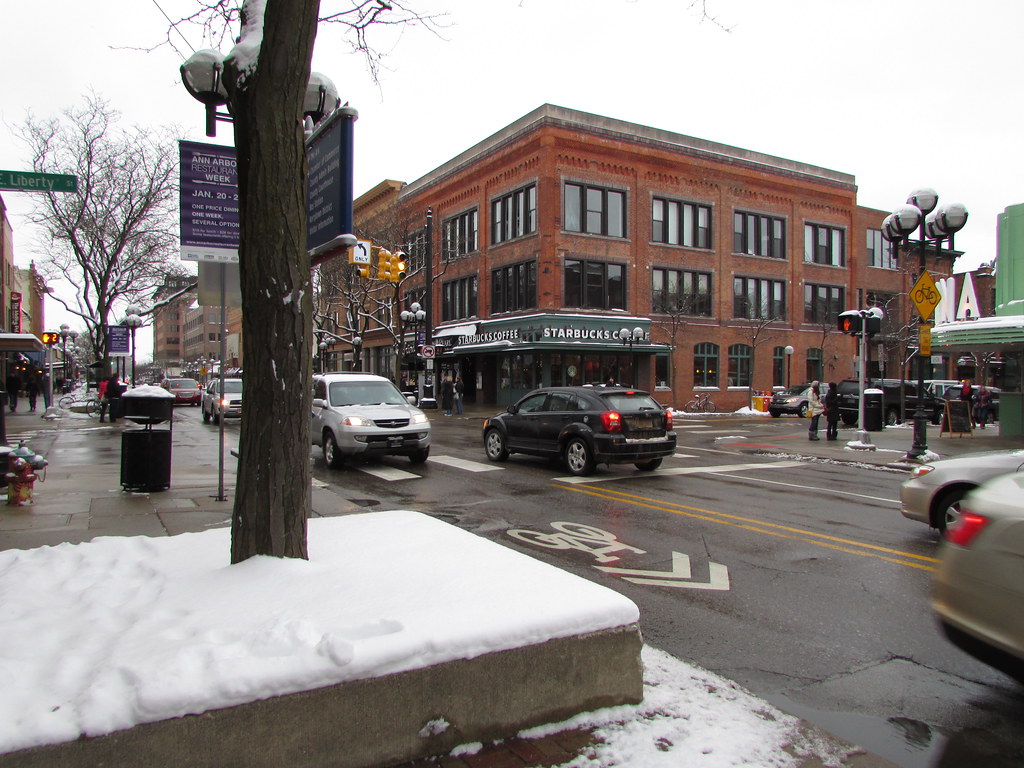
Featured photo: VasenkaPhotography / Flickr, CC BY 2.0.