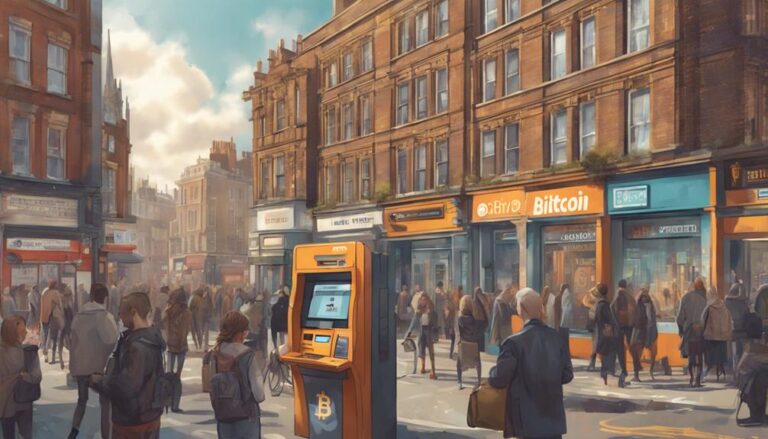
You typed an address into a locator app, drove fifteen minutes, and now you’re standing in a gas station parking lot looking at a machine that isn’t there. Or it’s there, but the screen is dark. This happens more than most people expect. When USA Crypto Reports checked 200 Bitcoin ATM listings against reality, 41 of them no longer existed — roughly one in five. That’s not a rounding error. That’s a listing you can’t trust without a second look.
The good news is you can usually tell whether a listing is dead before you leave the house. It takes about two minutes and a phone call. Here’s what actually works.
Call the host business, not the ATM company
Bitcoin ATMs don’t stand alone. They sit inside host businesses — convenience stores, laundromats, gas stations, smoke shops — under a contract between the store owner and the machine operator. When that contract ends, or when the store itself closes, the machine can disappear with almost no trace left behind for a locator app to pick up. The listing keeps existing online because nobody told the map to update.
So skip calling the ATM operator’s general customer service line, which often can’t tell you anything about a specific street address. Call the store directly. Ask two questions: is the business still open, and is the Bitcoin machine still inside and working. A clerk can answer both in ten seconds. If the phone number is disconnected, that’s your answer too — the location is likely gone.
Check whether the operator’s own locator still lists it
Most Bitcoin ATM operators run their own store locator on their company website, separate from third-party map aggregators. If a machine was pulled or deactivated, the operator’s own page is usually the first place that gets updated, because it affects their support costs directly. A third-party aggregator that scrapes old data can lag behind for weeks or months.
Cross-check the address against both the aggregator listing and the operator’s own site. If the operator’s locator no longer shows that address, don’t go. If neither is current, try our verified Bitcoin ATM directory, which is checked against real-world status rather than left to update on its own.
Look at the last-verified date, and be suspicious if there isn’t one
Any listing worth trusting should tell you when it was last confirmed. If a site shows no verification date at all, treat it as decoration, not information. A listing that says it was checked eight months ago is more honest than one that implies it’s current with no timestamp anywhere.
This matters because a machine can be physically present but deactivated — powered off, out of service, or simply no longer connected to a network — and none of that shows up on a map pin. The pin just says “Bitcoin ATM here.” It doesn’t say whether the machine will take your cash today. A recent verification date is the closest thing to a guarantee you’ll get from a listing alone, which is still not a guarantee — just better odds.
Watch for signs the whole operator is in trouble
Sometimes the problem isn’t one machine. It’s the company behind thousands of them. Bitcoin Depot filed for Chapter 11 bankruptcy in May 2026, and more than 9,000 of its machines were deactivated as a result. If you’re checking a machine and it’s marked as being run by an operator you’ve heard is struggling, financially or legally, that’s a reason to verify twice, not once. A bankruptcy filing doesn’t always mean a machine near you went dark, but it means the odds shifted, and it means a phone call is not optional.
You can also do a quick search on the operator’s name plus words like “bankruptcy,” “shutdown,” or “closing.” Five minutes of searching before you drive is cheaper than a wasted trip, and cheaper than what happens if the machine is on but the company behind it is in freefall.
Know what you’re risking if the machine works but the deal doesn’t
Even if the machine is live and the store is open, it’s worth knowing what you’re walking into. Bitcoin ATM transactions carry real cost. The Federal Reserve Bank of Kansas City reported in 2023 that the median fee for buying Bitcoin at a US ATM, self-reported by operators through Coin ATM Radar, is 16 percent of the transaction — and the median sell fee is 15 percent. Add estimated exchange rate costs of 5 to 7 percent on top of that, and total fees of 20 percent are not uncommon. Compare that to the fact that operating a Bitcoin ATM only costs the operator an estimated 3 to 6 percent of revenue, and you can see where the rest goes.
It gets worse than the headline number suggests. That 16 percent median is self-reported, and operators charging above-average rates commonly turn off reporting altogether, which means the published median is biased low — the real average paid across the industry is likely higher than what shows up in the data.
And once you feed cash into the machine and the transaction confirms, there’s no undoing it. Bitcoin transactions are irreversible once confirmed, so there’s no chargeback if something goes wrong, no bank to call, no dispute process. US Bitcoin ATM operators are money services businesses subject to federal anti-money-laundering rules, and money transmitter licensing is handled state by state — which matters for who’s allowed to operate legally, but doesn’t protect you from a bad fee or a mistyped wallet address. If you’re new to the terms involved before you use one of these machines, the site glossary explains them in plain language.
What to do standing in the parking lot right now
If you’re already there and the machine looks dead, don’t assume it’s just powered off for the night. Try the host business one more time in person — ask whoever’s behind the counter if they know when it last worked. If they shrug or say it’s been off for a while, believe them over the app on your phone.
Before you leave, report what you found. Use the page for reporting a machine that has closed or moved so the next person doesn’t drive fifteen minutes for nothing. A stale listing only stays stale until someone flags it.