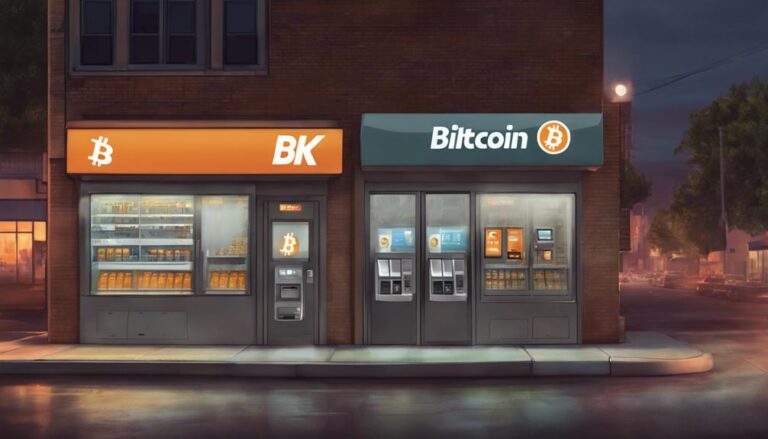
The median fee for buying Bitcoin at a US cash machine is 16 percent of the transaction, according to the Federal Reserve Bank of Kansas City’s report on the industry published in 2023. Selling runs slightly cheaper at a median of 15 percent. Read those numbers again. Put $100 into a Bitcoin ATM and the machine’s own operators, self-reporting through Coin ATM Radar, say you should expect to lose around $16 of it to fees alone before the transaction even settles.
That’s the headline. It’s also not the full bill.
The fee you see isn’t the fee you pay
The Kansas City Fed’s figures come from operators who voluntarily report their rates to Coin ATM Radar, the industry’s public rate-tracking service. That word “voluntarily” matters more than it sounds like it should. The same report notes that operators charging above-average rates commonly disable that reporting. If you charge less than the median, you have every incentive to publish your rate and attract customers. If you charge more, you have every incentive to go dark. The result is a published median that is mathematically pulled toward the low end of what people actually pay, because the highest-fee operators have opted out of the sample.
So when you read that the median buy fee is 16 percent, treat that as a floor for what a lot of machines charge, not a ceiling. Some machines charge less. A meaningful number charge more, and you won’t find out until you’re standing in front of one with cash in hand.
The fee line isn’t the only cost
Even the 16 percent figure only covers the transaction fee the operator discloses as its fee. It doesn’t cover the exchange rate itself. The Kansas City Fed’s report estimates that exchange rate costs, meaning the gap between the price the machine gives you and the actual market price of Bitcoin at that moment, run another 5 to 7 percent of the transaction value on top of the stated fee.
Stack those together and the report concludes that total fees of 20 percent may not be uncommon. That’s not a worst-case scenario. That’s a plausible ordinary outcome once you add the disclosed fee to the hidden spread baked into the exchange rate. On a $300 transaction, 20 percent is $60 gone before you’ve held the Bitcoin for five minutes.
For comparison, the Kansas City Fed estimates that the total cost of actually operating a Bitcoin ATM, meaning the machine, the cash handling, the compliance, the rent for the space, the software, all of it, runs only 3 to 6 percent of revenue. The distance between what it costs to run the machine and what the machine charges you is the business model. If you’re new to some of the terminology here, the site glossary is a decent place to look up terms like “spread” or “on-ramp” before you use a machine for the first time.
Why the fees are structured this way
Bitcoin ATMs exist to solve a specific problem: turning physical cash into cryptocurrency, or the reverse, without a bank account or a linked card. That convenience is real. Someone without a bank relationship, or someone who wants a transaction that doesn’t route through a traditional exchange’s verification queue, has genuinely limited alternatives. The machine, the cash logistics, and the compliance overhead all cost money to run, but the Kansas City Fed’s 3 to 6 percent operating cost estimate shows that overhead isn’t what’s driving the price. The margin above that cost is the product being sold: speed and cash access, priced accordingly.
That’s a legitimate business to be in. It’s also not a place to be casual about cost. A 16 to 20 percent hit on a transaction is a worse rate than nearly any other way to acquire or liquidate Bitcoin available to an ordinary US consumer, and because the reporting that produces the 16 percent median is self-selected, plenty of machines out there are charging more than that and simply not telling anyone.
What you can actually do about it
You can’t negotiate a Bitcoin ATM’s fee, and you often can’t tell what it is until you’re mid-transaction, since machines aren’t required to advertise the rate up front the way a gas pump displays a price per gallon. A few habits reduce the damage:
- Check the machine’s screen for the fee and exchange rate before you insert cash, not after. Every legitimate machine discloses the rate during the transaction flow, even if it never published that rate publicly beforehand.
- Compare more than one machine if you have options nearby. Fees vary by operator and by location, and a few minutes of comparison can be the difference between a 12 percent hit and a 20 percent one.
- Treat a Bitcoin ATM as a convenience tool for smaller, time-sensitive transactions, not as your primary way to buy or sell. The percentage cost doesn’t shrink as the dollar amount grows, so larger transactions lose larger dollar amounts to the same fee structure.
- Use a verified source to find machines and their listed details rather than searching blind. Our verified Bitcoin ATM directory lists operator information for machines so you’re not walking in with zero context.
None of this makes the fee structure fair. It’s not designed for the buyer’s benefit. But going in aware that the “official” median is likely understated, and that a real transaction can easily land near 20 percent all-in, means you won’t be surprised by the number on the screen.
Before you use one
If a Bitcoin ATM in your area has closed, moved, or is charging something wildly different from what’s listed, that data point matters to the next person searching for it. You can report a machine that has closed or moved so the directory stays current. Before your next cash transaction, look up the machine, check what fee it discloses on screen, and do the arithmetic on the total dollar loss before you commit the cash. If the number on the screen doesn’t match what you’re willing to pay, walk away. The machine will still be there tomorrow, and so will your cash.