What Are the Risks of Decentralized Finance Platforms?

You've likely heard that Decentralized Finance, or DeFi, is revolutionizing the way you interact with money, bypassing traditional financial middlemen. However, it's crucial to recognize the risks you face when participating in these platforms. From smart contract vulnerabilities that may result in significant losses to the murky waters of regulatory frameworks that are still in flux, the stability and safety of your investments might be at stake. Moreover, issues like liquidity risks and the potential for market manipulation add layers of uncertainty. Now, consider the complexities of scalability and interoperability—how well-prepared are you to navigate these challenges?
Smart Contract Vulnerabilities
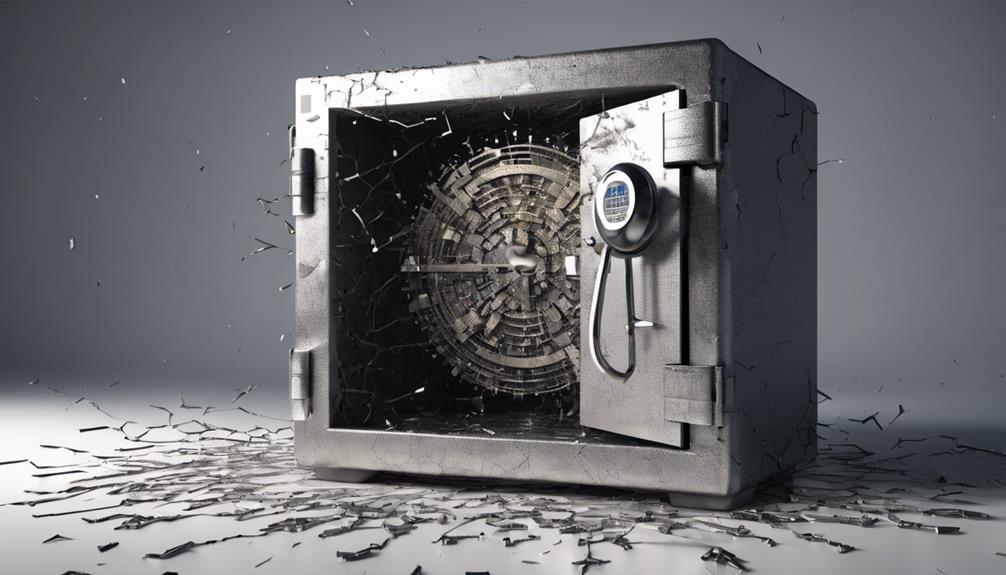
In the realm of decentralized finance, your assets are only as secure as the smart contracts they depend on. These contracts, written in code, execute financial transactions and agreements automatically, without human intervention. However, they're not infallible. If there's a bug in the code, your digital assets could be at risk.
You should be aware that smart contract vulnerabilities have led to significant financial losses. Take, for instance, the infamous DAO attack where a loophole was exploited, and millions of dollars in Ether were stolen. This wasn't just a fluke; similar incidents have occurred, underscoring the risks associated with coding errors.
It's crucial to understand that these aren't rare, isolated incidents. As you dive deeper into DeFi, you'll find that these contracts are complex. Their security relies heavily on the quality of code and the thoroughness of audits. However, even the most rigorous audit can't guarantee absolute security. New vulnerabilities can still be discovered after deployment.
To safeguard your investments, you need to stay informed about the platforms you use. Check their audit status, understand the specific risks involved, and perhaps most importantly, don't put all your eggs in one basket. Diversify your assets to mitigate potential losses.
Regulatory Uncertainty
While smart contract vulnerabilities pose significant risks, another layer of complexity comes from the regulatory environment surrounding decentralized finance. You're navigating a landscape where the rules aren't just unclear—they're constantly evolving. This uncertainty can affect everything from your investment choices to the stability of the platforms you use.
As you engage with DeFi platforms, you're probably finding that there's no uniform global framework regulating these services. Depending on where you and the platform are based, the regulations could vary drastically. This patchwork of laws makes it hard for you to know your rights and the legality of your transactions.
You might be in a jurisdiction that sees DeFi as the future of finance, fostering its growth, or in one that strictly regulates or even bans some aspects of it.
Moreover, the anonymous nature of blockchain could put you at odds with laws designed to prevent money laundering and terrorism financing. You've got to stay informed and possibly seek legal advice to navigate these murky waters. Without clear regulations, both your investments and personal security could be at risk, leaving you vulnerable to sudden changes in law enforcement and policy shifts.
Liquidity Risks

Liquidity risks in decentralized finance (DeFi) platforms can leave you exposed when you least expect it. At its core, liquidity refers to how easily you can convert assets into cash or other tokens without impacting the asset's price significantly. In DeFi, liquidity is crucial because it supports trading and lending activities.
You might find yourself unable to sell or trade your tokens if there's inadequate liquidity. This scenario often occurs during market downturns when everyone wants to sell, but there are few buyers. The volatility of cryptocurrencies exacerbates this risk, sometimes erasing significant value before you can react.
Moreover, many DeFi platforms rely on liquidity pools. These are collections of funds locked in a smart contract to facilitate trading. The risk here is that if too many participants withdraw their funds simultaneously, the pool's liquidity dries up, potentially leading to a temporary or permanent loss of your assets.
You should also be aware of pool imbalances. If a pool's assets aren't balanced, it could skew the value of tokens and affect your investment. Always check the health of liquidity pools and understand the terms before committing your assets. Being proactive in monitoring these factors can shield you from unexpected losses and stress.
Lack of Insurance
Another significant risk you face with decentralized finance platforms is the lack of insurance. Traditional financial institutions, like banks and brokers, generally have robust consumer protection schemes, including deposit insurance that can cover your losses in cases of failure. DeFi platforms, however, don't offer such safety nets. If a DeFi platform fails due to technical issues, hacking, or fraud, you might lose all your invested capital with no recourse for recovery.
Without the backing of any centralized authority, the responsibility for your asset security lies entirely with you. You're also at the mercy of the platform's security measures and the integrity of its smart contracts. Despite their automation, smart contracts are still prone to errors and vulnerabilities that can be exploited by attackers.
Moreover, the absence of insurance mechanisms in DeFi means there's no protection against unexpected financial shocks or operational failures. Unlike traditional settings where a central body can intervene to stabilize the system, DeFi platforms operate in a more isolated and self-reliant environment. This lack of a safety cushion makes investing in DeFi significantly riskier, especially for the uninitiated or those without technical savvy.
Market Manipulation Risks
Beyond the lack of insurance, you also need to be wary of market manipulation risks associated with decentralized finance platforms. DeFi markets are particularly vulnerable because they lack the oversight and regulation typical in traditional finance.
You're dealing with a system where large holders, often called "whales," can significantly alter market prices with substantial trades. This can lead to artificial inflation or deflation of asset prices that doesn't reflect their true economic value.
Moreover, the anonymity and borderless nature of blockchain can make it easier for manipulators to operate under the radar. You might encounter "pump and dump" schemes, where insiders hype up an asset to pump the price and then sell off their holdings at the peak, crashing the price and leaving other investors at a loss.
Furthermore, since smart contracts execute automatically based on predefined rules, they can be exploited by those with the technical know-how. These actors can create conditions favorable to them before others have a chance to react, profiting at the expense of less savvy participants.
Always remember, the decentralized aspect of DeFi, while innovative, opens doors to manipulation tactics that can be hard to detect and even harder to prosecute. Stay vigilant and informed.
Operational Security Issues
While market manipulation risks in DeFi are significant, operational security issues also pose serious threats to your investments. These challenges stem from the very nature of decentralized platforms, where the lack of centralized control can lead to unique vulnerabilities.
Firstly, you're dealing with smart contracts. These are automated, self-executing contracts with the terms directly written into code. However, if there's a flaw in this code, your assets could be at risk. Hackers often exploit such vulnerabilities, leading to substantial financial losses.
It's vital you understand that code audits, though helpful, aren't foolproof. They might miss nuanced bugs that later turn out to be disastrous.
Moreover, the interfaces you use to interact with DeFi platforms can be compromised. Phishing attacks, where you're tricked into giving away personal keys, are alarmingly common. Always verify that you're using authentic platforms and not imitations designed to steal your credentials.
Lastly, the decentralized nature of these platforms means there's usually no central point to help if things go wrong. If you send funds to the wrong address or fall prey to a scam, there's often no way to retrieve your assets. Always proceed with caution and prioritize platforms that offer some form of user protection.
Scalability Challenges

Scalability emerges as a critical hurdle for decentralized finance platforms as they strive to accommodate growing user bases. You've likely encountered slow transaction times or high fees during peak usage times. This isn't just an inconvenience; it's a fundamental flaw in many blockchain infrastructures that these platforms rely on.
As you dive deeper, you'll find that blockchains, such as Ethereum, often struggle to process transactions rapidly because each transaction must be verified by multiple nodes in the network. This isn't just a bottleneck; it directly impacts how scalable a platform can be.
You might wonder if there's a way around this. While solutions like layer-two scaling or sharding are in development, they're not yet widely implemented and come with their own sets of challenges.
Furthermore, the very nature of decentralized systems means that scaling solutions aren't as straightforward as simply upgrading server resources, as one might do in traditional centralized systems. You're dealing with a global network of nodes, each needing to update and maintain compatibility. This decentralized consensus is crucial for security, but it complicates scaling efforts considerably.
In essence, while DeFi offers innovative financial solutions, you must be mindful of these scalability challenges which can limit potential growth and innovation.
Interoperability Concerns
Interoperability concerns in decentralized finance platforms add another layer of complexity to the issues already faced by scalability. You're navigating a landscape where different blockchains don't naturally communicate with each other. This lack of seamless interaction can hinder your ability to leverage advantages across various networks.
Imagine you've got assets on one blockchain and want to use a service on another. Without interoperability, you're stuck. You might need to use intermediaries or wrap tokens, which introduces delays and extra fees.
It's akin to needing a different currency every time you cross a state line and having to exchange money at each border.
Moreover, each blockchain has its own security protocol and consensus mechanism. When platforms attempt to interoperate, they expose themselves to the weakest link in the security chain. You're not just dealing with one platform's vulnerabilities; you're potentially exposing yourself to multiple risks across different ecosystems.
Developers are working on solutions like blockchain bridges and cross-chain protocols, but these technologies are still in their infancy and have their own vulnerabilities. As you dive into decentralized finance, it's crucial to stay informed about these developments. Understanding the risks helps you navigate them more effectively.
Conclusion
As you explore DeFi platforms, remember you're facing several risks. Smart contracts can be buggy, exposing you to asset losses. Navigating the choppy waters of evolving regulations and liquidity fluctuations is challenging. Without traditional insurance, your investments lack a safety net. Market manipulation and operational security issues can further jeopardize your assets. Moreover, scalability and interoperability issues might slow down or complicate your transactions. Stay informed and cautious to safeguard your investments in this volatile landscape.