What Secures Digital Currencies Using Cryptographic Techniques?

You've likely heard of Bitcoin and Ethereum, but have you ever wondered how these digital currencies stay secure? It's all down to cryptographic techniques like hash functions and digital signatures which ensure that transactions are not only secure but also verifiable. These methods are fascinating not just for their complexity but for how essential they are in preventing fraud and maintaining user trust. Let's unpack how these techniques work and why they're considered effective in the realm of digital finance. Understanding this can give you a deeper insight into the future possibilities of technology and finance. What will you discover next?
Understanding Cryptographic Hash Functions
Cryptographic hash functions are the backbone of digital security in cryptocurrency transactions. When you make a transaction, such as sending Bitcoin to a friend, a hash function scrambles the transaction data into a fixed-size hash. It's like a digital fingerprint that's unique to your transaction. No two transactions can produce the same hash; if even a single character in the transaction data is altered, the hash changes entirely.
This property is what makes hash functions vital for maintaining blockchain integrity. Each block in the blockchain contains a unique set of transactions along with the hash of the previous block. This linking via hashes secures the blockchain against tampering. If an attacker tries to alter a transaction, the hash of the block will change, and so must the hashes of all subsequent blocks, making fraud easily detectable.
Moreover, hash functions are designed to be fast to compute but difficult to reverse-engineer. You can't feasibly discover the original input from its hash output, safeguarding user data against hacking attempts. This one-way nature ensures that while everyone can verify the authenticity of the transaction data, no one can manipulate it without detection.
Role of Public Key Cryptography
Public key cryptography, also known as asymmetric cryptography, fundamentally transforms how you secure your digital assets and transactions. This method relies on two keys: a public key, which everyone can see, and a private key, which you keep to yourself. When you engage in a transaction, you use these keys to encrypt and decrypt information, ensuring that only the intended recipient can access it.
This technology enables you to exchange data securely over an insecure network, like the internet, without needing to share a secret key beforehand. It's like having a secure mailbox where anyone can drop a message, but only you have the key to open it. This aspect of public key cryptography is crucial, especially in the realm of digital currencies, where trust and security are paramount.
Moreover, public key cryptography allows for the creation of a digital identity tied to your private key. This identity verifies that the transactions are indeed from you without revealing any sensitive information.
As you delve deeper into the world of digital currencies, you'll see how essential this method is in maintaining the integrity and security of your digital transactions, steering clear of potential fraud and theft.
Significance of Digital Signatures
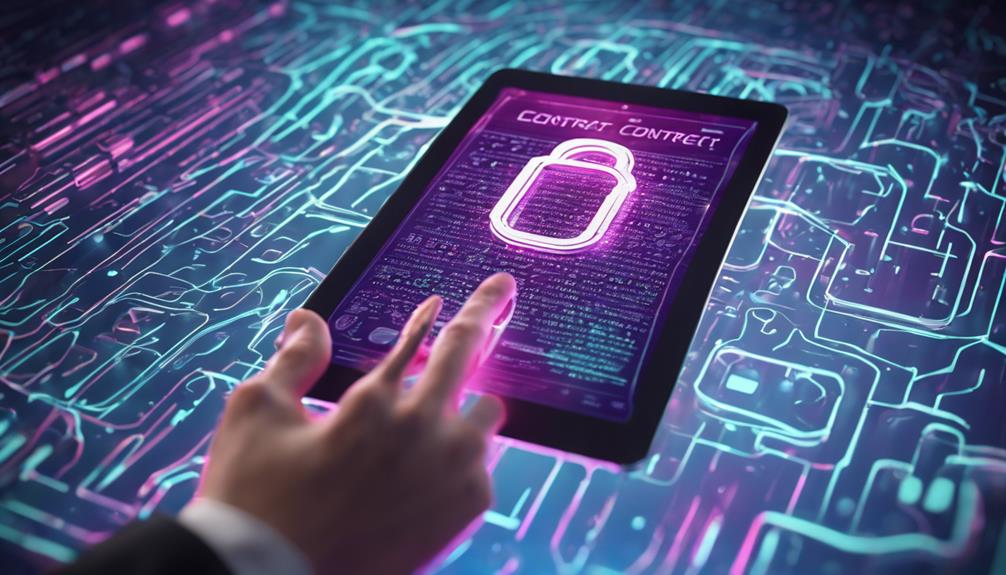
Building on the foundation of public key cryptography, digital signatures offer another layer of security for your transactions. They ensure that the messages or transactions you send are tamper-evident; if someone alters them, you'll know.
Digital signatures work by allowing you to use your private key to sign a transaction uniquely identifying it as yours. No one else has your private key, so no one else can forge your signature.
Here's how it impacts you: when you make a transaction with digital currency, your digital signature is used to confirm that you're indeed the sender of the funds. This verification process not only secures your transaction against interference but also plays a crucial role in maintaining the integrity and trustworthiness of the entire digital currency network.
Moreover, imagine you're entering into a contract digitally. Digital signatures can legally bind and validate your agreement, just as a handwritten signature would. This feature is invaluable in the digital age, where transactions and contracts are increasingly executed online without face-to-face interactions.
In essence, digital signatures keep your transactions safe, straightforward, and indisputably yours. They're a powerful tool in your digital security arsenal, making sure your online dealings are as secure as possible.
Mining and Proof of Work
Why is your digital currency transaction taking a while to confirm? It's likely due to the process known as mining, which is integral to proof of work (PoW) systems like Bitcoin. Mining involves solving complex mathematical puzzles that validate transactions and secure the network.
Here's how it works: Miners compete to solve these puzzles, and the first to succeed gets to add a "block" of transactions to the blockchain. This block then needs to be verified by other network participants.
This process isn't just about creating new coins—it's also critical for preventing fraud. By solving the puzzle, a miner proves they've put in significant computational effort. This effort helps to secure the network by making it prohibitively expensive and difficult for any single party to alter any aspect of the blockchain.
The time it takes to confirm your transaction can vary. It depends on the network's current load and the transaction fees set. Higher fees can encourage quicker confirmation as miners prioritize transactions that yield higher rewards.
Despite its resource intensity, mining is what keeps digital currencies like Bitcoin decentralized and secure, free from control by any governing authority.
Node Consensus Mechanisms

After understanding the role of mining and proof of work, it's crucial to explore node consensus mechanisms, which are foundational to the functionality and security of blockchain networks. As you delve deeper into how digital currencies are secured, you'll find that consensus mechanisms do more than just verify transactions. They ensure all participants in the network agree on the current state of the ledger, which is critical in preventing fraud and double spending.
One popular consensus mechanism you might've heard of is Proof of Stake (PoS). Unlike Proof of Work, PoS doesn't require vast amounts of energy. Instead, you stake your own cryptocurrency to become a validator in the network. The more you stake, the higher your chances of being chosen to validate transactions and create new blocks. This not only lowers the barrier for participation compared to mining but also aligns the interests of the validators with the network's health.
Another mechanism is Delegated Proof of Stake (DPoS), where you vote for delegates who'll secure the network on your behalf. This can make the blockchain more scalable and efficient, as fewer nodes are involved in the consensus process directly. Understanding these mechanisms is key to appreciating how secure and operational blockchains maintain their integrity and trust.
Secure Peer-to-Peer Networks
Transitioning from the complexities of node consensus mechanisms, the focus now shifts to secure peer-to-peer networks, a pivotal aspect of blockchain technology. You're stepping into the world where transactions aren't just transactions; they're part of a vast, decentralized ledger. Here's how it works for you.
Imagine you're sending digital currency to a friend. Instead of going through a bank, your transaction occurs directly between you and your friend, without any intermediaries. This is the essence of a peer-to-peer network. Each participant (or node) in the network holds a copy of the entire transaction history, ensuring transparency and security.
But how do you know it's secure? Well, each transaction is verified by multiple nodes. They use cryptographic algorithms to confirm the transaction's validity before it's added to the blockchain. This redundancy prevents fraud and ensures that no single point of failure can compromise the network.
Moreover, since there's no central authority, you're not reliant on any institution's security measures. Instead, the security of your transactions relies on the collective security protocols upheld by all nodes across the network. This dispersal of responsibility not only enhances security but also democratizes the control and oversight of the network.
Smart Contracts and Security
Within the realm of blockchain technology, smart contracts revolutionize how agreements are executed, directly impacting security. You're no longer dependent on middlemen to ensure that a contract is honored. Instead, these self-executing contracts with the terms directly written into code on the blockchain, enforce themselves automatically when conditions are met.
Imagine you're leasing a car. The smart contract could automatically transfer ownership records to you once you've made the final payment, simultaneously ensuring the dealer can't backtrack or alter the agreement. This transparency and immutability not only streamline processes but drastically reduce the potential for fraud or disputes.
However, the security of smart contracts isn't foolproof. They're only as secure as the code they're written in. If there's a bug or vulnerability in the code, your contract can be exploited. That's why it's crucial you understand that auditing and updating these contracts regularly is essential to maintaining security.
Moreover, consider the implications of automated tasks. They can be a double-edged sword. While they offer convenience and efficiency, faulty logic or unintended consequences can trigger actions that mightn't be easily reversible. Always ensure you have robust fail-safes and oversight mechanisms in place.
Conclusion
As you've seen, cryptographic techniques are vital in securing digital currencies. From the robustness of hash functions to the verification power of digital signatures and the consensus-driven security of nodes, these tools ensure your transactions are safe and verifiable. Mining and proof of work further solidify network integrity, while smart contracts automate and secure agreements on the blockchain. So, you can trust that these sophisticated cryptographic measures keep your digital assets secure against fraud and manipulation.