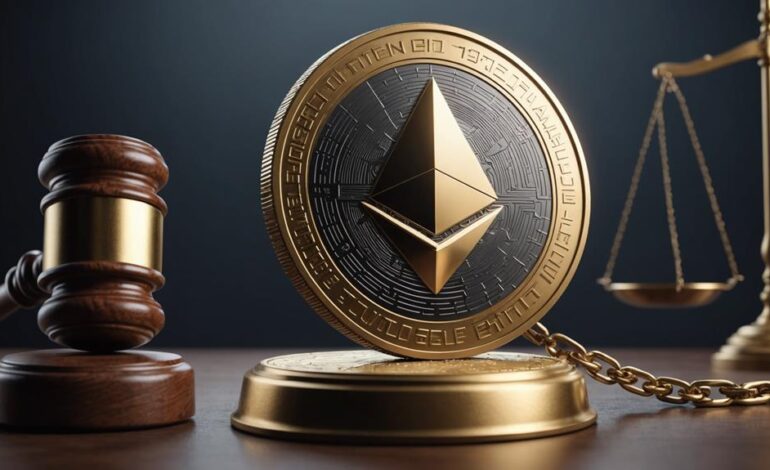
How SEC Regulations Affect Ethereum’s Future

As you navigate the complexities of investing in Ethereum, it's essential to consider how SEC regulations could shape its future. These regulations determine not only the legal framework within which Ethereum operates but also influence investor behavior and market stability. By understanding these rules, you're better equipped to anticipate shifts in Ethereum's market dynamics and investment potential. However, the question remains: what specific upcoming regulations should you keep an eye on, and how might these alter your investment strategy? This is particularly pressing as the crypto landscape continues to evolve rapidly, leaving even seasoned investors questioning their next move.
Overview of SEC's Role in Crypto

The Securities and Exchange Commission (SEC) plays a pivotal role in regulating the cryptocurrency market. You've probably heard about their influence in the news, shaping how digital assets are managed and traded. They're the watchdogs ensuring that the crypto market remains transparent and fair, protecting investors like you from fraud and manipulation.
You might wonder how they do it. Well, the SEC classifies cryptocurrencies as securities or commodities based on specific criteria, which affects how they're regulated. This classification determines if and how a cryptocurrency adheres to federal securities laws. It's a complex process, but it essentially boils down to the nature of the asset and its intended use.
By enforcing regulations, the SEC aims to prevent market abuse and promote investor confidence, which is crucial for the stability and growth of the market.
They also provide guidelines and enforce actions against entities that don't comply, ensuring that the market operates under a set of rules that protect investors and maintain market integrity.
Understanding the SEC's role helps you navigate the crypto space more effectively, making informed decisions about your investments.
Recent SEC Regulations on Ethereum
Why should you pay attention to the SEC's recent regulations on Ethereum? Well, these changes could directly impact your investments and the broader market dynamics. The Securities and Exchange Commission has been closely monitoring cryptocurrencies like Ethereum to ensure they fit within a regulatory framework that protects investors. You might've noticed some shifts in the market following announcements or enforcement actions from the SEC.
One significant measure has been the clarification on whether Ethereum should be classified as a security. This decision influences everything from tax implications to trading permissions. Moreover, the SEC has increased its scrutiny on Initial Coin Offerings (ICOs), many of which are launched on the Ethereum platform.
If you're holding or planning to buy Ethereum-based tokens, this heightened regulation could affect their liquidity and value.
The SEC's focus isn't just on protecting investors but also on maintaining fair and orderly markets. By understanding these regulations, you can better navigate potential risks and opportunities in the Ethereum space. Remember, staying informed and proactive about these changes is crucial in adapting to an evolving digital currency landscape.
Compliance Challenges for Ethereum

Navigating compliance with SEC regulations presents significant challenges for Ethereum and its users. As you delve into the world of Ethereum, you'll find that the decentralized nature of blockchain technology doesn't neatly fit into traditional regulatory frameworks. This mismatch means you often face a murky legal landscape, where the rules aren't just complex, they're also continuously evolving.
You've got to keep your ear to the ground. Changes can come swiftly and can be quite sweeping.
For instance, if you're developing or investing in Ethereum-based projects, understanding the classification of assets—whether they're considered securities or not—becomes crucial. This classification influences everything from your reporting requirements to the legal responsibilities you hold.
Moreover, the international scope of Ethereum adds another layer of complexity. You're not just dealing with U.S. regulations; you must be aware of and comply with legal standards globally, which can vary dramatically. This global puzzle makes it essential for you to stay informed and possibly seek legal advice to navigate these waters successfully.
Effects on Ethereum Investment
Uncertainty often circles above, especially when you consider how SEC regulations impact your investments in Ethereum. As these regulations evolve, you're likely pondering whether to hold or sell your Ethereum assets. It's crucial to understand that regulatory decisions can either stabilize the market or trigger abrupt changes in investor sentiment, directly influencing Ethereum's investment appeal.
With the SEC scrutinizing cryptocurrencies more intensely, your investment strategy might need a serious revamp. If Ethereum is classified as a security, for instance, it would require registration and adherence to stricter compliance measures. This could potentially limit your ability to freely trade or could increase the costs associated with holding Ethereum due to higher compliance expenses.
Moreover, these regulations could influence institutional investors, who play a significant role in Ethereum's market dynamics. Stringent rules might deter these large players, diminishing liquidity and possibly leading to lower market prices.
However, clear regulations might also pave the way for new institutional money, boosting your investment's long-term potential.
Understanding these dynamics helps you navigate this shifting landscape. You'll need to stay informed and perhaps even seek advice from financial experts to align your investment decisions with the evolving regulatory environment.
Ethereum's Market Volatility Response

Ethereum's market reacts sharply to regulatory changes, potentially swaying your investment's value overnight. When the SEC hints at new guidelines or enforcement actions, it's crucial you stay alert. These shifts often cause rapid price fluctuations as investors react. One moment, you might see your holdings soar if the news suggests a lenient approach. Conversely, a strict regulatory announcement could send prices tumbling.
You've got to keep in mind that Ethereum isn't just another asset. Its underlying technology plays a huge role in its market sensitivity. Since Ethereum powers numerous decentralized applications, any regulatory impact on these apps directly influences Ethereum's demand and price.
Moreover, the broader crypto market's sentiment plays into Ethereum's volatility. News affecting Bitcoin or broader financial markets often spills over, affecting Ethereum's stability. It's an interconnected ecosystem where global events, tech developments, and regulatory changes in any major economy can ripple through, impacting your investment.
To navigate this, you'll need to stay informed and possibly adapt your strategy based on the regulatory climate. Keeping an eye on SEC announcements and understanding their implications isn't just wise—it's essential to safeguarding your investment in this volatile market.
Legal Implications for Ethereum Developers
As an Ethereum developer, you face a complex legal landscape that can influence every line of code you write. With the SEC's increasing scrutiny over cryptocurrencies, understanding the regulatory framework is crucial. You're not just crafting smart contracts; you're navigating a field littered with legal obligations.
Firstly, consider the classification of your tokens. If they're deemed securities, you're under SEC's jurisdiction, which means compliance with additional registration and disclosure requirements. This distinction isn't just academic; it affects how you market, sell, and distribute your tokens.
You're also bound by anti-money laundering (AML) and know-your-customer (KYC) regulations. Integrating these requirements into your platforms isn't optional. It's essential for avoiding potentially severe penalties. You'll need to implement systems that verify and record user identities and track transactions.
Privacy laws are another crucial aspect. With global variations in data protection regulations, like GDPR in Europe, you must ensure your applications comply with these laws to avoid hefty fines.
Each decision you make has implications. Whether you're considering token functionality, user interaction, or even geographic service areas, legal considerations should guide your development process. Stay informed, consult with legal experts, and always prioritize compliance to safeguard your projects and your future.
Future Predictions for Ethereum Regulation

Looking ahead, it's clear that regulations surrounding Ethereum will likely tighten as governments seek to catch up with rapid technological advancements. You'll find that these changes could significantly impact how you interact with Ethereum, whether as an investor, a developer, or a casual user.
Governments are increasingly aware of the potential for blockchain technology to transform financial markets, and they're not going to ignore the implications.
Expect to see more stringent requirements for transparency and reporting. You might need to adjust your strategies and operations to align with new compliance measures. These could include enhanced due diligence on transactions and stricter identity verification processes.
As a developer, this means that smart contracts could require new layers of regulatory approval before deployment.
Additionally, cross-border Ethereum transactions could face more scrutiny, complicating international dealings. You'll need to stay informed and agile, adapting to regulatory shifts to avoid potential legal pitfalls.
Keep an eye on how different countries approach Ethereum regulation. Some might adopt a more progressive stance, potentially creating havens for blockchain innovation, while others may impose restrictive measures that could stifle growth. Your ability to navigate this evolving landscape will be crucial for leveraging opportunities and managing risks in the future.
Conclusion
As you navigate the evolving SEC regulations, it's clear that Ethereum's future hangs in the balance. You'll need to adapt to compliance challenges and legal implications. Ethereum's market volatility and investment potential are directly influenced by these regulations. Staying informed and agile is crucial for both investors and developers alike. Keep an eye on the regulatory landscape, as it will shape Ethereum's sustainability and growth in the dynamic crypto market.