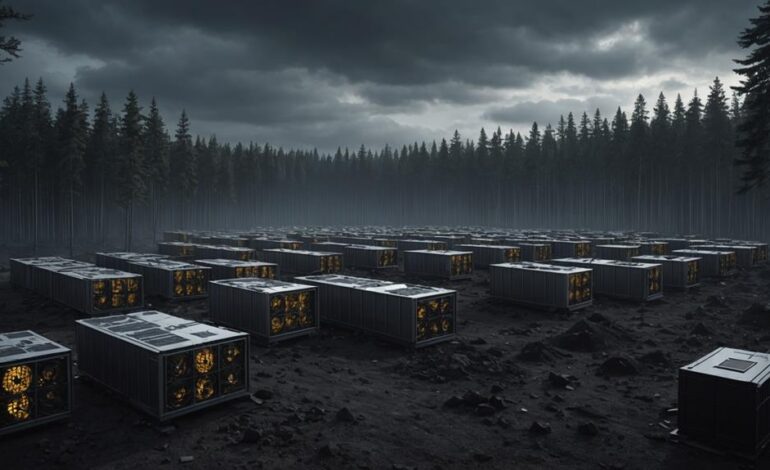
How Crypto Mining Devours Energy: Unveiling Secrets

You've likely heard about the massive energy consumption of crypto mining, a critical but often overlooked aspect of the digital currency world. This process isn't just a matter of electricity use; it's a complex interplay between technology, economics, and environmental impact. As you consider the sustainability of this burgeoning industry, you'll find that the energy demands of mining operations are not just a technical challenge but a significant environmental concern. What might surprise you are the innovative solutions being developed to tackle this issue. Are these solutions enough to mitigate the environmental effects while keeping up with the growing demand for cryptocurrencies?
The Basics of Bitcoin Mining

Bitcoin mining is the process by which new bitcoins are entered into circulation; it's also a critical component of the maintenance and development of the blockchain ledger. This activity involves solving complex mathematical problems that validate and secure transactions on the network. You're effectively a digital miner, sifting through data blocks to ensure the blockchain's integrity and, in return, receiving bitcoins as a reward.
The actual mining process requires powerful, specialized computers known as ASICs (Application-Specific Integrated Circuits). These machines compete to solve cryptographic puzzles that can't be handled by ordinary hardware. The first miner to crack the code is rewarded with newly minted bitcoins and transaction fees. It's a competitive and resource-intensive operation, but crucial for the decentralized nature of cryptocurrencies.
You might wonder about the role of mining pools in this scenario. These are groups of miners who combine their computational power to increase their chances of solving the puzzles and earning rewards. They then share these rewards proportionally to the amount of power each contributed. This collaboration makes mining more accessible and profitable for participants with less powerful equipment.
Global Energy Demands of Mining
As you delve into the world of crypto mining, it's crucial to grasp the substantial energy demands this activity generates globally. The entire process of mining cryptocurrencies like Bitcoin demands an immense amount of electrical power. To put things into perspective, the global power consumption for mining these digital assets reaches an estimated 120 terawatt-hours per year—that's more than entire countries like Argentina or the Netherlands use annually.
You might wonder why it requires so much energy. Well, the answer lies in the mining process itself, which involves complex computational tasks designed to secure transactions and add new blocks to the blockchain. This process, known as proof of work, is intentionally energy-intensive to maintain security and integrity within the network.
As the price of cryptocurrencies rises, so does the incentive to mine, leading to an increase in energy use as more miners join the fray. This surge in activity not only amplifies the energy consumption but also intensifies the competition among miners, further escalating the computational effort and, consequently, the power required.
Understanding this energy usage is vital, as it underscores the significant environmental and resource implications of sustaining such a decentralized, digital economy.
Impact on Electricity Prices

The surging energy requirements of crypto mining not only strain global power supplies but also significantly impact electricity prices. You might notice your utility bills climbing, and here's why: as crypto mining consumes more electricity, the demand drives up the cost of power.
This isn't just a minor uptick. In areas with intense mining activities, electricity rates have soared, affecting both households and businesses.
You're essentially competing with miners for the same energy resource. In regions like Upstate New York or parts of Scandinavia, where electricity was once cheaper, prices have jumped. This spike is directly linked to the influx of miners attracted by lower costs, which ironically, don't remain low for long.
It's a classic supply and demand scenario, where increased demand from mining operations leads to higher prices for everyone else.
Moreover, this surge in prices isn't easily mitigated. Because crypto miners often choose locations based on the lowest energy costs, they inadvertently push the prices up by increasing demand. You end up paying more, even if you're not directly involved in mining.
This ripple effect stresses the importance of reevaluating energy use in industries like crypto mining, which disproportionately affect public resources.
Renewable Energy in Crypto Mining
Shifting focus to renewable energy, crypto mining is beginning to harness more sustainable power sources. You've likely heard about the high energy consumption associated with mining digital currencies like Bitcoin. However, there's a significant shift towards greener alternatives that you mightn't be fully aware of yet.
Mining operations are increasingly tapping into renewable energy sources, such as solar, wind, and hydroelectric power. This isn't just to mitigate their environmental impact, but also to reduce costs in the long run.
You see, renewable energy can offer lower prices compared to traditional fossil fuels, which fluctuate more in price.
Moreover, innovators in the crypto space are developing new technologies to integrate renewable energy sources more efficiently. This includes building mining facilities near renewable power plants and using excess energy that would otherwise go to waste.
It's a win-win; the environment benefits, and miners gain access to cheaper, more stable energy supplies.
You should also consider how this shift impacts the broader energy market. By driving demand for renewables, crypto mining could potentially speed up the transition from fossil fuels, contributing to a more sustainable global energy framework.
This move towards renewable energy sources in crypto mining highlights a responsible step forward in addressing its previously hefty environmental toll.
Comparing Bitcoin With Traditional Banking

While discussing the strides crypto mining has made towards sustainability, it's also worth examining how Bitcoin stacks up against traditional banking systems in terms of energy consumption.
You've probably heard that Bitcoin mining consumes a massive amount of electricity, often compared to the energy usage of entire countries. But when you look closer, you'll find that traditional banking isn't exactly light on resources either.
Consider this: the global banking system involves numerous layers including ATMs, bank branches, data centers, and card network operations, all of which consume a significant amount of energy.
In fact, some studies suggest that the combined energy usage of these components can surpass the total energy consumption of the Bitcoin network. It's not just about the electricity used to power offices or data centers; think about the energy costs of producing and transporting physical currency, maintaining ATM networks, and the daily commute of millions of employees.
Regional Variations in Mining Impact
Examining how crypto mining impacts energy consumption reveals significant regional variations. In regions like Scandinavia, abundant renewable energy sources mean that local miners can often power their operations with minimal environmental impact. You'll find that these green solutions not only reduce carbon footprints but also appeal to a global community increasingly concerned about sustainability.
Conversely, in areas such as Inner Mongolia or certain parts of the United States, where coal and other fossil fuels dominate, the energy-intensive process of mining cryptocurrencies like Bitcoin results in a considerably higher environmental toll. Here, the carbon emissions associated with every Bitcoin mined are dramatically higher. If you're operating in these regions, it's crucial to consider the broader implications of your energy consumption choices on global climate change.
Furthermore, local regulations and energy pricing play pivotal roles. In some countries, favorable policies encourage the growth of crypto mining through subsidies and low energy costs, which can lead to an increase in mining activity without necessarily considering the long-term environmental consequences.
As a miner or investor in these areas, you're positioned to influence how sustainably your mining operations are conducted, shaping not just your bottom line but also the health of the planet.
Future of Energy in Cryptocurrency

As we consider the varying impacts of crypto mining on regional energy grids, it's important to also look ahead at the evolving landscape of energy use in cryptocurrency.
You're going to see more innovations that aim to reduce the carbon footprint of mining activities. Renewable energy sources are becoming increasingly critical. Imagine solar panels or wind turbines powering large mining farms, drastically cutting down on fossil fuel consumption.
You'll likely witness the rise of more energy-efficient blockchain technologies too. Developers are shifting towards proof of stake algorithms, which don't require the massive computational power that proof of work systems do. This means you're not only saving energy but also making the whole mining process more sustainable.
Furthermore, there's a growing push for regulations that encourage greener mining practices. Governments might start offering incentives for low-energy blockchain operations, or penalizing those that stick to high-energy consumption models.
Also, watch out for the decentralization of mining operations. It's not just about reducing energy consumption but also about distributing it more evenly across the globe, which could lead to better energy efficiency and less strain on any single power grid.
In short, the future of energy in cryptocurrency isn't just inevitable, it's already beginning to take shape. You're part of a movement towards a more sustainable and energy-conscious world.
Conclusion
You've seen how crypto mining gobbles up energy, raising serious concerns about its sustainability. As you explore these dynamics, it's clear that incorporating renewable sources and energy-efficient practices is vital. While comparing it to traditional banking gives some perspective, regional impacts can't be ignored. Moving forward, you'll need to advocate for and support innovations that reduce the environmental footprint of cryptocurrency, ensuring its future as a responsible player in the digital economy.