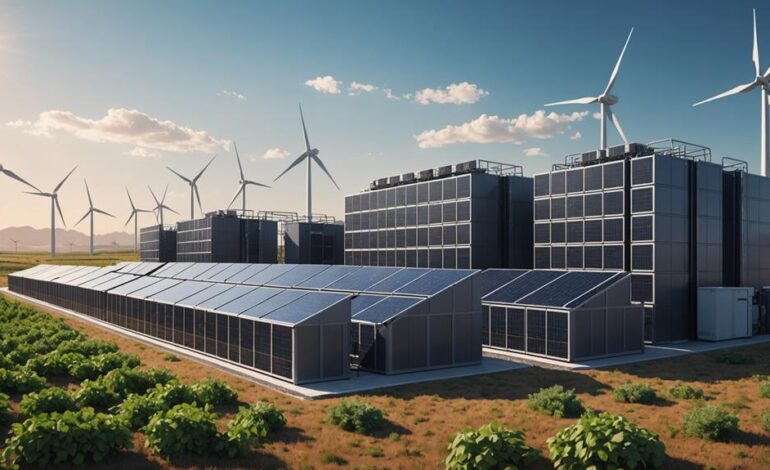
Why Does Crypto Mining Consume So Much Energy?
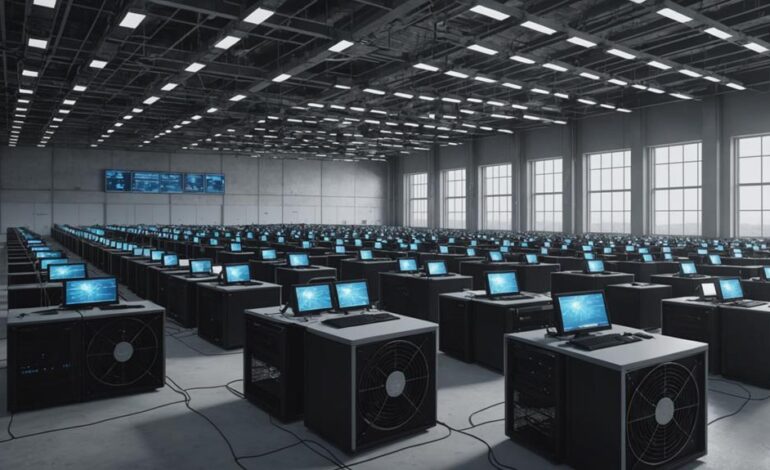
You've probably heard that crypto mining devours a vast amount of energy, but have you ever wondered why that's the case? At the core of this phenomenon lies the proof of work mechanism, demanding that miners solve complex puzzles to validate transactions and secure the blockchain. This process requires powerful, energy-intensive computers that are always in a race against time and each other, pushing the limits of their capabilities. As the competition heats up with more miners entering the fray, the puzzles become increasingly difficult, naturally escalating the energy consumption. Consider the ripple effects on our environment and energy resources; what solutions might be on the horizon to mitigate these impacts?
Understanding Crypto Mining Basics

Why is crypto mining crucial to understanding blockchain technology? When you're delving into the world of cryptocurrencies, you can't overlook the importance of mining. It's not just about creating new coins; it's the backbone that maintains and secures the blockchain. Without mining, there's no way to verify transactions or introduce new coins into the system, essentially rendering the blockchain dysfunctional.
Mining involves solving complex mathematical problems that validate and secure transactions. Each verified transaction is added to the blockchain, an immutable digital ledger. This process ensures that each transaction is secure and not susceptible to fraud. Think of it as the process that upholds the integrity of the cryptocurrency system.
Moreover, mining isn't just a free-for-all. It requires consensus; multiple miners must agree that a transaction is valid. This consensus prevents any single entity from gaining control over the blockchain. It's a democratic process, ensuring that no single miner or group can manipulate the data.
Understanding crypto mining gives you insight into the essential security mechanisms of blockchain technology. It's more than just an energy-consuming activity; it's the critical process that keeps the blockchain trustworthy and operational.
Key Components of Mining Hardware
After understanding the role of crypto mining in maintaining and securing blockchain technology, it's important to explore the physical aspects that make it possible. Let's dive into the key components of mining hardware which are crucial for efficient operation.
First, you've got the central processing unit (CPU), but it's not the star of the show in mining. That role goes to the graphics processing unit (GPU) or more specialized hardware like application-specific integrated circuits (ASICs). GPUs are preferred for their ability to handle complex algorithms faster, boosting your mining capability.
Next is the motherboard. This is where all hardware components connect. You'll need one that supports multiple GPUs if you're aiming to scale up your mining rig.
Memory, or RAM, also plays a part, but it isn't as critical as your GPU. However, sufficient RAM ensures your rig runs smoothly without bottlenecking the process.
Finally, don't overlook the power supply unit (PSU). It needs to be robust enough to handle the load without faltering, especially as you add more GPUs.
These components are the backbone of any mining rig. Choosing the right combination can significantly influence your mining efficiency and success.
Energy Demands of Mining Rigs
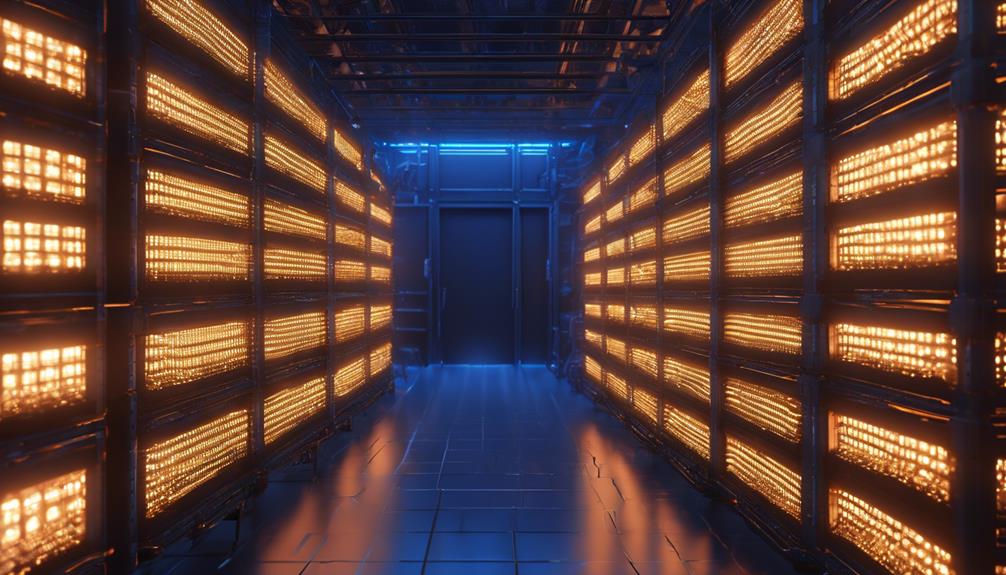
The energy demands of mining rigs are considerable, primarily due to the high-powered components required for efficient operation. You'll find that these rigs often consist of multiple high-end graphics cards, top-tier CPUs, and other power-intensive devices. Each component is designed to solve complex mathematical problems, which inherently consumes a lot of power.
As you delve deeper into mining, you'll notice the sheer scale of energy consumption. Imagine running several of these rigs 24/7—it adds up quickly. The GPUs, which are crucial for processing transactions and generating new coins, are particularly energy-hungry. They're not only running complex calculations but also need to be kept cool, adding further to the energy overhead with additional cooling systems.
Moreover, the power supply units (PSUs) in your rig must be robust enough to handle sustained high loads, which means they too draw significant power. It's not just about having enough wattage; efficiency ratings of these PSUs impact your overall energy consumption. Opting for gold-rated or higher PSUs can somewhat mitigate the energy drain, but it's still substantial.
Understanding this, you'll see why optimizing the setup for energy efficiency, while maintaining output, is a crucial balancing act in crypto mining.
Proof of Work Explained
While exploring the technical backbone of cryptocurrency mining, you'll encounter the term "Proof of Work" (PoW). It's a critical concept that's foundational to how cryptocurrencies like Bitcoin operate. Essentially, PoW is a mechanism that validates transactions and adds new blocks to the blockchain. But what does this really mean for you?
Think of PoW as a complex puzzle. Miners compete to solve this puzzle using high-powered computers. The first one to solve the puzzle gets to add a block of transactions to the blockchain and is rewarded with cryptocurrency. The puzzle-solving process is what ensures the security and integrity of the blockchain, preventing fraud and double-spending.
This might sound straightforward, but the puzzles require an enormous amount of computational power to solve. Since the difficulty of these puzzles adjusts depending on the number of miners and their combined computational power, the process remains competitive and secure.
However, the need for powerful hardware and continuous operation means that mining isn't just a mental challenge—it's a power-intensive process.
As you dive deeper into how PoW functions, you'll see why it's both a security feature and a major reason behind the high energy consumption of mining operations.
Global Electricity Consumption

Understanding the energy demands of Proof of Work in cryptocurrency mining naturally leads you to wonder about its broader impact. How much electricity does this digital endeavor actually use on a global scale? You might be surprised to learn that the crypto mining industry consumes more electricity annually than entire countries. For instance, it's estimated that global Bitcoin mining uses more power than Argentina.
To put it in perspective, the energy used for mining the most popular cryptocurrencies is a significant fraction of the world's total electricity consumption. This isn't just a drop in the ocean. It's a substantial, growing demand that pulls heavily on the world's energy resources.
You're looking at an industry that accounts for nearly 1% of global electricity use. That's a hefty footprint for a sector that's barely a decade old.
With such high energy use, it's clear why the environmental implications are at the forefront of discussions about cryptocurrency. While it's true that innovations and improvements in technology might reduce the energy drain, you're currently witnessing an intense phase where the hunger for electricity in crypto mining shows no signs of slowing down.
Impact on Power Grids
Due to the immense energy consumption of cryptocurrency mining, power grids across the globe are under increasing stress. You've likely noticed fluctuating electricity bills or perhaps even experienced brief power outages, especially during peak mining hours. This isn't just a coincidence. Crypto mining requires such a vast amount of power that when multiple mining operations are running simultaneously in a local area, they can strain the capacity of existing power infrastructure.
This strain can lead to increased maintenance costs for utility companies, which often trickle down to you as higher energy prices. In some cases, the demand is so high that it leads to rolling blackouts, which are implemented to prevent a total collapse of the power grid. These aren't just inconvenient; they can be downright dangerous, disrupting everything from home heating systems to traffic lights.
Moreover, the constant high demand can hasten the aging of power grid components, leading to more frequent equipment failures and the need for repairs. This isn't just a local issue—it's a global one, affecting countries around the world as the crypto mining industry continues to expand. You're part of a much bigger picture and your energy consumption habits play a role in this complex system.
Regional Energy Consumption Differences

Regional energy consumption differences greatly influence the impact of crypto mining on local power grids. Depending on where you live, the strain on your community's power grid can vary significantly. If you're in an area with abundant energy resources and capacity, the local grid might handle the high demands of crypto mining more smoothly.
In contrast, regions with limited energy supplies or aging infrastructure can experience more stress, potentially leading to power shortages or higher electricity costs for everyone.
You'll also find that the cost of mining can fluctuate wildly from one region to another. For instance, the price you pay for electricity in a densely populated city may be much higher than what someone pays in a rural area with less demand for power. This variation affects your overall expenses and might even dictate whether mining is economically viable for you.
Moreover, the type of available energy sources in your area can influence operational costs. Places with cheaper, more accessible power can provide a more cost-effective environment for mining operations. However, remember, these factors are purely economic and don't necessarily reflect the environmental or long-term sustainability of mining practices in your region.
Renewable Energy in Mining
While regional energy consumption differences play a crucial role, integrating renewable energy sources has become a pivotal strategy for reducing the environmental impact of crypto mining. As you dive deeper into this topic, you'll realize that harnessing solar, wind, and hydroelectric power can significantly decrease the carbon footprint associated with mining operations.
You're probably aware that crypto mining requires a tremendous amount of electricity to power the high-performance computers needed for blockchain computations. By shifting to renewables, miners can operate more sustainably. For instance, some mining farms have relocated to areas with abundant hydroelectric power, benefiting from lower energy costs and greener operations.
Moreover, you might find it interesting that solar energy, with its declining cost and increasing efficiency, presents a viable solution for remote mining installations. These setups can run independently of traditional power grids, further reducing their environmental impact.
It's important to note, however, that the transition isn't just beneficial for the planet. It also makes economic sense for miners. Renewable energy sources, being less prone to price fluctuations than fossil fuels, can offer more stable operational costs. This stability is crucial for maintaining profitability in the highly competitive world of cryptocurrency mining.
Efficiency Innovations in Mining
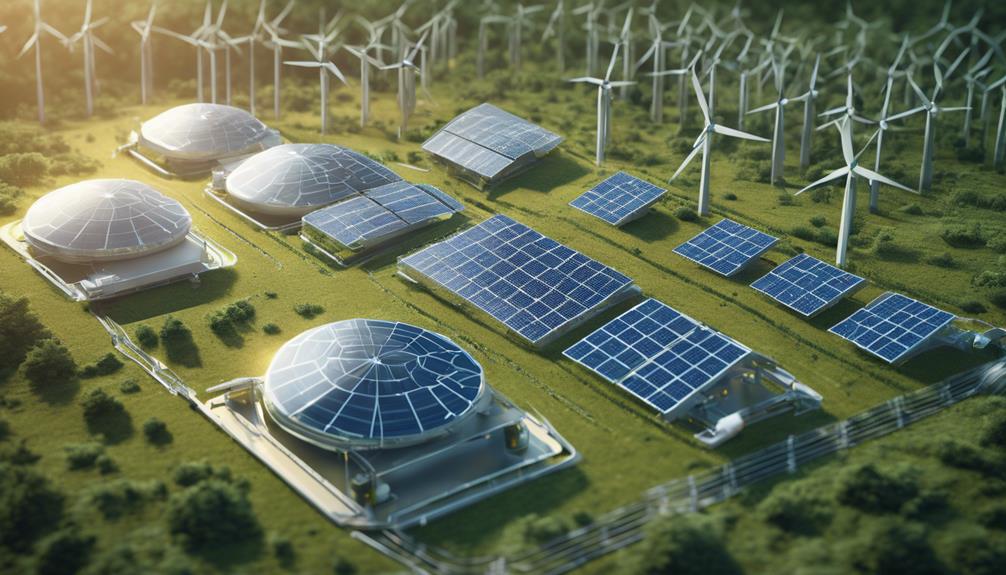
Shifting focus to efficiency innovations in mining, you'll find that significant advancements are streamlining the process. Developers and engineers have introduced more energy-efficient hardware with lower power needs yet greater computational output. You're seeing ASIC miners that aren't only faster but also smaller and cooler, reducing the overall energy footprint per unit of cryptocurrency mined.
Moreover, the software used in mining has become smarter. Algorithms now dynamically adjust to consume less power during periods of lower network demand. This adaptive scaling isn't just smart; it's also a game-changer for reducing electricity usage without sacrificing productivity.
You've also got to consider the role of data center design in energy efficiency. Modern mining operations are strategically located to take advantage of natural cooling environments, like colder climates, which significantly cuts down on the energy required for cooling systems.
Additionally, the layout and setup of these centers are optimized for minimal energy waste.
Together, these technological and strategic improvements are making crypto mining not only more sustainable but also more economically viable. You're witnessing a shift where efficiency is just as critical as output, balancing the energy-intensive nature of blockchain technology with a more conscientious approach to power consumption.
Future Trends in Energy Use
Looking ahead, you can expect the momentum of efficiency innovations to strongly influence future trends in energy use within the realm of crypto mining. As you delve deeper, you'll see a shift towards more sustainable practices. Companies and individual miners are likely to adopt newer, energy-efficient technologies that not only reduce power consumption but also lower environmental impact.
You might find increased use of renewable energy sources like solar, wind, and hydroelectric power becoming a norm in mining operations. This shift isn't just about being eco-friendly; it's economically sensible. Renewable energy can be cheaper in the long run, reducing operational costs significantly.
You'll also witness the rise of decentralized mining as a means to distribute energy consumption more evenly across the globe. This method helps avoid concentration in areas where energy is derived from non-renewable sources, leading to a more balanced, sustainable approach in the energy demands of mining.
Furthermore, advancements in blockchain technology itself, such as the development of more energy-efficient consensus algorithms like proof of stake (PoS), could drastically cut down the energy footprint of cryptocurrencies. PoS and similar mechanisms require significantly less power, making crypto mining less energy-intensive and more accessible to a broader audience.
Conclusion
You've seen how crypto mining, driven by the proof of work mechanism, demands immense energy to sustain its security and competitiveness. Despite the environmental concerns, advancements and a shift towards renewable energy sources are promising. Keep an eye on innovations that aim to reduce this footprint. As the industry evolves, staying informed will help you understand the balance between technological progress and environmental responsibility in the ever-expanding world of cryptocurrency.