Uncover the Shocking Costs of Cryptocurrency Mining Energy
You've likely heard about the financial benefits of cryptocurrency mining, but have you considered its environmental price tag? The energy consumption is truly astonishing, often compared to the electrical needs of entire nations. Each transaction and mined coin requires a vast amount of power, leading to an increase in carbon emissions and severe environmental degradation. This begs the question: Is the cost of digital currency worth its impact on the planet? As you ponder this, think about the potential solutions and innovations that could balance out these extensive costs. What changes would be necessary to make this a sustainable practice?
Understanding Cryptocurrency Mining
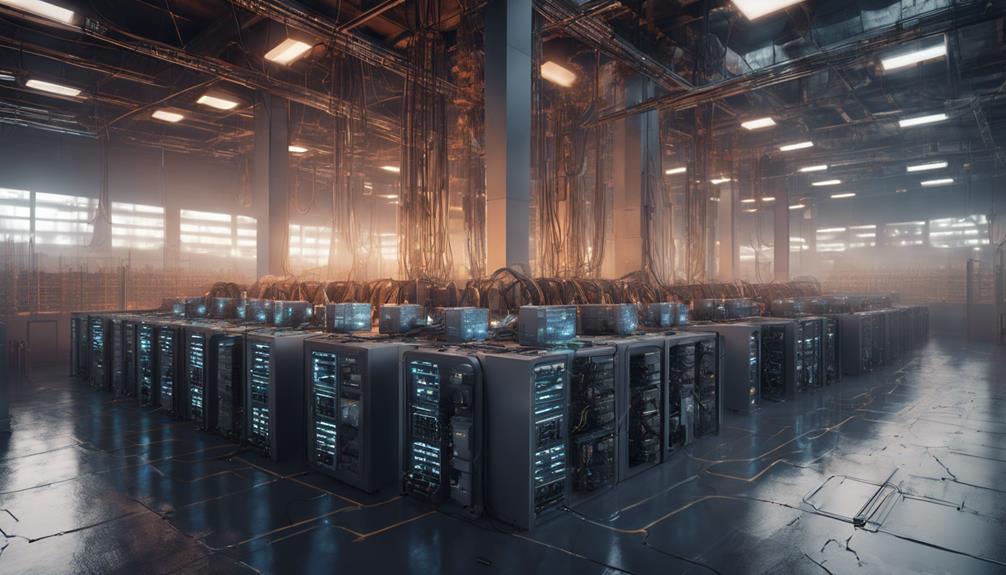
Cryptocurrency mining involves solving complex mathematical puzzles to validate transactions and secure a blockchain network. As you dive deeper, you'll find it's a critical process, but not without its challenges. Essentially, mining is how new coins are created and transaction information is added to the blockchain.
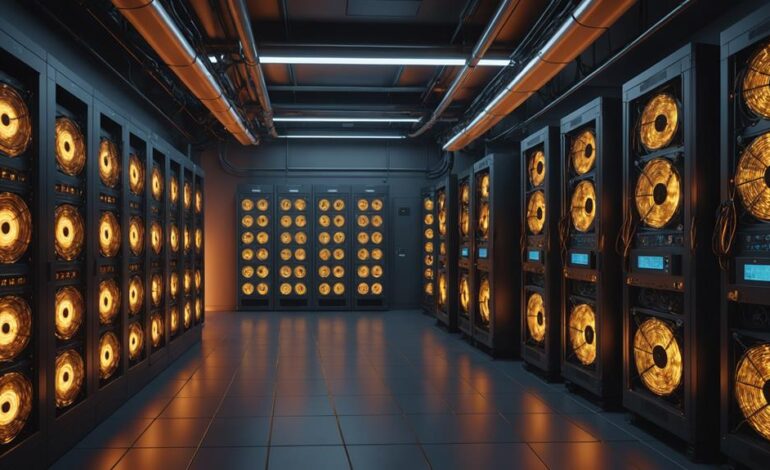
You're probably aware that mining requires specialized hardware, including ASICs (Application-Specific Integrated Circuits) and GPUs (Graphics Processing Units). These aren't just any computers; they're powerful enough to handle the intense workload required for mining operations. However, setting up this equipment isn't cheap. You'll need a significant initial investment for purchasing the hardware and setting up the proper environment for efficient cooling and operation.
Moreover, mining isn't as simple as plugging in a machine and watching it go. It demands a continuous, stable internet connection and a substantial amount of electrical power. The setup also needs regular maintenance to keep it running smoothly, and any downtime means potential loss of income.
As a miner, you're in a constant race against both rising hardware costs and the increasing difficulty of mining puzzles. This difficulty adjusts as more miners join the network, ensuring that the rate of block creation remains stable, but also making mining progressively harder.
Global Energy Consumption Rates
Have you ever wondered how much energy the global cryptocurrency mining sector consumes annually? You might be astonished to learn that it's comparable to the annual energy usage of entire countries. For instance, Bitcoin alone, the most popular cryptocurrency, consumes more electricity than many countries. This intense energy demand mainly stems from the computational power required to solve complex cryptographic puzzles, which are integral to maintaining blockchain security and verifying transactions.
To put it in perspective, the mining process relies heavily on electricity-hungry machines that operate 24/7. These machines require a massive amount of power, and as the difficulty of mining increases, so does the energy consumption.
It's not just about the electricity; the type of energy sources used also plays a significant role in shaping the overall energy footprint.
Interestingly, this sector's demand for energy has spurred growth in renewable energy sources, as miners seek cost-effective, sustainable options. However, the reliance on non-renewable sources still prevails in many areas, challenging the shift towards greener alternatives.
As you dive deeper into the crypto world, you'll see how this energy use is a pivotal part of the entire ecosystem.
Environmental Impact of Mining

While the vast energy consumption of cryptocurrency mining is clear, it's equally important to consider the environmental toll this takes. You mightn't realize it, but every digital coin mined can have a significant impact on our planet.
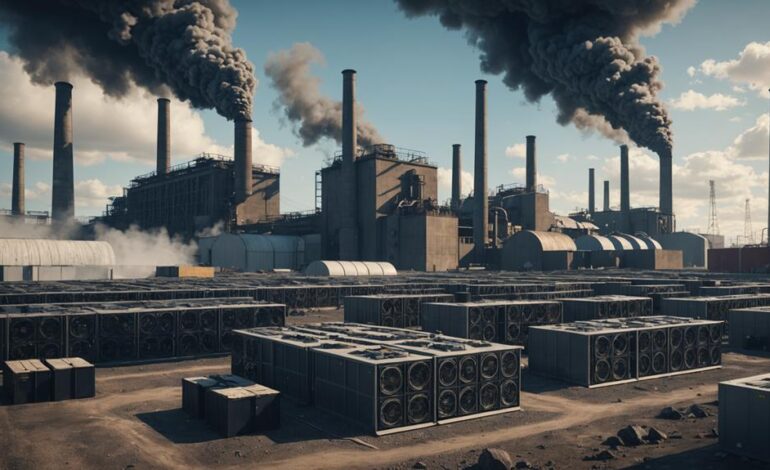
The massive amounts of electricity needed to power mining operations often come from non-renewable sources, leading to substantial carbon emissions. As you delve deeper into mining, you're indirectly contributing to air pollution and exacerbating global warming.
Moreover, the demand for hardware accelerates the depletion of natural resources. Mining rigs require rare minerals for their components, and the constant need for newer, more powerful machines means these resources are being consumed at an alarming rate.
This not only strains the Earth's reserves but also leads to habitat destruction and biodiversity loss as mining for these minerals disrupts ecosystems.
Water pollution is another critical issue. The runoff from electronic waste contaminates water bodies, affecting aquatic life and potentially entering human water supplies. You're part of this cycle every time you engage with or invest in cryptocurrency mining.
It's vital to recognize these environmental costs as they're not just abstract numbers; they represent real-world damage that could have lasting effects on our planet.
Regional Energy Cost Variations
You'll notice significant variations in the cost of energy required for cryptocurrency mining depending on the region. This fluctuation is crucial because it directly impacts your profitability as a miner.
In countries like Venezuela, where energy costs are heavily subsidized, you might pay a fraction of what someone in Germany does, where electricity rates are steeper due to higher fuel costs and governmental taxes.
Moreover, local energy policies and availability of resources play a pivotal role. For instance, areas rich in natural gas or coal might offer cheaper power compared to regions that rely heavily on imported oil. This disparity means that your location could either boost or bite into your mining gains.
You should also consider the infrastructure quality. In some places, even if the power is cheaper, frequent outages can disrupt mining operations, leading to potential losses. On the other hand, regions with robust and reliable power grids, although possibly pricier, ensure continuous mining activities, which can be more profitable in the long run.
Renewable Energy in Cryptomining
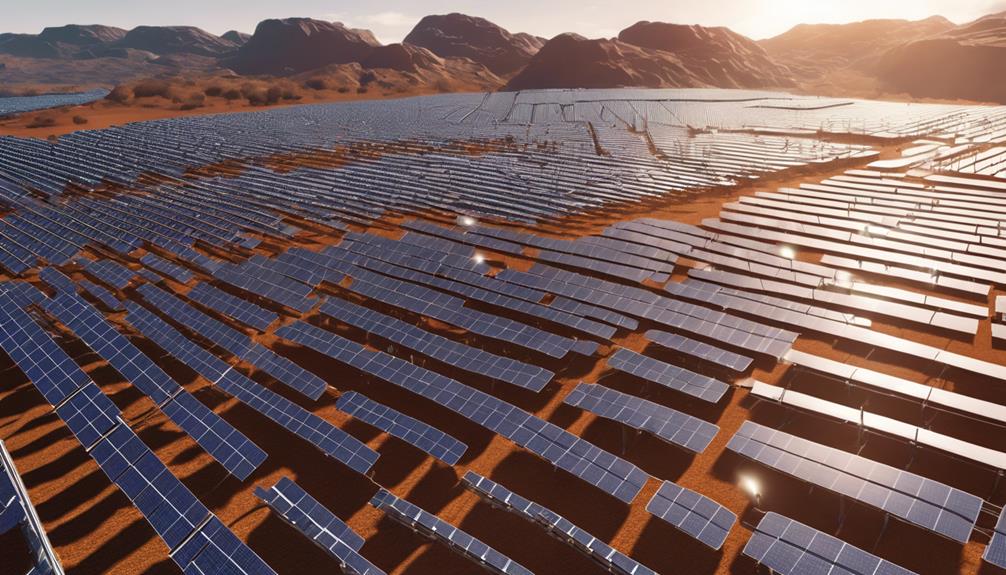
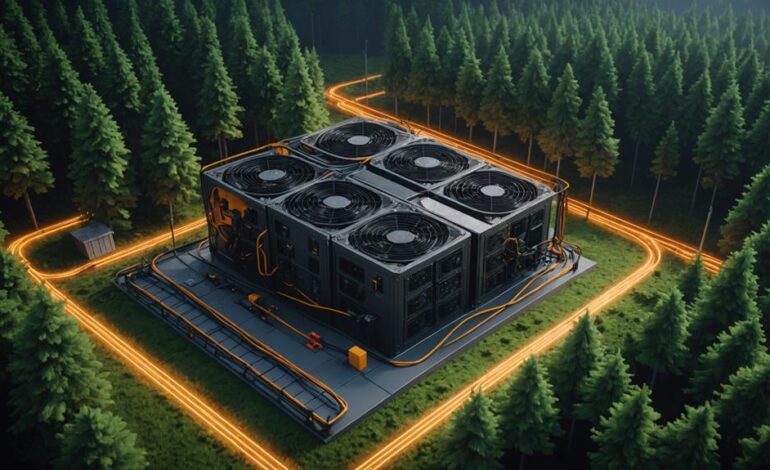
Shifting focus to renewable energy in cryptomining reveals a sustainable approach that's gaining traction. As you delve deeper into the world of cryptocurrency, it's clear that the environmental impact of traditional energy sources can't be ignored. That's where renewables come into play, offering a cleaner, more sustainable way to power the massive computational demand of mining operations.
You might wonder, how do you make the switch to renewables? First, consider the sources like solar, wind, and hydroelectric power. These options not only reduce your carbon footprint but can also lower energy costs in the long run.
For instance, solar farms in sunny regions provide a consistent energy supply that's perfect for the continuous operation needed in mining.
Moreover, transitioning to renewable energy isn't just good for the planet; it's increasingly becoming a financial necessity. With governments worldwide implementing stricter regulations on carbon emissions, integrating renewable sources shields your mining activities from potential fines and restrictions.
Efficiency of Mining Hardware
Beyond the source of power, the efficiency of mining hardware greatly influences overall sustainability and cost-effectiveness in cryptocurrency mining. When you choose hardware, it's not just about raw power. It's about how much bang you're getting for your buck and how much energy each hash consumes.
Today's mining landscape shows a stark divide between older models and the cutting-edge ASICs (Application-Specific Integrated Circuits). These newer machines aren't just faster; they're also much more energy-efficient. You'll find that modern ASICs can perform more calculations with less power, reducing not only your electricity costs but also your environmental footprint.
You've probably heard of rigs being pushed to their limits, heating up like little ovens. Well, energy efficiency plays a huge role here. More efficient hardware produces less heat, which also cuts down on cooling requirements—a double win for operating costs.
Let's not overlook the lifespan of your hardware. Efficiency isn't only about energy use; it's about durability and maintenance. Efficient machines tend to last longer and require less frequent replacements, helping you save on long-term investment costs.
Policy and Regulation Influences
Many countries have implemented specific policies and regulations that significantly impact cryptocurrency mining operations. As you're navigating this landscape, it's crucial to understand how these changes can affect your mining activities.
For instance, some governments have introduced taxes on the energy used by miners, which can drastically increase operational costs. Others have set environmental standards that require you to invest in cleaner, albeit often more expensive, technologies.
You'll also find that regulatory frameworks vary widely. In some regions, cryptocurrency mining is encouraged with tax incentives and subsidized power rates, making it a more viable and profitable venture.
Conversely, in areas where energy consumption is a concern, you might face strict limits on the amount of power you can use, forcing you to scale down operations or invest heavily in energy efficiency.
It's important to stay informed about the policy environment in your specific area. Compliance isn't just about avoiding penalties; it can also provide opportunities for cost savings and operational improvements. Keeping up with these regulations can be challenging, but it's essential for maintaining a competitive edge in the rapidly evolving world of cryptocurrency mining.
Conclusion
As you delve into the realities of cryptocurrency mining, it's clear that the environmental toll is immense. The energy consumption rivals nations, causing significant pollution and resource depletion. By embracing renewable energy and enhancing hardware efficiency, the industry can mitigate these impacts. It's crucial for policymakers to step in and foster sustainable practices. Your awareness and advocacy for greener solutions can drive the change needed to reduce the ecological footprint of cryptocurrency mining.