Understanding Cryptocurrency Mining’s Carbon Footprint
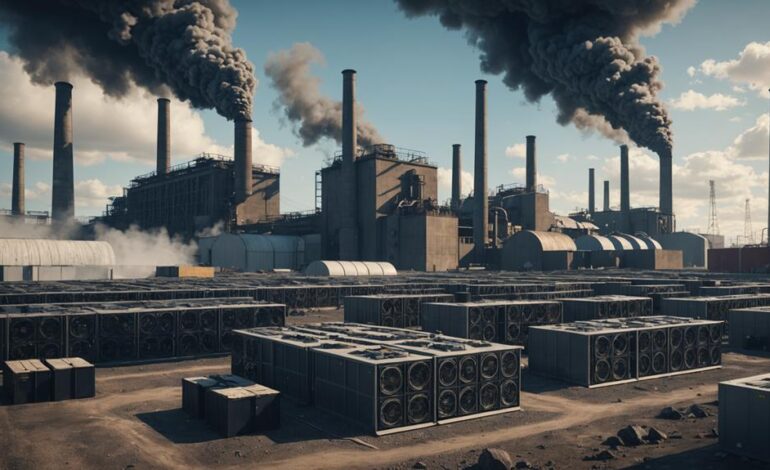
You might already be aware that cryptocurrency mining is not just a digital gold rush but a serious energy guzzler. As you delve into the mechanics behind those energy-intensive processes, like the Proof of Work algorithm used in Bitcoin mining, you'll find that they require a colossal amount of electricity, much of which comes from non-renewable sources. This raises a pressing question: what is the real environmental cost of maintaining the blockchain's security and integrity? Exploring the trade-offs between technological advancement and environmental sustainability could lead you to some compelling insights about the future of digital finance.
Basics of Cryptocurrency Mining

While cryptocurrency mining may seem complex, it essentially involves validating transactions and adding them to a blockchain. You're part of a digital ledger maintenance team, ensuring all coin transfers are accurate and secure. Each transaction gets confirmed by miners who solve cryptographic challenges, a process that helps prevent fraud and double-spending.
Your role as a miner isn't just about earning new coins; it's crucial for the network's integrity and functionality. When you successfully solve a puzzle, you add a new block to the blockchain. This block contains a group of transactions and, in return for your efforts, you're rewarded with cryptocurrency. This process is known as proof of work.
The rewards incentivize you to invest in powerful hardware necessary for mining. However, the difficulty of puzzles adjusts over time, based on the total computing power of the network.
This means as more miners join, the puzzles become harder to solve, requiring more computational power.
Energy Sources in Mining
Cryptocurrency mining demands significant energy, primarily due to the computational power required to solve complex puzzles and secure blockchain transactions. You've probably heard about the immense amount of electricity this consumes, but where does it all come from?
Mining operations often draw power from a mix of sources, which can vary widely depending on their geographical location. If you're mining in a region abundant with hydroelectric power, like parts of Canada, you're tapping into a relatively clean energy source.
Conversely, in areas where coal or natural gas dominates, the story changes, and the energy isn't as green.
Renewable energy sources are becoming more popular in the mining community, with solar, wind, and hydroelectric power leading the charge. This shift is partly because you, as a miner, might be looking to reduce operational costs and appeal to more environmentally conscious investors.
Solar panels, for instance, can provide a sustainable power supply that reduces dependency on traditional power grids.
In your quest for efficiency, you might also explore less conventional sources like geothermal or nuclear energy, depending on availability and legality in your region. Each choice impacts your operational costs, sustainability, and sometimes, the public perception of your mining activity.
Emissions From Mining Operations

As you delve into the realm of cryptocurrency mining, it's crucial to consider the emissions released by these operations. These emissions primarily stem from the energy used to power the extensive network of mining computers. If you're using electricity derived from fossil fuels, you're directly contributing to the emission of greenhouse gases such as carbon dioxide and methane. This is common in areas where coal or natural gas dominates the power grid.
The type of hardware used also plays a significant role. Older, less efficient miners consume more electricity for the same amount of processing power, leading to higher emissions. The production of these mining rigs, often overlooked, adds another layer of environmental impact due to the energy-intensive manufacturing processes and the mining of rare earth metals required.
Moreover, the cooling requirements for mining operations can be substantial. Large-scale mining farms deploy vast arrays of fans and air conditioning units, running continuously to keep equipment at optimal temperatures. This not only consumes a great deal of energy but also releases refrigerants that can be potent greenhouse gases.
Understanding these sources of emissions helps you grasp the broader environmental impacts of your mining activities, beyond just the electricity you consume.
Impact on Global Warming
Understanding the emissions from cryptocurrency mining operations sets the stage for recognizing their broader impact, particularly on global warming. As you delve into the intricacies of these operations, it's essential to grasp how they contribute to the planet's increasing temperatures.
Cryptocurrency mining, notably energy-intensive, relies heavily on electricity generated from fossil fuels in many regions. This dependence results in significant carbon emissions, which are potent contributors to global warming.
When you consider the prolonged operation of mining equipment, which often runs 24/7, the energy consumption becomes enormous. Each transaction or mined coin requires a substantial amount of power, leading to a continuous release of carbon dioxide into the atmosphere. This greenhouse gas traps heat, raising the Earth's surface temperature, a phenomenon you know as global warming.
This warming effect isn't just a slight increase in temperatures; it's part of a larger trend that affects global climates, weather patterns, and ecosystems. You're seeing more frequent and severe weather events, like hurricanes and wildfires, which are exacerbated by the rising temperatures.
As a participant in the digital age, it's crucial to understand the environmental toll of these modern technologies and consider sustainable practices that reduce this impact.
Comparison With Traditional Banking

Comparing cryptocurrency mining with traditional banking reveals significant differences in their environmental impacts. You might think of banks as just brick-and-mortar structures, but their operations extend far beyond that. They encompass vast networks of physical branches, massive data centers, and fleets of vehicles—all consuming significant amounts of energy.
In contrast, cryptocurrency mining is notoriously energy-intensive, primarily due to the computational power required for blockchain transactions. However, it's crucial to note that while traditional banks have a broader physical infrastructure, crypto mining predominantly relies on electricity. This can be sourced from renewable energy, although currently, most is not.
Moreover, the banking system operates continuously, utilizing energy around the clock for ATMs, branch operations, and backend data processing. Crypto mining's energy use, while substantial, spikes with intense mining activity but isn't consistent like banking's.
Your awareness of these differences helps in understanding the broader implications of where and how energy consumption occurs. It's not just about the high energy use in crypto mining; it's also about the persistent, widespread consumption by traditional banks. Both sectors are evolving, but they each bear unique footprints on our planet's health.
Innovations in Green Mining
Innovations in green mining are transforming the way cryptocurrencies operate, significantly reducing their environmental impact. You're witnessing a shift towards more sustainable practices that align with global environmental goals. Among these, renewable energy sources stand out. Cryptocurrency miners are increasingly tapping into solar, wind, and hydroelectric power to fuel their operations. This shift not only curbs carbon emissions but also reduces the overall energy consumption of mining activities.
Additionally, you'll find that new technologies like the use of advanced cooling mechanisms and energy-efficient mining hardware are making a big difference. These technologies minimize the amount of electricity required for mining operations, enhancing the sustainability of the process.
You're also seeing a trend towards "green mining pools" where miners combine their resources to share renewable energy sources and reduce their collective carbon footprint. This collaborative approach not only helps in cutting down emissions but also optimizes the energy use for each participant.
These innovations are crucial. They not only help mitigate the environmental concerns associated with cryptocurrency mining but also ensure that digital currencies can be a part of a sustainable future. As you continue to explore this field, keep an eye on these transformative changes—they're setting the new standard in the industry.
Regulatory and Policy Considerations

As you explore the advancements in green mining, it's equally important to consider the regulatory and policy frameworks that govern these technologies. Governments worldwide are starting to realize the environmental impacts of cryptocurrency mining and are stepping in to guide its development in a sustainable direction.
You'll find that some regions have implemented strict regulations to reduce the carbon emissions associated with mining operations, while others have offered incentives for using renewable energy sources.
You're also seeing an increasing number of policies aimed at not just minimizing environmental damage but also ensuring the ethical sourcing of the hardware used in mining rigs. This includes regulations around the recycling of electronic waste and the use of conflict-free minerals.
As a miner or investor, you need to stay informed about these developments to navigate the complex landscape successfully.
Moreover, international collaboration is on the rise, aiming to create a standardized approach to cryptocurrency mining that balances economic benefits with environmental sustainability. You should keep an eye on these changes, as they could significantly impact the profitability and legality of mining operations.
Staying ahead means adapting quickly to these regulatory environments, ensuring that your mining practices are both compliant and environmentally conscious.
Conclusion
As you consider the profound impact of cryptocurrency mining, remember that shifting from fossil fuels to renewable energy sources is key to reducing its carbon footprint. By supporting innovations in green mining and advocating for strong regulatory policies, you can help mitigate the effects on global warming. Comparatively, while traditional banking also has its environmental costs, the unique energy demands of mining cryptocurrencies highlight an urgent need for change to protect our planet.