Top 5 Crypto Wallet Security Solutions Explained
As you navigate the volatile world of cryptocurrency, securing your digital assets becomes paramount. You've likely heard of hardware wallets and multi-factor authentication but understanding how these tools can serve as your first line of defense is essential. From the robust protection offered by devices like Ledger and Trezor to the added security layers through biometrics and decentralized backups, each solution provides unique benefits. However, the effectiveness of these measures hinges on how they're implemented in your overall security strategy. Let's explore how these top solutions work in concert to protect your crypto investments and why neglecting even one aspect could leave you vulnerable.
Hardware Wallets: Ultimate Safeguards
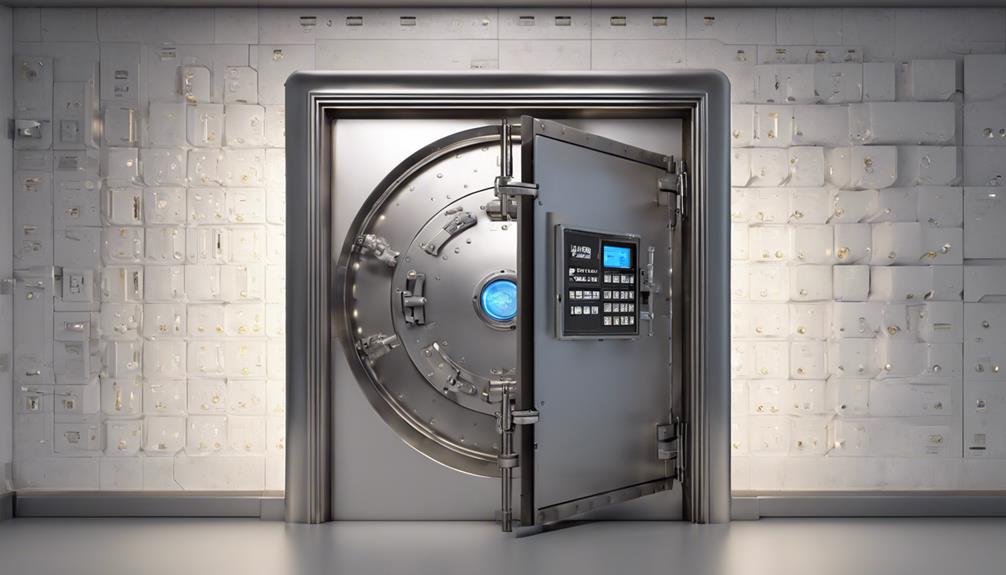
In the realm of cryptocurrency, security is paramount, and hardware wallets stand as the ultimate safeguard for your digital assets. Unlike software wallets, which reside on your computer or smartphone and are vulnerable to hacking, hardware wallets store your private keys on a physical device that isn't connected to the internet. This means they're immune to online attacks and malware that can compromise your assets.
You might wonder how you actually use one. It's simpler than it sounds. When you need to make a transaction, you'll connect your hardware wallet to your computer or smartphone. The transaction is signed inside the wallet itself, ensuring your private keys never leave the device. Once the transaction is signed, it's sent back to the network for confirmation, keeping your keys secure.
Choosing the right hardware wallet can be crucial. Look for one with a robust track record and positive reviews from other users. Consider its compatibility with different cryptocurrencies and whether it has a user-friendly interface.
Multi-Factor Authentication
Multi-factor authentication (MFA) significantly enhances the security of your crypto wallet by requiring more than one method of verification before access is granted. This approach means that even if someone gets hold of your password, they'll still need another form of identification to break into your wallet.
Typically, MFA combines something you know, like a password or PIN, with something you have, such as a smartphone or a hardware token. You might also be asked for something you receive, like a code sent via SMS or email. It's crucial to activate these additional layers of security.
Without them, you're simply relying on a single barrier, which today's cybercriminals can often bypass with disturbing ease.
When setting up MFA, choose options that suit your lifestyle yet offer maximum security. For instance, using an authenticator app generates time-sensitive codes on your device, providing a safer alternative than SMS, which can be intercepted. Remember, the slight inconvenience of an extra step is worth the significant boost in safety.
Biometric Security Features

Biometric security features offer a personal touch to safeguarding your crypto wallet. You're probably familiar with biometrics like fingerprint scanners, facial recognition, or even iris scanning. These methods leverage your unique physical characteristics to ensure that only you can access your funds.
Implementing biometric authentication adds a layer of security that's significantly harder to breach compared to traditional password systems. It's simple: your features can't be guessed like a password or stolen like a hardware device. Whether you're using a mobile app or a specialized hardware wallet, integrating biometrics means you're putting a physical barrier between your digital assets and potential intruders.
Moreover, using biometrics can streamline your access process. Forget about fumbling for passwords or security tokens; with a quick scan, you're in. It also adds a psychological deterrent; the presence of biometric security suggests a high-security environment, discouraging casual hackers right from the start.
However, it's crucial to use biometric security wisely. Ensure the wallet provider uses advanced encryption for biometric data. Don't rely solely on biometrics either; combine it with other security measures to create a robust defense for your crypto assets.
Decentralized Backup Solutions
Decentralized backup solutions provide an essential safety net for your crypto wallet. Unlike traditional backup methods, which rely on a single point of storage, decentralized backups distribute your wallet's data across multiple locations. This strategy enhances security by reducing the risk of total data loss due to a single point of failure.
You're probably wondering how it works. Essentially, your wallet's private key is split into several parts, each stored in different, secure locations on the blockchain. To access your funds, you'd need to recombine these parts. Think of it as a treasure map where you need all the pieces to find the treasure.
This setup prevents unauthorized access since an attacker would need to compromise multiple locations to reconstruct your private key. It also means you won't lose access to your assets if one storage point is compromised or fails.
Furthermore, these solutions often use automated systems to ensure that backups are regularly updated without your direct involvement. By dispersing your risk, you're not just protecting your crypto; you're ensuring that it remains accessible and safe, no matter what happens in a single location. This peace of mind is invaluable in the volatile world of cryptocurrency.
Regular Security Audits

In addition to implementing decentralized backup solutions, it's crucial to conduct regular security audits of your crypto wallet. This process involves systematically reviewing and evaluating your wallet's security measures to ensure they're up to par with the latest security standards and threats. By doing so, you can uncover vulnerabilities before they're exploited by malicious actors.
You should start by assessing the strength of your passwords and recovery phrases. Make sure they aren't just strong, but also stored securely and known only to you.
Next, check for software updates. Your wallet's software should always be up-to-date to protect against new vulnerabilities. Don't overlook the importance of regularly updating your associated devices' operating systems and security software as well.
Another key aspect is reviewing your transaction history and wallet addresses for any unauthorized activity. If something looks off, investigate it immediately. It's also wise to test your wallet's backup and recovery processes to ensure you can access your assets in case of an emergency.
Conclusion
Securing your crypto assets is paramount, and these top five solutions offer robust protection. Opt for hardware wallets like Ledger or Trezor to keep your keys offline. Don't overlook multi-factor authentication; it's crucial for an added security layer. Use biometric features for personalized access. Consider decentralized backups to eliminate single points of failure. Finally, regular security audits will keep your defenses sharp. Stay vigilant and proactive to protect your digital wealth effectively.