How Crypto Mining Impacts Global Energy Demand

You've likely heard about the surging popularity of cryptocurrencies, but have you considered how crypto mining is affecting our planet's energy resources? The process is not just a digital gold rush; it's a power-hungry beast consuming vast amounts of electricity, rivalling the energy usage of entire nations. As you grapple with the nuances of blockchain technology, it's crucial to understand the broader implications of its energy consumption. This growing concern connects directly to you, affecting everything from energy bills to environmental policies. What's less clear, however, is how we can balance this digital advancement with our sustainable responsibilities. What do you think could be a viable solution?
The Basics of Crypto Mining

Crypto mining, at its core, involves validating transactions and securing a blockchain network. This process is essential for maintaining the integrity and functionality of blockchain technology. As a miner, you'd contribute to this by solving complex mathematical problems that confirm and record the legitimacy of transactions.
To start mining, you need a computer with specialized hardware that can handle the computational requirements. The more powerful your setup, the higher your chances of solving these puzzles and earning cryptocurrency rewards. These rewards are what incentivize miners to keep the network running smoothly.
However, it's not just about throwing hardware at the problem.
You also need to understand the blockchain you're working with. Each blockchain has its own set of rules and configurations, known as the protocol, which you must adhere to. This ensures that all participants in the network are following the same guidelines, which in turn, maintains the decentralization and security of the network.
Mining Techniques and Energy Usage
Understanding the hardware and protocols involved in crypto mining lays the groundwork for a deeper look at mining techniques and their energy consumption. As you delve into this world, you'll find that the two main mining techniques are Proof of Work (PoW) and Proof of Stake (PoS).
PoW, the original method used by Bitcoin, demands significant computational power. Miners solve complex mathematical puzzles to validate transactions and create new blocks. This process requires high-performance hardware such as ASICs and GPUs, which consume a lot of electricity.
On the other hand, PoS doesn't need such intense computational efforts. Instead, it selects validators based on the number of coins they hold and are willing to "stake" as collateral. This method is inherently less power-hungry than PoW, leading to lower energy consumption. However, transitioning from PoW to PoS isn't straightforward and involves significant changes in the network architecture and consensus mechanisms.
It's crucial for you to understand that the choice of mining technique directly influences energy usage. As cryptocurrencies evolve, finding a balance between network security and energy efficiency becomes paramount, especially in the context of global sustainability goals.
Global Electricity Consumption Trends

Examining global electricity consumption trends reveals a significant increase over the past decade, primarily driven by industrial growth and technological advancements. You've seen economies around the world expand and modernize, necessitating more power in sectors from manufacturing to data centers. This surge isn't just about more factories or offices; it's about the devices you use every day and the digital infrastructure they connect to.
As you look closer, emerging markets stand out for their rapid growth in electricity demand. These regions are urbanizing at an unprecedented rate, bringing millions into the grid's fold. You're witnessing a shift where access to electricity, once a luxury, is now becoming more widespread, powering new opportunities and improving lives.
Yet, it's not just about quantity. The nature of electricity consumption is evolving. Renewable energy sources are gradually replacing traditional coal and gas plants. You're part of a global movement towards cleaner energy, influenced by both environmental concerns and economic factors.
Understanding these trends is crucial. They not only affect how you live and work but also how sectors like crypto mining evolve. As you delve deeper, remember that your energy footprint is part of a larger, dynamic system, shaping and being shaped by global forces.
Environmental Impact of Crypto Operations
As you explore the ramifications of increased energy usage, consider the environmental impact of cryptocurrency mining operations. The relentless demand for power primarily stems from the need to run complex algorithms on specialized hardware. This energy-intensive process not only leads to large carbon footprints but also strains local energy resources.
You'll find that in regions where fossil fuels dominate, crypto mining significantly boosts carbon emissions, contributing to climate change. Moreover, the heat generated by continuous mining operations exacerbates the issue, necessitating additional energy for cooling technologies. This cycle of consumption and emission creates a substantial environmental toll.
You'll also see that the water used in cooling these systems adds another layer of ecological impact, particularly in water-scarce areas. The massive use of resources can lead to altered water temperatures and reduced availability for local communities and ecosystems.
It's crucial to recognize that while the digital nature of cryptocurrencies might seem environmentally benign, the underlying operations tell a different story. As you delve deeper into this issue, you'll understand the pressing need for innovations in energy efficiency and perhaps, a rethinking of the systems that power this digital economy.
Comparing Crypto to Traditional Banking

When comparing the environmental impact of cryptocurrency mining to traditional banking, it's clear that both sectors have significant energy footprints. You might think that digital transactions with cryptocurrencies would inherently consume less energy than the massive infrastructure of physical banks. However, the reality of crypto mining, with its round-the-clock operations requiring substantial computing power, draws a surprising parallel to the traditional banking system.
Traditional banks, with their numerous branches, ATMs, and data centers, consume a vast amount of energy. These facilities need to be heated, cooled, and powered; staff needs to commute, and armored vehicles transport cash and documents. Each component adds layers to the bank's carbon footprint.
On the other hand, crypto mining primarily consumes electricity for powering high-performance computers and cooling systems to prevent overheating. Unlike banks, there's no physical infrastructure requiring traditional utilities or transport services, but the continuous operation at maximum capacity means that the energy usage is consistently high.
Understanding this, you can see that while the methods and means differ drastically, the scale of energy consumption can be quite comparable. Both systems demand significant energy inputs, highlighting a broader issue of sustainability in financial services.
Renewable Energy in Crypto Mining
With growing concerns over the environmental impact of cryptocurrency mining, many in the industry are turning to renewable energy sources to power their operations. You'll find that solar, wind, and hydroelectric power are increasingly becoming the backbone of energy solutions for mining activities. This shift not only helps reduce the carbon footprint associated with digital currency creation but also aligns with global sustainability goals.
You might wonder how significant this transition is. Well, several leading mining companies have started setting ambitious targets to achieve net-zero emissions within the next decade. They're investing in renewable energy projects and upgrading their equipment to be more energy-efficient. By doing so, they're not just minimizing environmental impact but also reducing operational costs, as renewable resources often prove less expensive in the long run compared to fossil fuels.
Moreover, you'll see a growing trend where miners are relocating their operations to regions with abundant renewable resources. Places like Iceland, with its geothermal energy, and Quebec, with its hydroelectric power, are becoming hotspots for sustainable mining practices.
This geographical shift ensures that energy-intensive mining processes are powered by the cleanest energy possible, setting a new standard in the industry.
Future of Crypto Mining and Energy
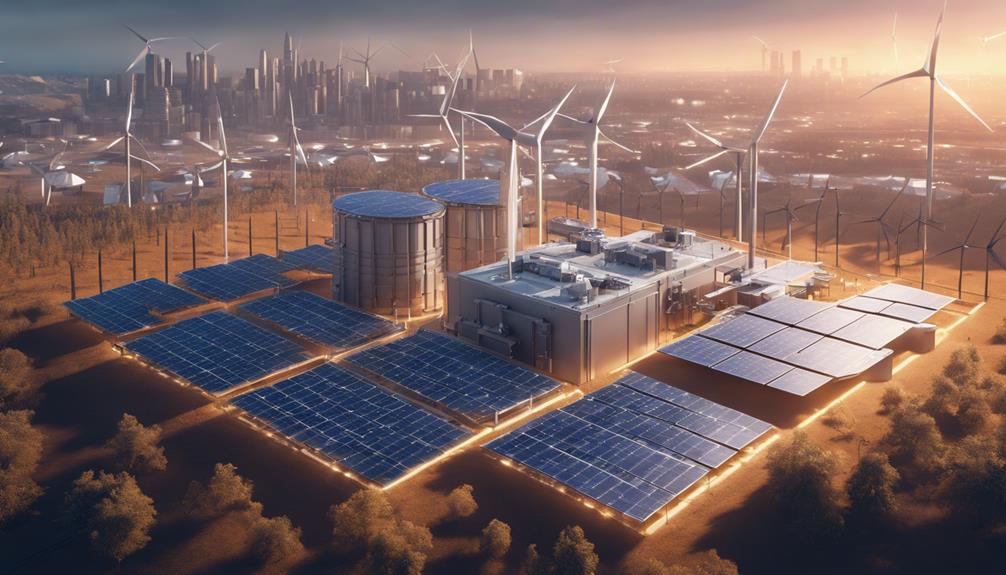
The future of crypto mining hinges significantly on advancements in energy technology and the industry's ability to adapt to changing environmental regulations. As you look ahead, you'll see that the integration of sustainable practices becomes not just beneficial, but essential.
Innovations such as the use of excess natural gas from oil fields and advances in solar, wind, and hydroelectric power sources are starting to reshape the landscape. You'll need to stay informed and adaptable.
You'll also find that regulatory frameworks around the world will play a pivotal role. Countries that provide clear, supportive regulations for renewable energies will likely become hotspots for crypto mining operations seeking sustainability and lower operational costs. You should watch these trends closely, as they'll influence where and how mining farms set up.
Moreover, the technology behind crypto mining is bound to evolve. The development of more energy-efficient mining hardware and techniques can significantly reduce the environmental impact.
You're looking at a future where blockchain technology not only supports cryptocurrency but does so in a way that aligns with global sustainability goals. Staying ahead of these changes isn't just good for the planet—it's crucial for your continued success in the crypto mining industry.
Conclusion
You've seen how crypto mining exhausts vast amounts of energy, posing serious challenges to our planet's sustainability. By comparing it with traditional banking, it's clear the stakes are high. However, there's hope. The shift towards renewable energy sources in mining operations is promising. As you look ahead, remember the industry's future largely depends on integrating more green energy solutions. This change is crucial not only for reducing environmental impact but also for ensuring the viability of crypto mining.