What Does Cryptocurrency Mining Energy Cost?
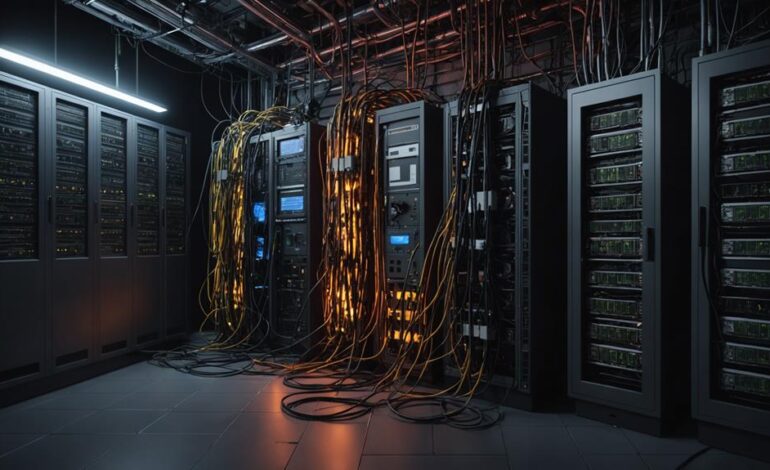
You've probably heard about the high costs of cryptocurrency mining, but have you considered the actual energy expenses involved? When you're mining cryptocurrencies, you're not just creating digital coins; you're also consuming vast amounts of electricity to power those state-of-the-art computers that solve complex mathematical problems. This power consumption can significantly affect your bottom line, especially as global energy prices continue to fluctuate. Moreover, as environmental concerns grow, the pressure mounts to find sustainable energy sources. But how are current miners adapting to these challenges, and what innovations are on the horizon that could potentially lower these costs? Let's explore the shifting landscape of cryptocurrency mining expenses.
Understanding Cryptocurrency Mining

Cryptocurrency mining might seem complex, but it essentially involves validating transactions and adding them to a public ledger, known as the blockchain. When you mine cryptocurrency, you're part of a vast network of computers working to secure and verify transaction records. This process is critical to prevent double-spending, a key issue in digital currency systems.
Mining isn't just about creating new coins. You also help maintain the network's security and integrity. Each transaction block you add builds upon the previous ones, creating a chain of information that's hard to alter without the consensus of the network.
This decentralized nature of blockchain technology is what makes cryptocurrencies like Bitcoin so revolutionary and resistant to fraud.
Key Factors Affecting Mining Costs
Several factors significantly influence the cost of cryptocurrency mining, and it's crucial you understand them if you're considering entering this field.
Hardware costs are at the forefront; efficient mining requires high-performance computers with specialized chips, known as ASICs, which can be quite expensive. The technology advances rapidly, so you're often faced with the need to upgrade your equipment to stay competitive.
Energy consumption is another major factor. Mining devices consume a lot of electricity, and while we're not diving into global energy prices here, it's clear that your local electricity rate will directly impact your mining expenses. Choosing a location where electricity is cheaper can significantly reduce overall costs.
Additionally, the choice of cryptocurrency affects costs. Different cryptocurrencies require different types of hardware for mining. Some might need more power or newer technology, influencing your initial and running costs.
Cooling systems are also vital. Mining equipment generates a lot of heat, and without efficient cooling, you risk damaging your hardware. This requires additional energy and can lead to higher maintenance costs.
Lastly, consider the network difficulty, which adjusts based on the total computational power in the network. As more people mine, difficulty increases, reducing the profitability unless your setup is sufficiently robust.
Global Energy Prices Impact

Nearly all miners feel the pinch of fluctuating global energy prices. As you delve into cryptocurrency mining, you'll quickly find that your profitability isn't just about the hardware you're running or the coins you're digging up; it's heavily tied to the cost of electricity. These energy costs can vary wildly from one country to the next or even within regions of the same country, affecting your bottom line.
You might live in a place with relatively cheap power, giving you a leg-up over competitors in areas where electricity rates are steep. However, remember that global events, economic policies, and fuel source availability often cause shifts in these prices. An increase in the price of coal or natural gas, which powers many plants, could mean higher costs for you, hitting your profits hard.
Moreover, as you scale up your operations, the impact of energy prices becomes even more significant. Small fluctuations might seem negligible at a low scale, but as your energy consumption climbs, even minor increases can become costly.
You'll need to stay informed and possibly even forecast these changes to maintain—or hopefully enhance—your mining profitability.
Energy Efficiency of Hardware
As you assess your cryptocurrency mining setup, keep in mind that the energy efficiency of your hardware can significantly impact your overall expenses. Choosing the right equipment isn't just about hash rates; it's also about how much power each device consumes relative to the amount of cryptocurrency it can mine.
You're looking for hardware that maximizes output while minimizing energy consumption. Advanced ASIC miners and high-efficiency GPUs are at the forefront of energy-saving mining technology. These units are designed to provide more computational power with less electrical draw, which translates into lower electricity bills and a smaller carbon footprint.
Consider the power efficiency ratio, usually expressed in watts per gigahash/sec (W/Gh), when comparing hardware. The lower this number, the better the energy efficiency of the unit.
Modern mining setups often feature cooling systems that further help reduce energy use by maintaining optimal operating temperatures, thus preventing hardware from working harder than it needs to.
It's also wise to update your equipment regularly. Technology advances rapidly, and newer models are typically more energy-efficient than older ones. Staying updated can be an investment upfront but tends to pay off in the long run through reduced energy costs and increased mining efficiency.
Comparison of Top Cryptocurrencies
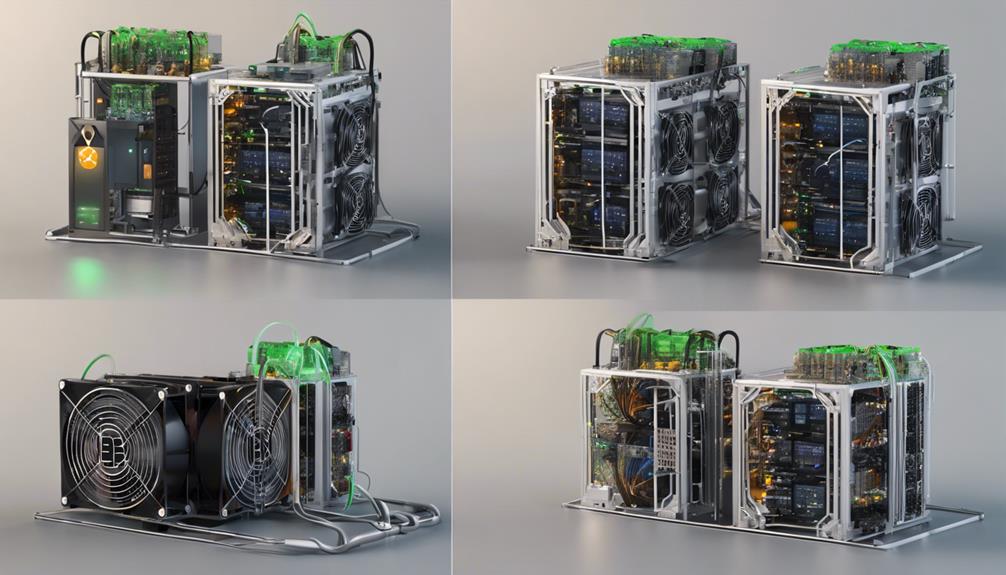
While considering the energy efficiency of your mining hardware, you should also evaluate the cryptocurrencies you plan to mine. Different coins have vastly different energy needs, primarily due to the underlying blockchain technology.
Bitcoin, for instance, is notorious for its high energy consumption, using the Proof of Work (PoW) mechanism. Mining a single Bitcoin requires a significant amount of electricity, making it less energy-efficient compared to others.
In contrast, Ethereum has been transitioning from PoW to Proof of Stake (PoS), which drastically cuts down energy use by eliminating the need for extensive computational work.
Other cryptocurrencies like Ripple (XRP) and Cardano (ADA) were designed with a low-energy footprint in mind. Ripple, for example, doesn't rely on mining at all, which means it consumes far less energy.
Cardano uses PoS from the start, positioning it as a more sustainable choice.
It's crucial to look into each cryptocurrency's mechanism and not just its market performance. Choosing to mine a less energy-intensive coin mightn't only reduce your costs but also align better with broader environmental goals. Remember, your choice helps shape the demand and development direction of these technologies.
Renewable Energy in Crypto Mining
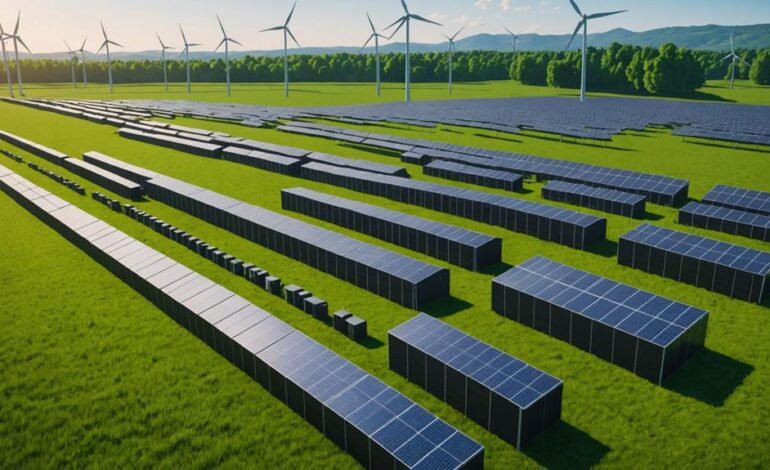
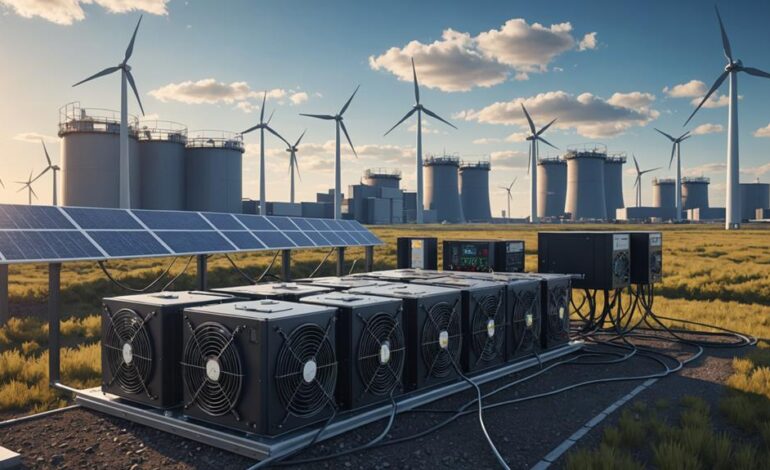
Many cryptocurrency miners are now turning to renewable energy sources to power their operations, recognizing the environmental impact of traditional energy sources. As you explore the evolving landscape of crypto mining, it's clear that sustainability has become a top priority. Using solar, wind, hydro, and even geothermal energy, miners aren't only reducing their carbon footprint but also aligning with global sustainability goals.
You'll find that in regions with abundant renewable resources, mining operations are increasingly prevalent. Places like Iceland, where geothermal and hydroelectric power are plentiful, have become hotspots for eco-friendly mining.
This shift isn't just about being environmentally conscious; it's also about long-term viability and community acceptance.
Moreover, as public pressure mounts over the environmental toll of digital currencies, your choice to invest in or operate mining activities powered by renewables could enhance your reputation. It positions you as a forward-thinking player in the market.
Reducing Costs With Innovations
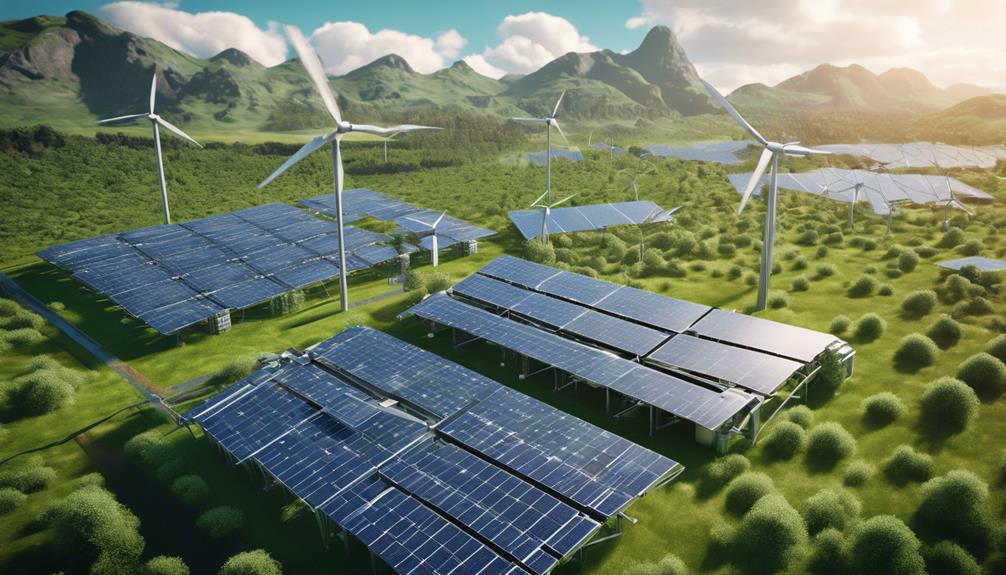
You can significantly lower your operational costs by embracing innovative technologies in cryptocurrency mining. Advances like ASIC miners offer vastly superior efficiency compared to older hardware. These specialized chips are designed specifically for mining, boosting your hashing power while slashing electricity use. You'll see a remarkable decrease in energy bills as a result.
Liquid cooling systems are another game-changer. Unlike traditional air-cooled setups, these systems use a coolant fluid to remove heat more effectively. This not only enhances the performance of your mining rigs by keeping them cooler but also reduces the risk of overheating and potential downtime. By investing in this technology, you're setting up for sustained, cost-effective mining operations.
Don't overlook software solutions either. Modern mining software optimizes the operation of your hardware. It adjusts the mining intensity based on real-time electricity prices and your hardware's performance metrics. This adaptive approach means you're always mining in the most energy-efficient manner possible.
Future of Mining Expenses
Looking ahead, the future of mining expenses appears set to transform as technological advancements continue to evolve. You'll likely see a shift towards more sustainable and cost-effective solutions as the industry responds to public concern over environmental impacts and the economic demands of mining operations.
Developers are innovating aggressively to reduce power consumption and improve the efficiency of mining hardware. You might soon be investing in next-generation ASICs and GPUs that not only speed up processing but also slash your electricity bills.
Moreover, the rise of renewable energy sources in mining isn't just possible; it's probable. Solar, wind, and hydroelectric power could become your go-to options, significantly cutting costs and boosting your green credentials.
Additionally, blockchain itself is adapting. With movements towards proof-of-stake (PoS) algorithms, which require far less power than traditional proof-of-work (PoW) systems, you're looking at potentially lower operational costs. This change could reshape your expense structure fundamentally.
As you plan your future in mining, keep a close eye on these trends. Staying ahead could mean the difference between profitability and loss. Innovations in technology and energy are on your side, promising a more affordable and sustainable mining landscape.
Conclusion
As you delve into cryptocurrency mining, it's crucial to keep an eye on fluctuating global energy prices and pursue energy-efficient hardware. Opting for renewable energy sources not only slashes your costs but also positions you as a responsible player in this digital field. Stay ahead by embracing innovative technologies that promise lower expenses. The future of mining costs hinges on these smart choices, ensuring that your mining operations remain profitable and sustainable in the long run.