What Does Ethereum Mining Mean for Energy Consumption?

You've probably heard about Ethereum mining and its significant energy draw, but have you considered what that means on a global scale? As you explore the complexities of Ethereum's Proof of Work mechanism, you'll find that it's not just about the massive amounts of electricity consumed. The broader implications for our planet's health and our ongoing energy crisis are profound. This growing concern has sparked a push towards more sustainable practices within the industry. So, what are the possible solutions and innovations on the horizon that could reshape this energy-intensive process? Let's examine the shifts that might pave the way for a more sustainable future in blockchain technology.
Understanding Ethereum Mining
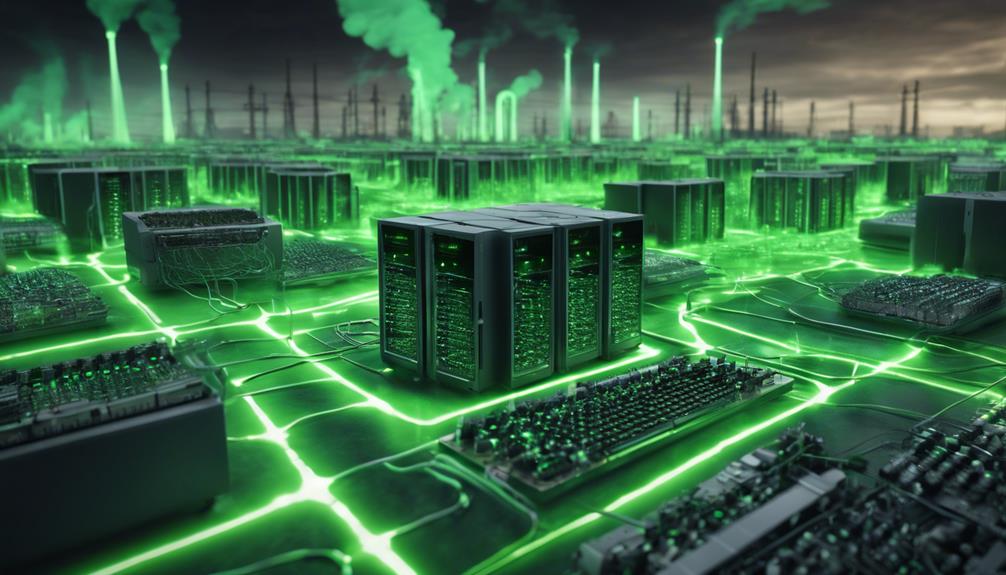
Ethereum mining, the process of validating transactions and securing the network, requires both computational power and technical knowledge. You're essentially part of a global network of computers competing to solve complex mathematical problems. When you successfully solve one, you validate a block of transactions and secure it onto the Ethereum blockchain.
To get started, you'll need specialized hardware. Initially, regular computers could handle the mining, but as Ethereum grew more popular, the difficulty increased. Nowadays, you're looking at investing in GPUs (Graphics Processing Units) or more advanced ASIC (Application-Specific Integrated Circuit) machines specifically designed for mining. This hardware isn't cheap, and the competition can be fierce.
Moreover, it's not just about having the right equipment; you also need a solid understanding of blockchain technology and smart contract functionality. These skills are crucial as they allow you to optimize your mining operations and potentially develop new applications on the Ethereum platform.
Ethereum Mining Process
Delving into the Ethereum mining process, you'll find that it begins with the installation of your mining hardware. This setup includes powerful GPUs or specialized ASICs designed specifically for mining.
Once your hardware is up and running, the next step is to install and configure mining software compatible with Ethereum. You'll choose from a variety of software options, each offering different features and performance efficiencies.
Next, you'll join a mining pool unless you're mining solo, which isn't recommended due to the sheer computational power needed to compete. A mining pool combines your hardware power with others, increasing your chances of earning Ethereum.
You'll need to connect your software to the pool's server, entering details like the server address and your wallet information.
After you're set up, your system begins to solve complex mathematical problems. Each solution provides a 'proof of work' that verifies Ethereum transactions. Successfully solving these problems before others in the network earns you a reward in Ethereum.
The process is continuous, with your hardware and software automatically starting on a new problem once the previous one is solved. Remember, the efficiency of your setup impacts your potential rewards.
Energy Requirements for Ethereum

While you have your mining setup geared towards solving complex problems to earn Ethereum, it's important to understand the substantial energy consumption involved. Each Ethereum transaction and mining process demands a significant amount of electricity. This is due to the computational power required to execute and verify transactions on the blockchain.
You're probably aware that Ethereum mining uses a mechanism called Proof of Work (PoW). This method requires miners to solve cryptographic puzzles to add new blocks to the blockchain, a process that's power-intensive. High-performance computers, also known as mining rigs, are essential, and these machines consume a lot of electricity. The energy consumed per transaction can be equivalent to the daily power usage of an average household.
Moreover, the energy efficiency of your mining setup isn't just about electricity consumption. It also impacts the longevity and performance of your mining equipment. Over time, energy inefficiency can lead to increased costs not only due to power usage but also in cooling systems to prevent overheating.
Understanding these dynamics helps you optimize your setup for better energy efficiency, potentially reducing costs and increasing your mining returns without contributing excessively to energy consumption.
Global Impact of Mining Ethereum
Many countries feel the environmental repercussions of Ethereum mining, given its massive global energy consumption. You might already know that these operations require a substantial amount of electricity, often sourced from non-renewable resources. This reliance exacerbates the carbon footprint globally, contributing significantly to air pollution and greenhouse gas emissions.
In regions where energy is primarily coal-based, such as certain parts of China and Eastern Europe, the impact is even more pronounced. The surge in demand for power can lead to increased burning of fossil fuels, negating many efforts towards achieving global climate goals.
Moreover, the infrastructure needed for Ethereum mining isn't just about the energy source; it's also about the hardware. High-performance computers and cooling systems consume a lot of electricity and generate considerable heat, leading to higher energy use and further environmental degradation.
This extensive energy consumption doesn't just strain the environment; it also affects local communities. In some areas, the massive power usage leads to electricity shortages, impacting residents' daily lives and increasing energy costs for everyone. As you reflect on the implications, it becomes clear that the environmental and social costs of Ethereum mining are indeed global issues.
Renewable Energy in Ethereum Mining
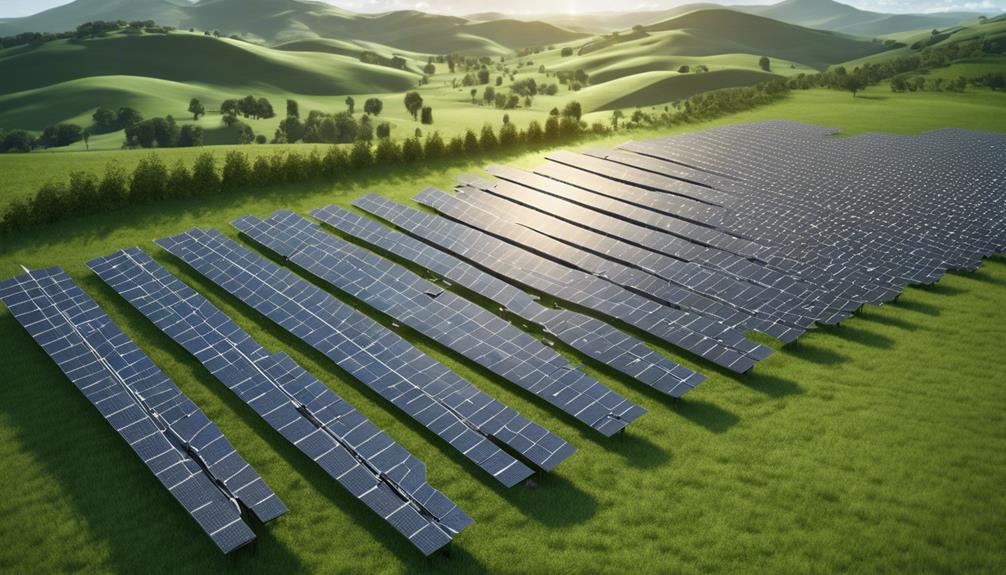
Addressing the environmental issues associated with Ethereum mining, a significant shift toward renewable energy sources is emerging as a sustainable solution. You're likely aware of the hefty energy consumption Ethereum mining demands. However, it's heartening to see a pivot towards green energy sources such as solar, wind, and hydroelectric power. This shift doesn't just reduce the carbon footprint but also aligns with global sustainability goals.
You might wonder how feasible incorporating renewable energy into Ethereum mining is. It's more practical than you might think. Several large-scale mining operations have begun harnessing energy from renewable sources, significantly cutting down on traditional, non-renewable energy reliance. This move also helps stabilize energy costs, which can be volatile with fossil fuels, making mining operations more predictable and efficient.
Moreover, you should consider the role of technological advancements in this transition. Innovations in energy storage and efficiency are making renewable energy more viable. For instance, improved battery technologies allow excess energy generated during peak production times to be stored and used later, ensuring continuous mining operations without the constant need for fossil fuels.
This proactive approach in the Ethereum community not only addresses the immediate energy concerns but also sets a precedent for future blockchain applications and their energy consumption strategies.
Comparing Ethereum to Other Cryptocurrencies
In comparing Ethereum to other cryptocurrencies, you'll notice significant differences in how they manage energy consumption and blockchain operations. Ethereum, for instance, has traditionally relied on a proof-of-work (PoW) mechanism, which requires substantial computational power and, consequently, energy. This is similar to Bitcoin, the largest cryptocurrency by market cap, which is also known for its high energy consumption due to PoW.
However, when you look at cryptocurrencies like Ripple or Cardano, you'll see a shift in approach. These use proof-of-stake (PoS) or other consensus mechanisms that significantly reduce the energy required to maintain the network.
For example, Cardano operates on a PoS protocol, which limits the amount of computational work needed by assigning block validation to participants based on the number of coins they hold, rather than solving cryptographic puzzles.
Furthermore, newer or less mainstream cryptocurrencies are often designed with energy efficiency as a core feature, reflecting growing concerns about sustainability in the crypto space. They tend to implement more energy-efficient consensus mechanisms from the start, setting them apart from older blockchains like Ethereum and Bitcoin in terms of their environmental impact.
Technological Advances Reducing Energy Use
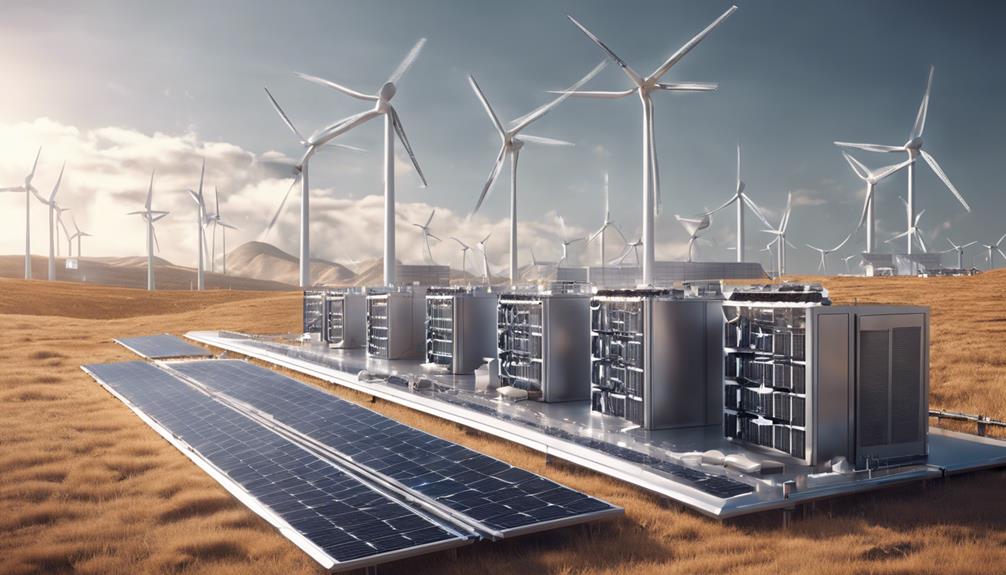
Technological advances are significantly reducing the energy consumption of cryptocurrency mining. You've likely heard of the immense energy demands of traditional mining methods, but recent innovations are paving the way for a more sustainable future.
Take Ethereum's shift from Proof of Work (PoW) to Proof of Stake (PoS). This change alone dramatically cuts down on the computational power—and thus energy—that your mining operations require. You're no longer competing to solve complex mathematical puzzles, but instead, you're participating in a more energy-efficient validation process based on your existing coin ownership.
Moreover, advancements in hardware, specifically designed for mining, are making strides. Developers are crafting ASICs (Application-Specific Integrated Circuits) that aren't only faster but also more energy-efficient than ever. This means you can achieve more with less power.
Additionally, you can tap into renewable energy sources. Solar, wind, and hydroelectric power are becoming popular among miners looking to reduce their carbon footprint and energy costs. By integrating these green technologies, you're not just benefiting financially; you're also contributing to a more sustainable approach to cryptocurrency mining.
These technological advancements aren't just good news for your wallet—they're crucial for the planet.
Regulatory Influences on Ethereum Mining
Regulatory changes are reshaping your approach to Ethereum mining. Governments worldwide are implementing policies that directly affect how you mine and the energy consumption associated with it. These regulations aim to mitigate the environmental impact of blockchain technologies, including Ethereum.
In the EU, for instance, the Crypto-Asset Markets (MiCA) framework proposes strict guidelines on the sustainability of digital assets. You're now required to disclose your energy usage and prove compliance with environmental standards to continue operations. This means you can't just mine; you've got to mine responsibly.
In the United States, several states have introduced bills to oversee the energy consumption of mining operations. New York, for example, has passed legislation focusing on environmental concerns, which could lead to limitations on mining activities based on their carbon footprint. As a miner, you must stay informed and possibly adapt to renewable energy sources to meet these criteria.
Moreover, these regulatory pressures aren't just about compliance. They're changing market dynamics. You might find renewable energy investments more financially feasible now, given potential future savings on regulatory compliance. Thus, staying ahead of these changes is crucial for your operational sustainability and profitability in the evolving landscape of Ethereum mining.
Future Trends in Ethereum Energy Consumption

Looking ahead, Ethereum's energy consumption patterns are poised to undergo significant transformations. As you delve deeper into Ethereum's future, you'll see a landscape increasingly influenced by the shift to Ethereum 2.0, which includes a transition from proof-of-work (PoW) to proof-of-stake (PoS). This change isn't just a minor tweak; it's a fundamental overhaul that reduces the need for energy-intensive mining activities.
You can expect this shift to markedly decrease Ethereum's overall energy usage. Estimates suggest that Ethereum's transition to PoS could reduce its energy consumption by up to 99.95%. This means that the vast farms of computers currently mining Ethereum could soon become obsolete, replaced by staking processes that require far less power.
Moreover, as renewable energy technology advances, Ethereum's remaining energy needs are likely to be increasingly met by green sources. The integration of blockchain technology with smart grids and renewable energy trading could foster a more sustainable ecosystem around Ethereum.
You'll also see more developers focusing on optimizing the efficiency of Ethereum-based applications, minimizing the energy footprint of each transaction. This focus on sustainability isn't just good for the planet; it aligns with growing investor and user demand for environmentally friendly digital solutions.
Public Perception of Ethereum's Energy Use
Public perception of Ethereum's energy use often shapes how people engage with it. You might hear debates or see headlines criticizing the environmental impact, painting a picture of heavy electricity use akin to entire countries. This view can affect how you perceive not just Ethereum, but all blockchain technologies, potentially skewing your understanding of the true scale and context of its energy consumption.
It's vital to recognize that Ethereum has been transitioning to a more energy-efficient system known as proof of stake, which drastically reduces its energy use. However, despite these improvements, the prevailing narrative often remains focused on its past inefficiencies. This can lead you to overlook the strides made towards sustainability.
Your awareness and the actions you take, such as advocating for further advancements in technology or choosing to invest in greener alternatives, can influence how Ethereum and similar technologies evolve. By staying informed and participating in discussions, you help shape the future landscape of blockchain technologies, pushing for innovations that prioritize both functionality and environmental responsibility.
Conclusion
As you've seen, Ethereum mining demands significant energy, impacting our environment. However, the shift towards renewable sources and technological innovations are promising steps toward sustainability. Regulatory changes are also shaping more energy-efficient practices. It's crucial for you to stay informed and support these positive changes, as public perception and demand can drive faster improvements. Ultimately, the future of Ethereum's energy consumption lies in our collective hands. Let's push for a greener blockchain technology together.