Is Ethereum Mining Energy Use Efficient?
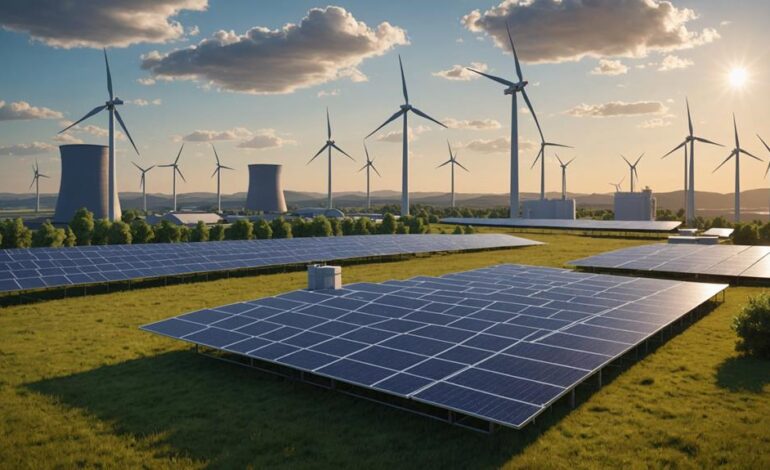
When you consider the vast amounts of energy Ethereum mining consumes, it's natural to question whether this expenditure is truly efficient. The current proof-of-work model, akin to powering a small nation, certainly raises eyebrows. Yet, as you explore deeper, you'll find that shifts toward the proof-of-stake with Ethereum 2.0 and innovative uses of renewable energy sources are on the horizon, promising substantial cuts in energy use. But the question lingers: are these advances enough to align with global sustainability goals? This evolving landscape leaves one pondering the balance between technological progress and environmental responsibility.
Understanding Ethereum Mining
Ethereum mining is the process by which new cryptocurrency tokens are created and transactions are verified on the Ethereum blockchain. When you mine Ethereum, you're essentially turning your computing power into a node on the network, solving complex mathematical problems that help to secure the entire system.
It starts with miners like you attempting to solve a cryptographic puzzle. The first miner to solve the puzzle gets the right to add a new block to the blockchain and is rewarded with Ether, the native cryptocurrency of Ethereum. This reward serves as an incentive for miners to continue contributing their computational resources to the network.
The process involves compiling recent transactions into blocks and trying to solve a computationally difficult puzzle. The participating nodes, or miners, use their computational power to solve the puzzle. The transactions in the block are considered verified once the puzzle is solved, and the miner adds the new block to the blockchain.
This mechanism not only secures and maintains the network but also creates a competitive lottery, which prevents any individual from easily adding new blocks to the blockchain. This ensures the fairness and security of the Ethereum network, making sure that all transactions are processed properly.
Energy Consumption Metrics
You should consider the significant energy consumption involved in Ethereum mining. It's crucial to understand the metrics used to measure this consumption to appreciate the scale and implications. Typically, the energy consumed by Ethereum mining is measured in kilowatt-hours (kWh). This metric helps calculate the electricity used by the powerful computer systems that mine Ethereum and maintain the blockchain.
To put it in perspective, each Ethereum transaction can require the same amount of energy that an average U.S. household uses in over a day. The mining rigs, packed with specialized hardware like GPUs or more recently, ASICs, run round the clock, solving complex mathematical problems that validate transactions and secure the network.
Moreover, the total energy consumption of the Ethereum network can be compared to the energy footprint of a small country. This immense power demand comes primarily from the computational intensity and the proof-of-work mechanism that the network currently employs, though plans to shift to a more energy-efficient proof-of-stake mechanism are underway.
Understanding these energy metrics isn't just about acknowledging the costs but also about foreseeing the sustainability and future improvements in technologies used for Ethereum mining.
Comparison to Traditional Banking
In comparison to traditional banking, Ethereum mining presents a different set of energy challenges and demands. You've probably heard that traditional banking involves multiple layers of infrastructure, from vast data centers to nationwide branch networks, all consuming energy. While it's clear that these systems are power-intensive, the energy footprint of Ethereum mining is a bit more direct, yet equally significant.
Traditional banks rely on physical buildings and electronic networks that operate non-stop, consuming a broad spectrum of resources — electricity for ATMs, branches, and data processing centers.
In contrast, Ethereum mining's power usage is largely tied to the operation of mining rigs and blockchain network maintenance. This might seem more straightforward, but it's intensive in its own right.
You might think that because Ethereum operations are digital, they'd inherently be less energy-intensive than physical banking. However, each Ethereum transaction involves complex computations and security protocols, demanding substantial computational power. This isn't to say that one is definitively more efficient than the other; rather, they utilize energy in profoundly different ways that reflect their distinct operational frameworks and technological underpinnings.
Renewable Energy in Mining
While both traditional banking and Ethereum mining consume significant amounts of energy, a growing emphasis on sustainability has led to increased use of renewable energy sources in the mining sector. You might wonder how this shift impacts you as an Ethereum miner or investor. It's simple: using renewable energy can significantly reduce the carbon footprint associated with your mining activities, potentially improving public perception of cryptocurrencies and, by extension, their market value.
Renewable energy sources like solar, wind, and hydroelectric power are becoming more prevalent in powering mining operations. This isn't just about being eco-friendly; it also makes economic sense. As renewable technology advances, the cost continues to fall, making it a more viable option compared to traditional, non-renewable energy sources.
You'll find that in regions with abundant renewable resources, the cost of mining can drop dramatically, increasing profitability.
Moreover, embracing renewables could future-proof your mining operations. As global scrutiny on the environmental impacts of energy-intensive industries intensifies, regulators are more likely to favor businesses that demonstrate a commitment to sustainability. This means you could enjoy lower regulatory hurdles and potentially benefit from incentives aimed at promoting green technology. So, it's a win-win: for the planet and your pocket.
Technological Advances Impact

Technological advancements are revolutionizing Ethereum mining, making it more efficient and less costly for you. Innovations in hardware, such as more powerful GPUs and dedicated ASIC miners, are optimizing the proof-of-work process, drastically reducing the power needed per transaction. These improvements aren't just about power, but also about enhancing the processing speed, enabling you to mine more Ethereum in less time.
On top of hardware, software upgrades play a crucial role. Mining software has become smarter, integrating algorithms that prioritize energy efficiency. This means your mining setup consumes less electricity, translating into lower bills and a smaller carbon footprint.
You'll find that with these software enhancements, managing your mining operations has become almost hassle-free, optimizing your energy use without constant manual adjustments.
Moreover, the shift towards Ethereum 2.0 introduces a proof-of-stake protocol, which will eliminate the need for extensive computational work to validate transactions. This transition not only promises to reduce Ethereum's energy consumption dramatically but also means that your investment in mining could soon focus more on staking rather than computing, further saving on energy costs.
These technological strides are pivotal, ensuring that your Ethereum mining endeavor isn't just profitable but also environmentally considerate.
Regional Energy Costs Analysis
As we consider the efficiency improvements in Ethereum mining technology, it's equally important to examine the impact of regional energy costs on your mining profitability. You've noticed that your mining rig's efficiency can heavily depend on where you're located, right? Energy prices vary widely across different regions and countries, significantly affecting your mining costs and profits.
For instance, if you're mining in a country like Iceland, where geothermal energy is cheap and abundant, your electricity costs are dramatically lower compared to someone operating in Germany, where electricity rates are much higher. This variation can mean the difference between a profitable operation and one that barely breaks even.
Let's dive deeper into the U.S., where energy prices can also vary significantly from one state to another. States like Washington and Oregon, with abundant hydroelectric power, offer some of the lowest electricity rates. This makes them hot spots for mining operations.
On the other hand, in states like California, where energy costs are high, you'll find it tougher to mine profitably.
It's crucial to factor in these regional differences when planning your Ethereum mining venture. Choosing the right location can optimize your operations and lead to substantial savings, enhancing your overall profitability.
Ethereum 2.0 and Efficiency

You've likely heard about Ethereum 2.0, but you mightn't fully understand how it's revolutionizing mining efficiency. Ethereum 2.0, also known as Eth2 or Serenity, is introducing a shift from the energy-intensive Proof of Work (PoW) model to a Proof of Stake (PoS) model, which fundamentally changes how transactions are verified and blocks are added to the blockchain.
In PoW, miners compete to solve complex puzzles using powerful computers that consume vast amounts of electricity. However, PoS eliminates this competition. Instead, validators are selected to create new blocks based on the amount of cryptocurrency they hold and are willing to "stake" as security. This method drastically reduces the need for high-powered mining rigs and, consequently, the energy consumption drops significantly.
Future Trends in Mining Energy
Looking ahead, the energy landscape for cryptocurrency mining is set to undergo significant transformations. As you delve deeper into the realm of cryptocurrencies, you'll notice an increasing shift towards more sustainable practices. The future is leaning heavily on renewable energy sources, which aren't just better for the planet but also potentially more cost-effective in the long run.
You'll see innovations in solar, wind, and hydroelectric power becoming more prevalent in mining operations. These technologies aren't only becoming more affordable but are also being integrated into mining setups to reduce the carbon footprint. It's likely you'll witness the rise of 'green mining centers' that prioritize sustainability.
Moreover, advancements in technology are set to improve the energy efficiency of the mining hardware itself. Companies are investing in developing lower-power-consuming chips that promise the same, if not better, performance. This means you could be mining more efficiently, without the hefty energy bill.
As the industry evolves, regulatory pressures will also steer mining activities towards more energy-conscious decisions. You'll need to stay informed and adaptable to navigate these changes successfully, ensuring your mining efforts aren't just profitable but also environmentally responsible.
Conclusion
As you've seen, Ethereum mining's hefty energy use is a complex issue. Fortunately, renewable energy and tech advancements are paving the way for greener practices. With the shift to Ethereum 2.0's proof-of-stake, you'll witness a significant drop in energy consumption. Keep an eye on regional energy costs and future innovations—they'll be key in balancing profitability with sustainability. The evolution towards more efficient mining practices is not just possible; it's underway, ensuring a more sustainable future.