Why Adopt Cryptography for Digital Currency Safety?

You might wonder why cryptography has become a cornerstone for the safety of digital currencies. It's simple: as you dive into the world of online transactions, the security of your digital assets can't be left to chance. Cryptography ensures that your transactions are not just secure, but also private. By encrypting data, only you and the intended recipient can access the information, keeping it away from prying eyes. But there's more to it. Consider the implications of compromised data in a world where digital transactions are ubiquitous. What happens when this foundational security is not just an option but a necessity? Let's explore why staying ahead in this cryptographic game could mean the difference between safeguarding your assets and losing them to cyber thieves.
Understanding Cryptography Basics
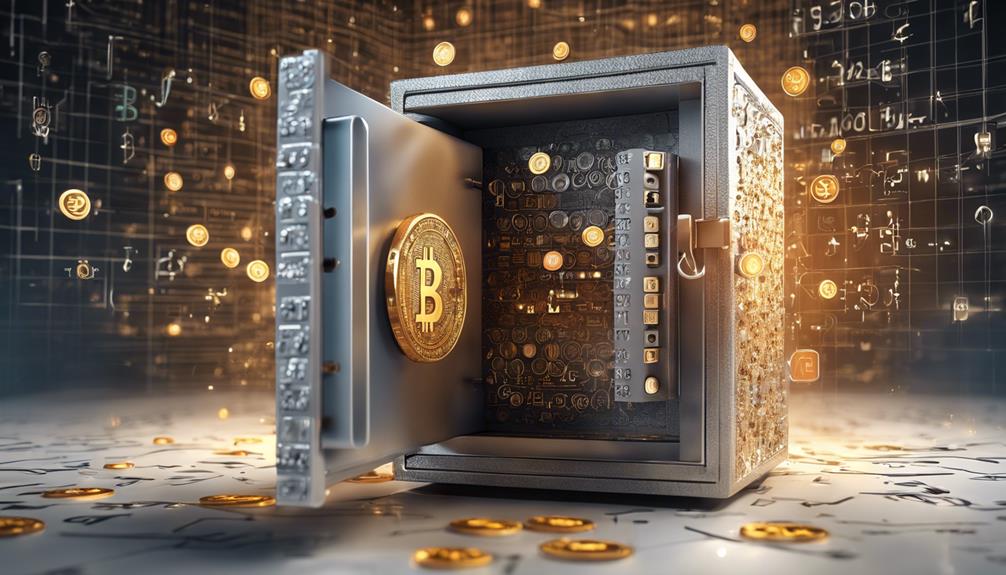
Cryptography is the backbone of digital currency security, ensuring your transactions stay private and protected. When you use digital currencies like Bitcoin or Ethereum, you're engaging in transactions that require robust security measures. Cryptography provides that by encrypting the data associated with your transactions. This means only the sender and intended receiver can understand what's being transferred.
Let's break it down a bit. At its core, cryptography uses mathematical theories and computational algorithms to turn standard information into a secure format. Only those with the correct decryption key can access the original information. You'll often hear terms like "public key" and "private key" in this context. Here's what they mean: your public key is shared with anyone who wants to send you data.
Your private key is what you keep secure and use to decrypt any data sent to you.
This isn't just about keeping money safe. It's about ensuring that every step of your digital interaction is shielded from prying eyes. Without cryptography, digital currencies couldn't exist in a secure, functional way. So, you're not just using an app or a digital wallet; you're actively participating in a sophisticated system of cryptographic security.
Enhancing Transaction Security
Digital currency's safety hinges significantly on enhancing transaction security, a critical aspect that serves as your front-line defense against potential threats. By integrating advanced cryptographic techniques, you can ensure that each transaction you make isn't only secure but also verifiable.
When you use digital currencies, every transaction is encrypted. This means the details of the transaction are converted into a secure code that only the sender and receiver can decipher. It's like sending a sealed letter instead of a postcard. You wouldn't want everyone to read your personal messages, right? Similarly, encryption keeps your financial transactions private.
Moreover, each transaction is linked to the previous one, forming a chain. This linkage provides another layer of security, making it extremely difficult for anyone to alter any part of the transaction history. Think of it as a puzzle; if a piece is changed, it won't fit perfectly anymore.
But it's not just about keeping the transaction secure; it's also about ensuring that it's executed correctly. Here, cryptographic protocols play a crucial role. They verify each transaction's integrity and authenticity, ensuring that the money you send reaches the intended recipient without any foul play.
Preventing Unauthorized Access
While enhancing transaction security is fundamental, it's equally important to prevent unauthorized access to your digital currency accounts. With the rise of digital currencies, ensuring that only you can access your funds is crucial. Cryptography plays a pivotal role here by securing your digital keys, which are essential for accessing your cryptocurrency.
Firstly, consider the importance of strong, unique cryptographic keys. These keys act like complex passwords that are extremely difficult to crack. You should never reuse keys across different accounts or platforms to minimize the risk of simultaneous breaches. Cryptography algorithms help by creating these robust keys that form the backbone of security in digital transactions.
Additionally, employing multi-factor authentication (MFA) enhances access security significantly. MFA requires more than one piece of evidence to verify your identity; usually something you know (a password or a pin), something you have (a mobile device or a hardware token), and something you're (biometric verification like fingerprints or facial recognition). This layered defense ensures that even if one factor is compromised, unauthorized individuals still can't access your account.
Always stay updated with the latest security protocols and be wary of phishing attacks. Educate yourself about common security threats and how to avoid them. Vigilance and informed security practices are your best defense against unauthorized access.
Ensuring Data Integrity
Ensuring the integrity of your data is as critical as safeguarding access to your accounts. When you're dealing with digital currencies, you can't afford to have your transaction records tampered with or altered. Cryptography comes into play here, serving as the backbone for data integrity in digital currency networks.
Think of cryptographic hash functions—they're a fundamental part of how blockchain technologies operate. Every block in a blockchain contains a unique hash of its data. If someone tries to alter a transaction, even slightly, the hash changes drastically. This alerts the entire network to potential fraud.
Digital signatures also play a crucial role. When you send digital currency, you sign the transaction with your private key. This process is akin to sealing an envelope. If the envelope arrives tampered with, the recipient knows something's wrong.
Similarly, if the digital signature doesn't match, the network rejects the transaction.
Promoting User Anonymity

Promoting user anonymity in digital currency transactions protects your identity and enhances security. When you use cryptocurrencies like Bitcoin, cryptographic techniques such as ring signatures and stealth addresses help disguise your financial footprints. This means your transactions aren't directly linked to your personal identity, making it harder for hackers or malicious actors to target you.
Cryptographic anonymity tools also shield your transactions from prying eyes, ensuring that only you and the recipient know the details of the exchange. You won't have to worry about leaving a digital trail that advertisers or third parties could exploit. This privacy is crucial in maintaining your financial sovereignty and personal safety online.
Moreover, using cryptocurrencies with enhanced privacy features, like Monero or ZCash, adds another layer of security. These currencies employ sophisticated encryption methods that obscure the transaction details to anyone except the involved parties.
You'll enjoy the freedom to make purchases or transfer funds without the risk of exposing sensitive information.
Facilitating Regulatory Compliance
Regulatory compliance plays a crucial role in legitimizing the use of digital currencies and building trust among users, regulators, and financial institutions. As you dive into the world of digital currencies, understanding how cryptography can aid in meeting regulatory demands becomes essential.
Cryptography doesn't just secure transactions; it also provides the tools necessary for compliance with laws governing financial transactions. For instance, by using cryptographic techniques such as digital signatures and encryption, you're not only protecting the integrity of transactions but also ensuring that they're traceable and transparent when necessary.
This traceability is crucial for complying with anti-money laundering (AML) laws and ensuring that all transactions can be audited effectively by the appropriate authorities. Moreover, cryptographic solutions can help manage and verify identities in digital transactions, a key requirement for Know Your Customer (KYC) regulations.
This capability ensures that you can confidently participate in the digital currency ecosystem, knowing that your operations adhere to strict regulatory standards.
Exploring Future Cryptographic Trends

As digital currencies evolve, staying ahead of cryptographic trends is crucial for your security and efficiency. You need to be aware of how these advancements can protect your digital assets and ensure smoother transactions.
One emerging trend is the development of quantum-resistant algorithms. As quantum computing becomes more feasible, it will challenge the security of existing cryptographic systems. By adopting these new algorithms, you're preparing yourself for a future where traditional encryption methods might no longer suffice.
Another significant trend is the use of zero-knowledge proofs (ZKPs). ZKPs allow you to prove knowledge of a fact without revealing the fact itself. This method enhances privacy and security for blockchain transactions, enabling you to conduct dealings without exposing sensitive information. It's a game-changer for maintaining transactional anonymity while ensuring compliance with regulatory frameworks.
Homomorphic encryption is also gaining traction. This technology lets you perform calculations on encrypted data, providing results without ever exposing the underlying data. You'll find this particularly useful in scenarios where data privacy is paramount but you still need to process and analyze your information.
Staying updated with these cryptographic technologies not only secures your digital assets but also gives you a competitive edge in the rapidly evolving digital currency landscape.
Conclusion
As you dive deeper into the world of digital currency, embracing cryptography is crucial for safeguarding your transactions. It not only secures your data from prying eyes but also ensures that every transaction remains intact and private. By staying updated with the latest cryptographic trends, you're not just protecting your assets; you're also building trust and facilitating compliance. So, keep ahead of the curve and ensure your digital dealings are always safe and sound.