You've likely heard about the surge in cryptocurrency use, but figuring out how to actually leverage this digital currency can seem daunting.
First, you'll need to choose a reliable digital wallet to store your cryptocurrencies safely. After setting up your wallet, begin by purchasing a small amount of cryptocurrency via an established exchange platform.
Handling these initial steps well sets the foundation for secure, practical usage moving forward.
But what about making transactions with crypto or understanding the deeper intricacies of its market trends? There's a lot more to learn about optimizing your cryptocurrency experience, and the benefits of setting up properly could be substantial.
Understanding Cryptocurrency Transactions

To understand cryptocurrency transactions, you need to know they're all recorded on a public ledger known as the blockchain, enhancing both transparency and security.
This means that when you're ready to make a payment, everything's out in the open in a way that protects your funds and builds trust among users.
You'll operate through a wallet application. It's not like your physical wallet; instead, it holds your private keys. These keys are your personal passcode to access your funds on the blockchain.
Don't worry – only you have access to your private keys, which keeps your transactions secure and personal.
When it's time to send or receive cryptocurrency, you use your wallet to transfer funds to another person's wallet address – a unique identifier that directs where the funds should go.
You can share your own wallet address with others who need to send money to you. It's kind of like forming your own little community where everyone knows where to send their part of the contribution.
Moreover, technologies like near-field communication and QR codes make these exchanges even smoother.
Just a quick scan, and you're all set. It's fast, direct, and incredibly user-friendly, making you feel right at home in the ever-expanding crypto family.
Acquiring Your First Cryptocurrency
Starting your journey into cryptocurrency begins with acquiring your first digital coins. You're not just buying a digital currency; you're becoming part of a vibrant, forward-thinking community.
First, you'll need a crypto wallet, which serves as your digital bank. This is where you'll securely store your first cryptocurrency.
To acquire your first cryptocurrency, you'll need to use cryptocurrency exchanges, which are platforms that enable you to buy Bitcoin, the most recognized cryptocurrency, or other digital currencies using traditional payment methods such as credit cards or bank transfers from your financial institution.
However, keep in mind that different exchanges have different transaction fees and security features, so choose wisely to ensure a smooth and safe entry into this world.
When you're set to invest in cryptocurrencies, ensure that your payment method is verified and secure to minimize risks.
Being part of the crypto world is exciting, and acquiring your first digital coins is your first step towards experiencing financial transactions of the future.
Making Payments With Cryptocurrency
Once you've acquired your first cryptocurrency, making payments with it's straightforward and efficient. All you need is a digital wallet, which doesn't actually store your crypto but holds the keys to access them*.
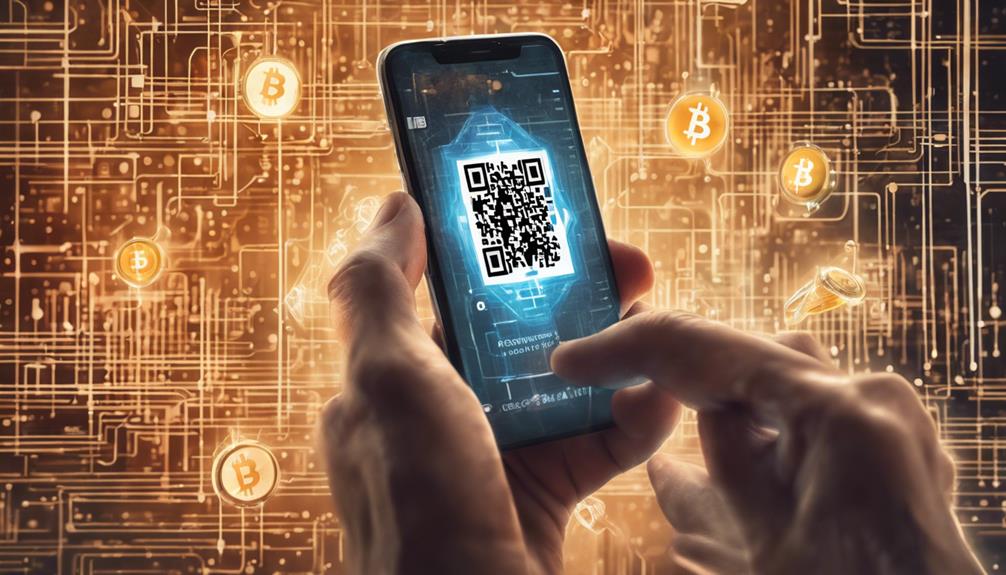
To send and receive payments, just use your wallet to scan a QR code or use near-field communication for touchless transactions – both highly efficient whether you're buying online or at a local store. It's as simple as using Venmo or PayPal, really merging into the mainstream ways you're already accustomed to.
More and more merchants are beginning to accept cryptocurrency. You'll see signs in stores specifying which digital currencies they take. Places like Starbucks, Overstock, and AMC Theaters are onboard.
These transactions are processed using blockchain technology, ensuring security and transparency. Whether you're making a quick coffee run or purchasing tech gadgets online, the process is secure and part of a global movement embracing digital currencies.
Storing and Securing Cryptocurrency
Safekeeping your cryptocurrency involves choosing the right wallet, which operates as the guardian of your private keys. These keys are the digital equivalent of a password to your online bank account, thus their security is paramount.
You can opt for hot wallets, which are connected to the Internet and convenient for frequent access and use. However, they're more vulnerable to online attacks and hacking.
On the other hand, cold wallets are offline devices, much like a digital safe, offering enhanced protection from online threats. They're perfect for storing crypto over longer periods or for substantial amounts.
Major cryptocurrency exchanges like Coinbase and Binance offer their own wallets, but for added peace of mind, storing your keys in a hardware wallet is a smart move.
Implementing strong passwords and utilizing two-factor authentication can fortify your defenses even further. This combination ensures the highest level of security for your digital assets.
Benefits and Risks of Cryptocurrency Usage

Cryptocurrency offers the flexibility of peer-to-peer transactions and global access, while also posing risks like price volatility and the potential for loss.
When using cryptocurrencies, you're part of a community that values digital payment methods that cross borders without traditional bank fees. This global accessibility draws you closer to others who appreciate the ease of sending money to anyone, anywhere.
Engaging with digital currency means facing transaction fees and the dreaded price volatility, which significantly affects investments. Each transaction is irreversible, so it's crucial to perform securely.
To protect yourself, consider storing private keys in a cold wallet rather than a hot wallet. Cold wallets aren't connected to the internet, greatly reducing the risk of hacking. Hot wallets, while convenient for frequent trading, remain vulnerable.
Secure transactions are paramount, and enabling two-factor authentication provides an additional layer of security.
As you dive into the world of cryptocurrencies, it's key to balance the exciting opportunities with an awareness of the risks. By taking these precautions, you'll enhance your ability to both protect and maximize your investments in this ever-evolving landscape.
Frequently Asked Questions
How to Use Crypto for Beginners?
You're starting out, so pick a good exchange like Coinbase or Binance, buy some crypto with cash, and keep it safe in a wallet. Use it easily for payments at major retailers.
Can You Make $100 a Day With Crypto?
You can definitely make $100 a day with crypto through day trading using strategies such as identifying promising buying opportunities, researching the right coins, developing effective trading strategies, and leveraging technical indicators like Bollinger Bands and RSI. This also involves staying informed by the news, engaging in activities like staking, yield farming, crypto mining, and crypto lending, and participating in airdrops. Moreover, understanding the risks and adopting a strategic mindset, thereby distinguishing between investing and gambling, are crucial for successful trading. This, combined with the right knowledge, discipline, and risk management practices, can yield consistent profits.
How Does Crypto Make You Money?
Crypto makes you money through various methods, such as appreciating in value or generating profits through trading. This strategy involves investing in digital currencies like [[Bitcoin]](https://www.cfr.org/backgrounder/crypto-question-bitcoin-digital-dollars-and-future-money) or [[Ethereum]](https://www.cfr.org/backgrounder/crypto-question-bitcoin-digital-dollars-and-future-money), hoping their value increases over time. Alternatively, you can trade these currencies skillfully to capitalize on market volatility.
Is Cryptocurrency Real Money?
Cryptocurrency isn't considered real money by everyone, but it does act as a digital currency you can use to buy goods and invest, bringing you into a community of forward-thinking tech adopters. It functions as a decentralized medium of exchange, a measure or store of value, and a unit of account, making it real money according to some definitions.
Conclusion
Cryptocurrency How to Use
Now that you've got a handle on cryptocurrency, dive in and grab your digital wallet.
Purchase some currency using an exchange, and start making payments simply with a quick QR scan.
Always remember to keep your coins secure; opt for strong passwords and cold wallets.
While using cryptocurrency comes with its fantastic perks, don't forget the risks.
Once you're set, the digital currency world is yours to explore!
Stay cautious, stay secure, and make the most of your digital finances.