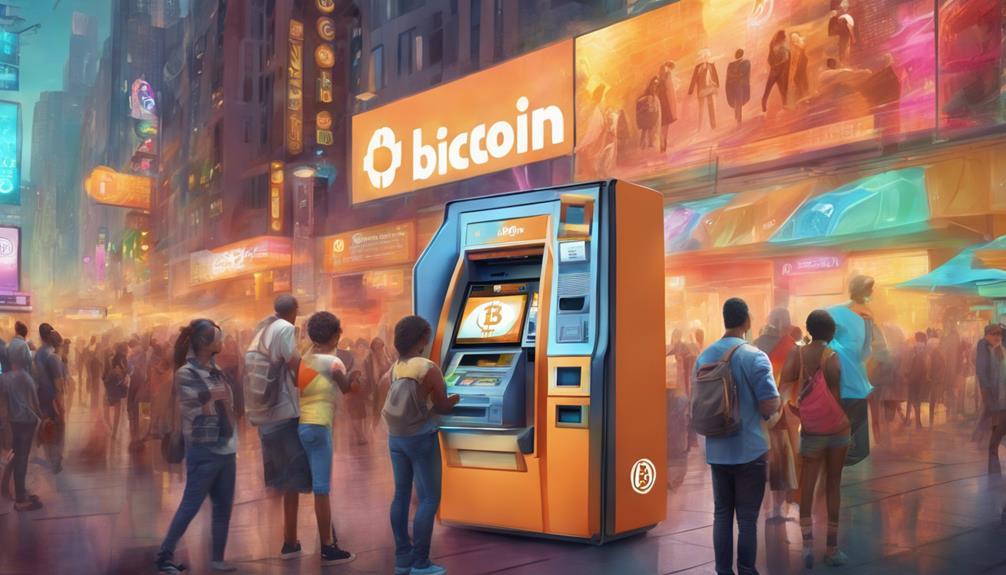
Cryptocurrency How It Works

Cryptocurrency operates on a technology called blockchain, a decentralized ledger that records all transactions across a network of computers.
This network is decentralized, meaning that no central entity controls it.
When you send or receive cryptocurrency, the transaction is verified by network participants called miners, using their computing power to solve complex mathematical problems.
This process not only secures the network but also generates new cryptocurrency units.
The verification process involves cryptography, which is the use of advanced coding to ensure the security and safety of transactions.
This encryption is critical in maintaining the integrity of the transactions recorded on the blockchain.
Although initially associated with financial transactions, the decentralization inherent in blockchain could revolutionize industries reliant on centralized control.
The potential is vast, with new use cases emerging that could transform how we interact with the digital world.
Understanding Cryptocurrency Basics

Cryptocurrency is a digital currency that operates independently of a central authority, allowing you to transact directly with others on a decentralized platform.
This modern financial system invites you into a community where everyone shares the same access to a secure, transparent ledger called a blockchain. Every transaction you make, whether buying, selling, or trading, is reflected consistently in real-time across the globe, without a need for intermediaries like banks.
In this community, the value of your cryptocurrency stays consistent across all transactions, ensuring that what you own remains fungible and accountable. Remember, any gains or losses from these transactions aren't hidden; they're reportable to tax authorities, making you a responsible member of the digital finance world.
Managing your cryptocurrency is done through digital wallets – tools that deepen your sense of belonging by connecting you personally to your digital assets.
These wallets, whether accessed on your phone or computer, store digital keys that verify your identity and transactions.
As you use Bitcoin, Ethereum, or other cryptocurrencies, each with unique features, you're not just transacting. You're part of a growing, evolving community, using tools that strengthen connections and foster mutual trust.
Creation and Mining Processes
To understand how cryptocurrencies like Bitcoin and Ethereum come into existence, it's crucial to delve into the mining process.
You're part of a global community when you engage with cryptocurrency mining. Think of it as a collective effort where members validate transactions and secure them onto a digital ledger known as the blockchain.
This task isn't simple; it demands powerful computers capable of solving intricate mathematical challenges.
Mining is more than powering up computers. It's your gateway to contributing to the security and efficacy of the cryptocurrency you support.
Each block you or your fellow miners validate not only strengthens the network but also rewards you with newly minted digital coins. These rewards aren't just numbers; they're a testament to your contribution to a growing ecosystem.
Imagine the satisfaction of securing a network while also being rewarded with assets like Bitcoin or Ether.
However, keep in mind that the process requires significant energy, equivalent to or surpassing what U.S. residential lighting consumes.
Yet, it's this energy consumption that fortifies the blockchain against fraud, making manipulation by any single entity nearly impossible. You're not just mining; you're safeguarding the integrity and continuity of the digital currency world.
Comparing Cryptocurrencies and Traditional Currencies

While traditional currencies, such as the US dollar, are issued by governments, cryptocurrencies, like Bitcoin and Ethereum, are generated through the decentralized process of mining.
You're used to dealing with traditional currencies every day; they're backed by a central authority like a central bank and pass through various financial institutions. When you make a transaction, a traditional payment method involves moving money through these established channels.
On the other hand, when you use cryptocurrencies, you're engaging with a completely different type of payment system. Cryptocurrencies operate on a digital platform without the need for a central bank or any central authority.
This means that every transaction you make is processed over a network of computers, validating each transaction collectively. This decentralized nature is one of the key distinct features between cryptocurrencies and traditional financial systems.
Both traditional currencies and cryptocurrencies serve the common purpose of facilitating payments but do so in fundamentally different ways.
While traditional payment methods rely on the structures and safeguards provided by a conventional financial institution, digital currency transactions empower you to operate outside these traditional bounds. This freedom introduces a different dynamic in how you perceive and use money in the digital age.
Advantages of Using Cryptocurrency
Advantages of Using Cryptocurrency
You're probably seeking ways to make your Bitcoin and other cryptocurrencies offer several advantages that can simplify and secure your financial transactions.
When using cryptocurrencies like Ethereum and Litecoin, there's no need to expose your personal information. This privacy means you can maintain your anonymity, much like being part of a global community where everyone respects each other's space.
Furthermore, cryptocurrencies like Bitcoin operate on a global scale. You can send money to someone across the world as easily as to your neighbor, without worrying about exchange rates or hefty fees. This makes it an ideal solution for international transactions, bringing everyone closer in a bustling, global economy.
Crypto transactions are noted for their security and reliability. They're recorded in a public ledger, known as a blockchain, which is transparent and nearly tamper-proof. This means you can trust that your transactions aren't just safe; they're also part of an immutable record, keeping everyone accountable.
Also, with cryptocurrencies like Ripple, you aren't bound by traditional bank restrictions—like ATM withdrawal limits—that can be frustrating. You have complete control over your funds, which empowers you within the community and makes you feel more connected and in charge of your own finances.
Getting Started With Cryptocurrencies
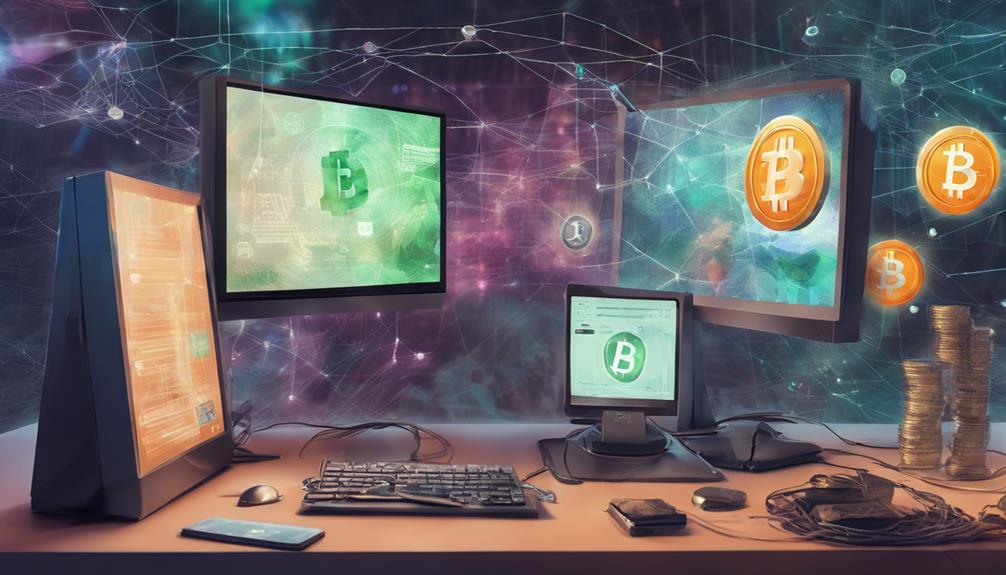
Getting Started With Cryptocurrencies
When depicted into the realm of cryptocurrencies, selecting a digital wallet becomes a crucial initial step.
This choice involves deciding between two primary types: a hot wallet, which remains connected to the internet and is optimal for everyday transactions due to its faster accessibility, and a cold wallet, designed for long-term storage away from potential online threats, offering superior security.
Both types are essential in safeguarding your investment portfolio by managing your assets securely.
Next, you need to create an account with a cryptocurrency exchange, a platform where you can purchase and sell various digital currencies.
It's advisable to select an exchange that aligns with your requirements, whether you're investing significant amounts or initiating small transactions.
Once you choose your platform, you'll need to fund your account to begin trading.
Beyond purchasing your first digital currencies, it's essential to understand the fundamentals of blockchain technology.
This understanding will enable you to effectively manage and transfer digital currency, setting you apart from mere followers and integrating you into a community that values smart, secure investments.
Remember, investing in cryptocurrencies goes beyond potential financial returns.
It involves stepping into a future that incorporates groundbreaking technology, where you'll join millions in shaping the financial landscape of tomorrow.
Frequently Asked Questions
How Does Crypto Make You Money?
Crypto can increase your wealth through trading, investing, staking, and lending. Decentralized finance applications let users loan their crypto with interest, while others stake compatible cryptocurrencies on blockchains or exchanges for rewards. Additionally, holding onto crypto with hopes of its market value increasing also offers potential gains.
How Does Cryptocurrency Exactly Work?
Cryptocurrency operates by using blockchain technology, which enables peer-to-peer transactions via electronic messages that are secure, without needing intermediaries. This technology relies on mutual trust in a digital community, where every transaction is transparent.
How Does Cryptocurrency Become Real Money?
Cryptocurrency becomes real money when widely accepted by individuals and businesses as a form of exchange for goods and services, much like traditional currency. This acceptance implies trust in its value.
How Does Crypto Work Step by Step?
You start by choosing a cryptocurrency wallet, which can be a software program, hardware device, or even a piece of paper storing your cryptocurrency keys. Then, you buy cryptocurrency through a dedicated crypto exchange, where you fund your account using fiat currencies like the US Dollar or British Pound via debit or credit cards, ACH transfers, or wire transfers. After purchasing, you can hold or trade your assets using various order types like market orders or limit orders. Over time, you'll manage transactions and make adjustments as part of your community, ensuring security through two-factor authentication and strong passwords.
Conclusion
You've explored the dynamic world of cryptocurrency, characterized by decentralization and blockchain technology.
From the intricate process of mining to transactions verified through cryptography, you've gained a deep understanding of the underlying mechanics.
You've compared it with traditional currencies like the U.S. Dollar and seen its advantages, like enhanced security and privacy.
Now you're equipped to dive into the ever-evolving cryptosphere.
Start by setting up your digital wallet, and remember, every transaction you make is part of a revolutionary financial landscape.
Embrace the change and perhaps, try your hand at mining.